Polyandrococos caudescens
(Mart.) Barb. Rodr.
Buri palm
iNaturalist· cc-by-nc
(c) Vitor C. Dias Gonçalves, some rights reserved (CC BY-NC)
iNaturalist· cc-by-nc
(c) Vitor C. Dias Gonçalves, some rights reserved (CC BY-NC)
iNaturalist· cc-by-nc
(c) Vitor C. Dias Gonçalves, some rights reserved (CC BY-NC)
Description
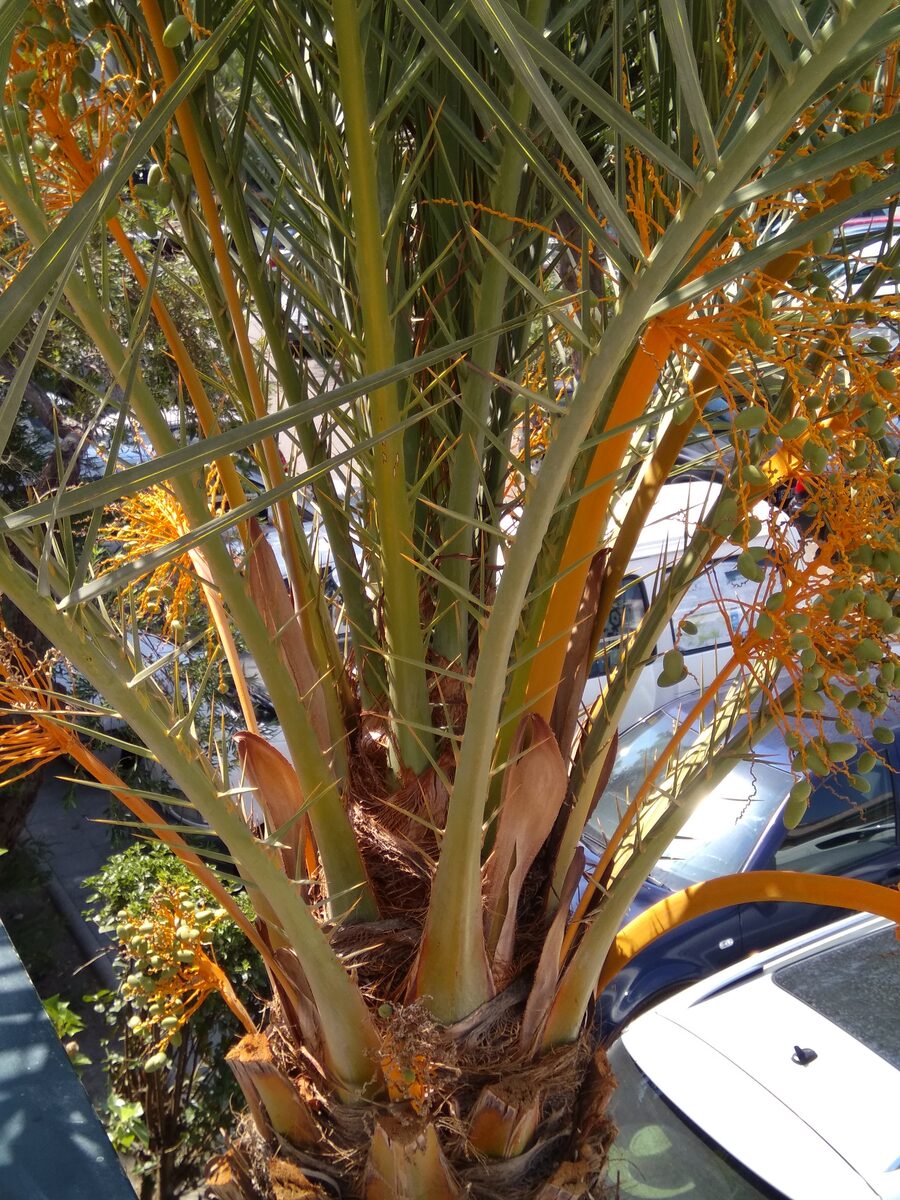
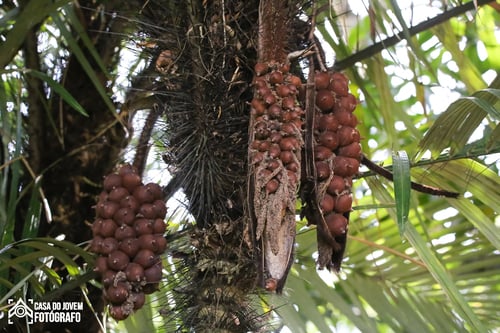
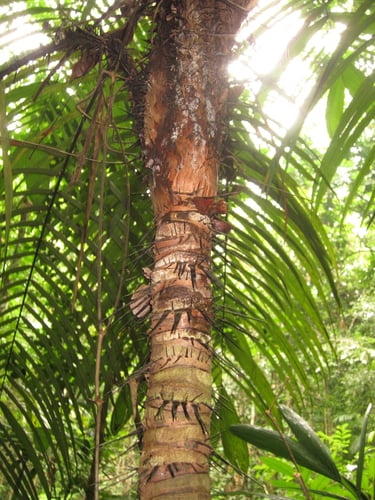
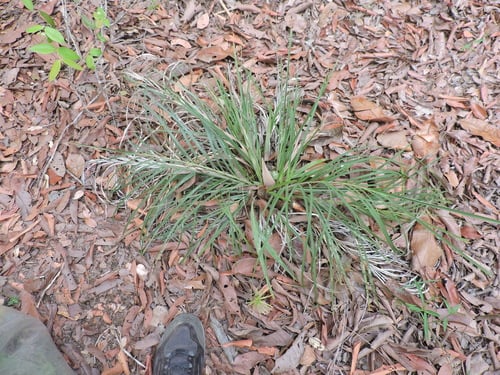
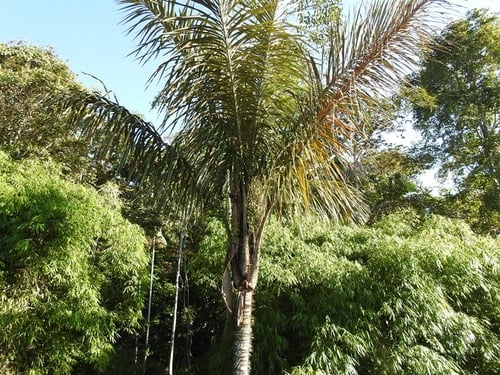
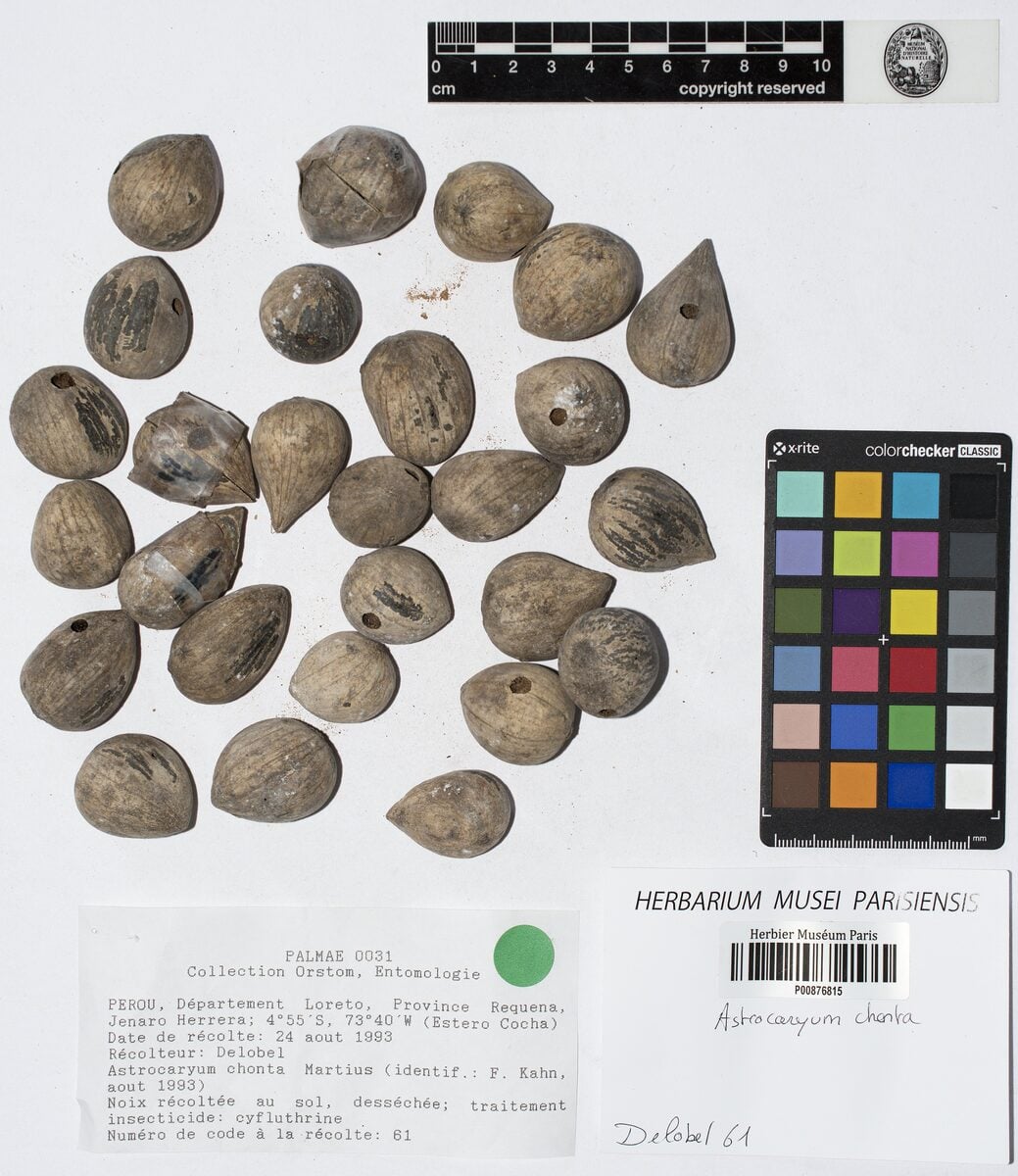
A small palm. It has a solitary trunk. It grows to 5-8 m high. The trunk is 15-20 cm across. The trunk has rough rings. The crown is dense. The leaves are held upright. They are 3-4 m long. The leaves are feather like. They are silvery underneath. The new leaves are striped. There is no crown-shaft. The leaf stalks are 60 cm long. They are stout and ribbed below. They have a broad base. The leaflets are long, narrow, stiff and pointed. They taper to a sharp point. The fruit hang on a long stalk in tightly packed clusters. The fruit are about 4 cm long. They are deep orange to brown when ripe. The flesh is orange.
Edible Uses
The succulent fruit are edible. The palm heart is bitter and requires treatment before eating. The seeds and cabbage are also edible portions.
Traditional Uses
The fruit are edible. They are succulent. The palm heart is bitter and needs treatment before eating.
This uses section is brief — help expand it
Distribution
It is a tropical plant. It often grows near the sea in dry sandy soils. It usually grows below 350 m altitude in Brazil. In the Cairns Botanical Gardens. Queen Sirikit BG. In Townsville palmetum.
Where It Grows
Australia, Asia, Brazil, SE Asia, South America, Thailand,
Cultivation
It is grown from seed. The seed germinate erratically. They may take a few weeks to a few months to germinate. The seed are only viable for a short time.
Production
Young plants grow steadily.
Other Information
They are only eaten occasionally.
Notes
There is one Polyandrococcus species.
Synonyms
Also Known As
Palmito-amargoso, Palha-branca
References (11)
- Balick, M.J. and Beck, H.T., (Ed.), 1990, Useful palms of the World. A Synoptic Bibliography. Colombia p 130, 131, (As Allagoptera caudescens)
- Contr. Jard. Bot. Rio de Janeiro 1:8. 1901
- Gibbons, M., 2003, A pocket guide to Palms. Chartwell Books. p 170
- Haynes, J., & McLaughlin, J., 2000, Edible palms and Their Uses. University of Florida Fact sheet MCDE-00-50-1 p 11
- Henderson, A., Galeano, G and Bernal, R., 1995, Field Guide to the Palms of the Americas. Princeton. p 153
Show all 11 references Hide references
- Johnson, D.V., 1998, Tropical palms. Non-wood Forest products 10. FAO Rome. p 94
- Jones, D.L., 1994, Palms throughout the World. Smithtonian Institution, Washington. p 55
- Kermath, B. M., et al, 2014, Food Plants in the Americas: A survey of the domesticated, cultivated and wild plants used for Human food in North, Central and South America and the Caribbean. On line draft. p 674
- Lorenzi, H., 2002, Brazilian Trees. A Guide to the Identification and Cultivation of Brazilian Native Trees. Vol. 01 Nova Odessa, SP, Instituto Plantarum p 301
- Martin, F.W. & Ruberte, R.M., 1979, Edible Leaves of the Tropics. Antillian College Press, Mayaguez, Puerto Rico. p 210 (As Allagoptera caudescens)
- Riffle, R.L. & Craft, P., 2003, An Encyclopedia of Cultivated Palms. Timber Press. p 418