Astrocaryum campestre
Mart.
Jariva, Tucum
iNaturalist· cc-by-nc
(c) Lucas C. Marinho, some rights reserved (CC BY-NC), uploaded by Lucas C. Marinho
iNaturalist· cc-by-nc
(c) Lucas C. Marinho, some rights reserved (CC BY-NC), uploaded by Lucas C. Marinho
Description
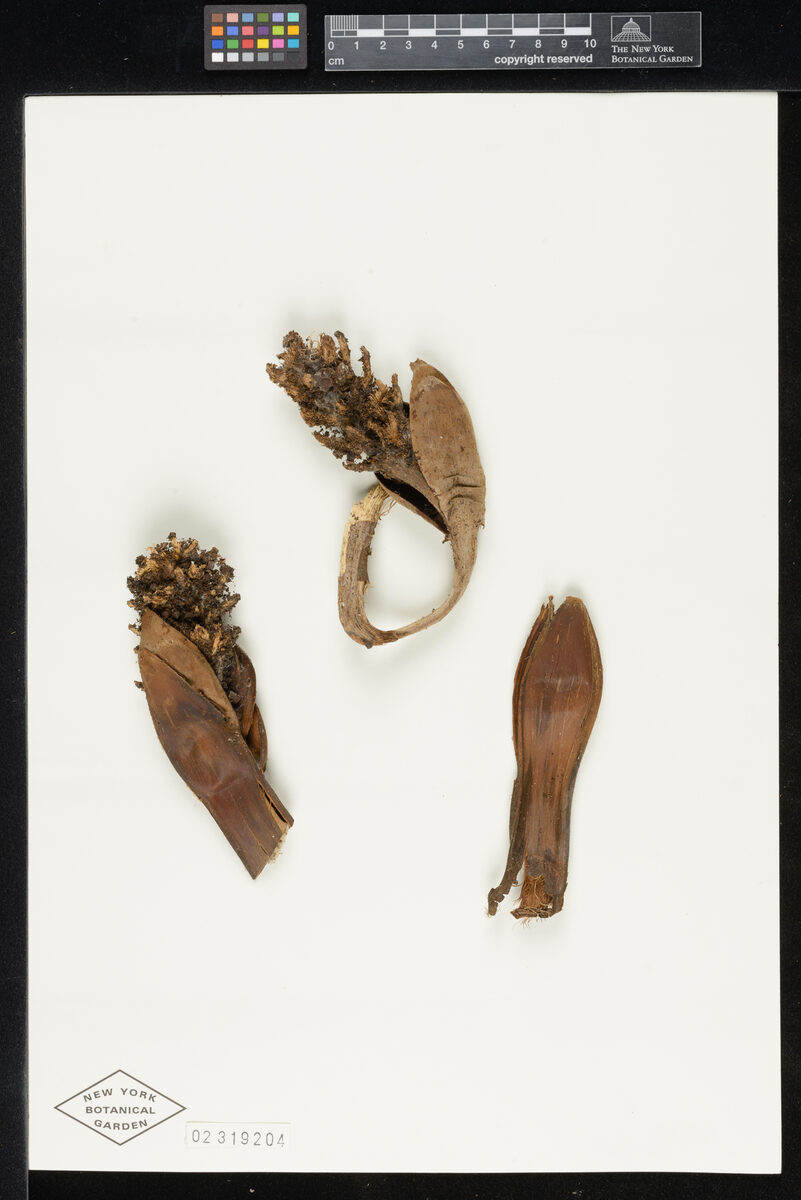
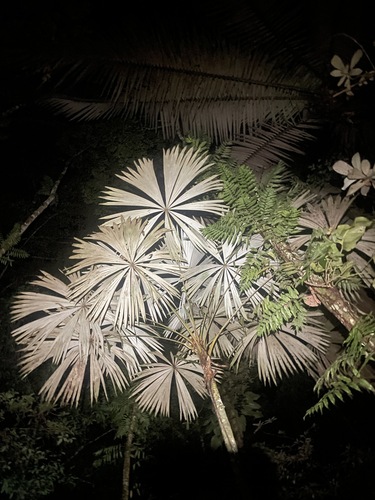
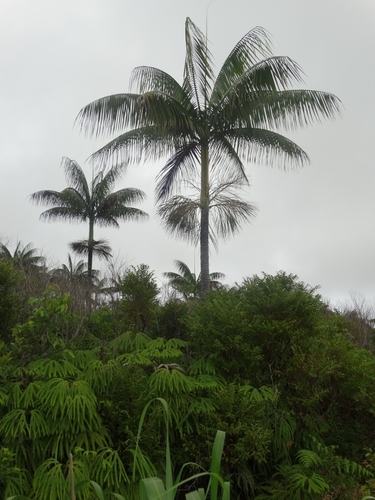
A solitary palm. The stems are short and often underground. There are 3-6 leaves. These arch over. There are 17-43 leaflets along each side. These are in irregular bundles. They spread in different planes. The flowering stalk is erect and among the leaves. It is short and compact and near ground level. The bract has a brown covering. There are also a few black spines. The flowering branches have 2-5 female flowers at the base. The fruit are oval and 3-3.5 cm long by 2-2.5 cm wide. They are orange or yellowish-green. They are smooth. The fruit are edible.
Edible Uses
Fruit. The orange or yellowish-green, obovoid fruits are up to 35mm long and 25mm wide. The palm heart (the inner core and growing bud of the plant) is harvested. It provides a crispy food, rich in nutrients, that can be eaten raw or cooked. Harvesting the heart will lead to the death of the plant because it is unable to produce side-shoots. We have no specific information for this species, but the fruits and seeds of various species in this genus are reported to be used for oil production in the Amazon region. Existing analyses of fruit fat content show a relatively homogeneous composition among the different species, with around. 20% of fat content in the mesocarp, mostly composed of oleic and palm itic acids, and 20 - 35% of fat content in the endosperm, with a predominance of lauric acid.
Medicinal Uses
The leaves are used to prepare a cure for venereal disease.
Distribution
A tropical plant. They grow in coastal areas in open savanna. They grow in deep sandy soils. They grow from sea level to 1200 m altitude in South America.
Where It Grows
Bolivia, Brazil, South America,
Cultivation
The plant often persists as a weed in agricultural fields.
Other Uses
Fibres from the leaves are used to make nets and similar items. The seed shell is used to make beads and ornaments for necklaces.
Notes
There are about 40-50 Astrocaryum species.
References (5)
- Haynes, J., & McLaughlin, J., 2000, Edible palms and Their Uses. University of Florida Fact sheet MCDE-00-50-1 p 2
- Henderson, A., Galeano, G and Bernal, R., 1995, Field Guide to the Palms of the Americas. Princeton. p 204
- Janick, J. & Paul, R. E. (Eds.), 2008, The Encyclopedia of Fruit & Nuts. CABI p 89
- Johnson, D.V., 1998, Tropical palms. Non-wood Forest products 10. FAO Rome. p 90
- Kermath, B. M., et al, 2014, Food Plants in the Americas: A survey of the domesticated, cultivated and wild plants used for Human food in North, Central and South America and the Caribbean. On line draft. p 91