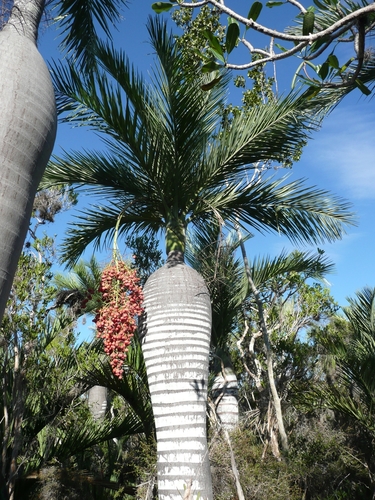
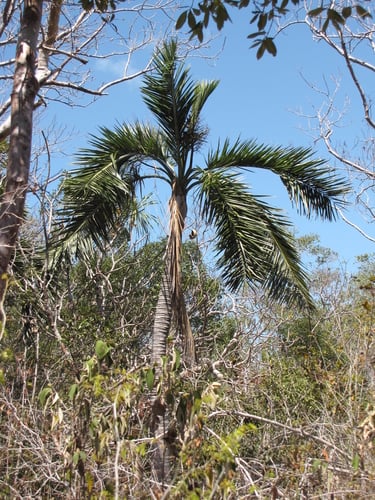
Borassus akeassii
Bayton, Ouedr. & Guinko
iNaturalist· cc-by-nc
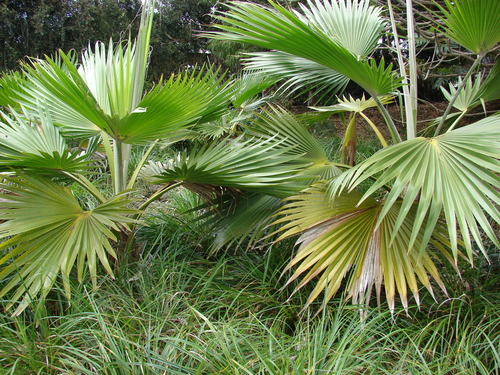
(c) Jukka Jantunen, some rights reserved (CC BY-NC), uploaded by Jukka Jantunen
iNaturalist· cc-by-nc
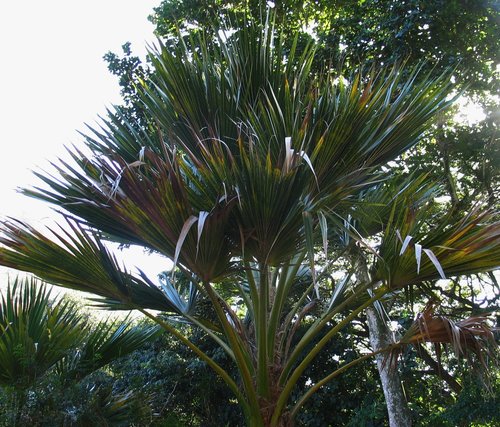
(c) Sylvain Piry, some rights reserved (CC BY-NC), uploaded by Sylvain Piry
iNaturalist· cc-by-nc-sa
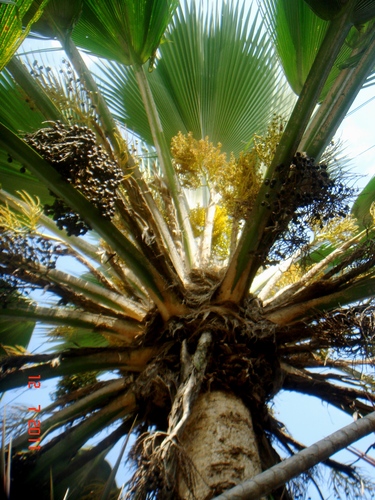
(c) Marco Schmidt, some rights reserved (CC BY-NC-SA), uploaded by Marco Schmidt
Summary
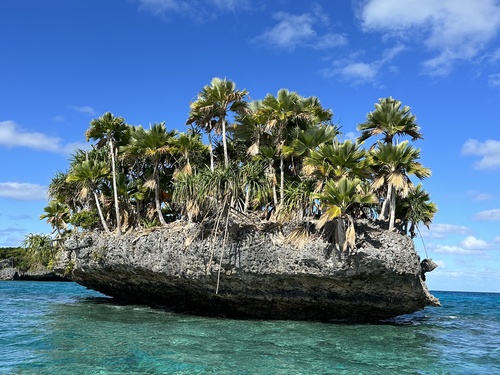
Source: WikipediaBorassus akeassii is a species of palmyra palm which is native to west and central Africa. It occurs from Senegal to Congo-Kinshasa. It was first described in 2006, having previously been confused with Borassus aethiopum and Borassus flabellifer. It is used by local people for a variety of purposes, particularly sap extraction.
Description
A fan palm. It has a single unbranched stem. It grows 15 m tall and the trunk can be 40-50 cm across. The fruit are 15 cm across and are produced in large clusters.
Edible Uses
Edible Parts: Fruit Sap Shoots Edible Uses: Drink The apical bud is hollowed out and the resulting sap is collected and fermented. The wine is made for sale enhancing local earnings), to drink at traditional ceremonies, as well as forming a part of the balanced diet in many rural areas, and used for aphrodisiac preparations. Excessive tapping of the sap kills the plant. Fruit - fresh or dried. Eaten as a food supplement. The fruit is 15cm in diameter and is produced in large clusters. The endosperm of immature seeds - raw. Young seedlings - eaten as a vegetable like asparagus. The terminal bud of the palm is used as palm cabbage. Eating this bud leads to the eventual death of the plant since it is unable to produce side shoots.
Traditional Uses
Sap can be extracted from near the top but extracting too much kills the palm. The sap is used to make wine.
This uses section is brief — help expand it
Medicinal Uses
Anthelmintic Antiasthmatic Aphrodisiac Mouthwash The roots serve for the treatment of stomach parasites, sore throats and asthma, as well as being used for a mouthwash
Distribution
It is a tropical plant. It grows in areas with a rainfall between 800-1,100 mm. It needs a sunny position and well drained soil. It can grow in poor soils and tolerate drought.
Where It Grows
Africa, Benin, Congo DR, Burkina Faso, Central Africa, Central African Republic, CAR, Congo, Côte d’Ivoire, Ivory Coast, Mali, Niger, Nigeria, Sahel, Senegal, Sudan, West Africa,
Cultivation
It is found in areas with a mean annual rainfall in the range 800 - 1,100mm. Requires a sunny position and a well-drained soil. Plants are able to extract nutrients, and thus grow, on very nutrient-poor soils. Established plants are drought tolerant. Established plants can resist fires. A slow-growing but long lived tree to over 100 years old. It does not start flowering until middle-aged. A dioecious species, both male and female forms need to be grown if fruit and seed are required
Propagation
Seed - it has a short viability and should be sown as soon as it is removed from the fruit pulp. The seed does not require pre-treatment and germinated in about 4 weeks. The plant produces a very long taproot, which can be 1 metre long when top growth is only 1cm tall, and so it is best sown in situ.
Other Uses
Wood Other uses rating: Medium (3/5). Other Uses The leaves are used for various purposes including for shelter. The dark brown, coarsely fibrous wood is a highly prized timber locally. It is very resistant to termites and fungi, and is used in carpentry, construction and also for household articles. Special Uses Food Forest
Production
It is slow growing but lives for many years.
Synonyms
Also Known As
Borassus akeassii or African Fan Palm. Other Names: Ake Assi's, Palmyra Palm
References (2)
- Bayton, R. P., 2007, A Revision of Borassus L. (Arecaceae) Kew Bulletin, Vol. 62, No. 4, pp. 561-585
- Wikipedia