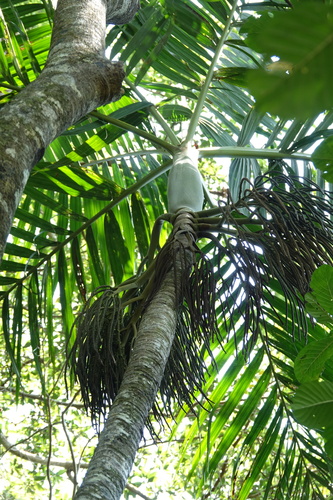
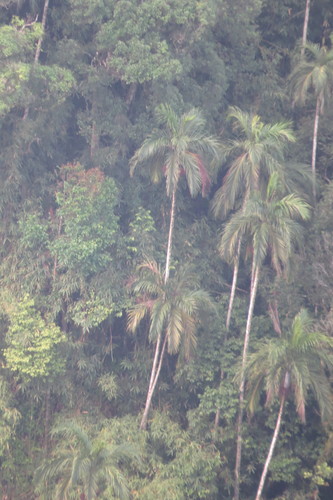
Borassus aethiopum
Mart.
African fan palm, Borassus palm, African Palmyra palm
iNaturalist· cc-by-nc
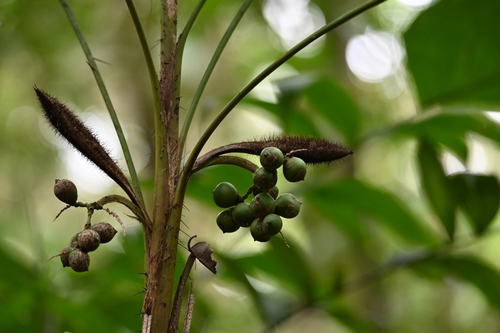
(c) ASSEDE Eméline S.P., some rights reserved (CC BY-NC), uploaded by ASSEDE Eméline S.P.
iNaturalist· cc-by-nc
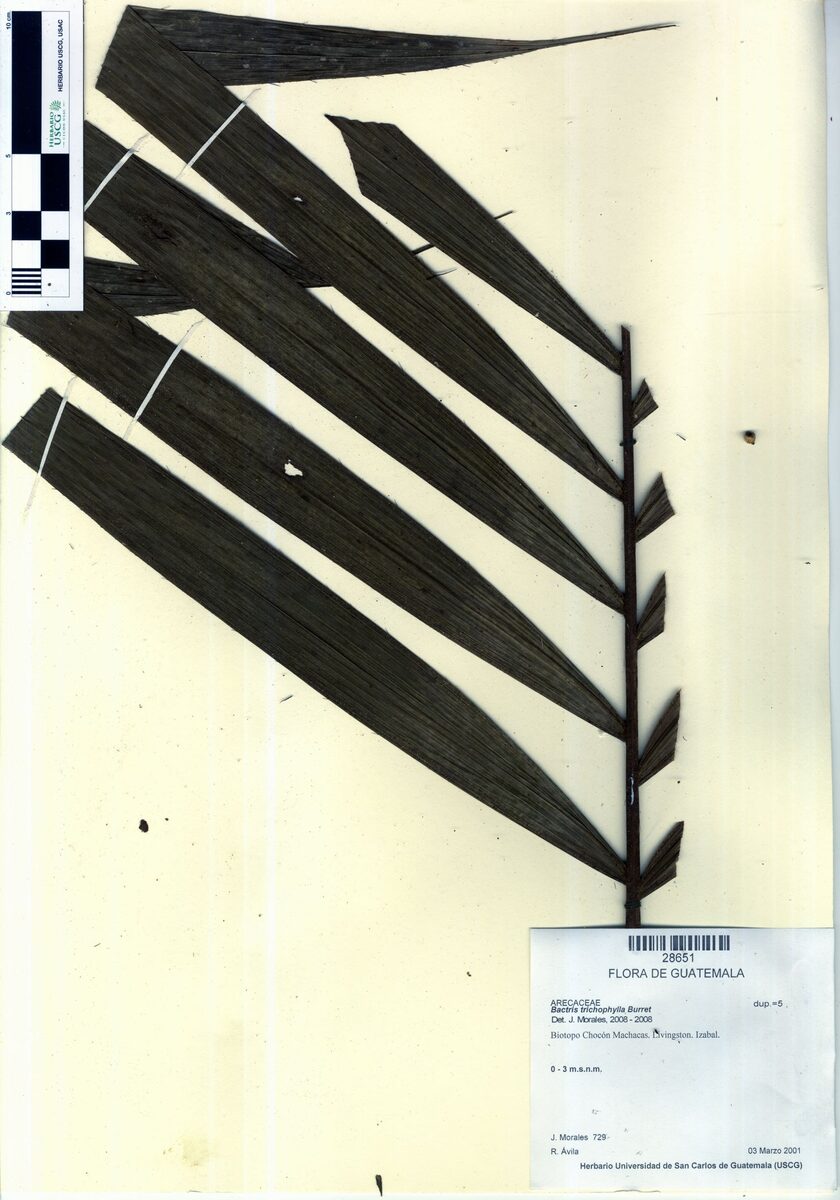
(c) Antonio Rodríguez Arduengo, some rights reserved (CC BY-NC), uploaded by Antonio Rodríguez Arduengo
iNaturalist· cc-by-nc
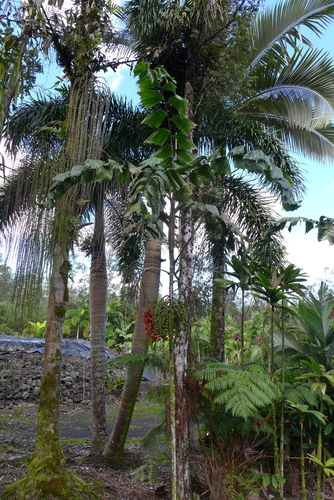
(c) ONG OeBenin, some rights reserved (CC BY-NC), uploaded by ONG OeBenin
Summary
Source: WikipediaBorassus aethiopum is a species of Borassus palm from Africa. In English, it is variously referred to as African fan palm, African palmyra palm, deleb palm, ron palm, toddy palm, black rhun palm, rônier palm (from the French). It is widespread across much of tropical Africa from Senegal to Ethiopia and south to northern South Africa, though it is largely absent from the forested areas of Central Africa and desert regions such as the Sahara and Namib. This palm also grows in northwest Madagascar and the Comoros.
Description
A solitary fan palm. It grows up to 25 m tall. It has separate male and female trees. The trunk is bottle shaped and smooth. Older trees have a swelling on the trunk above the middle which helps distinguish it from Palmyra palm. The bark is grey. Young trees have leaf bases which cling to the tree. The leaf scars are prominent. The terminal crown is a cluster of fan-shaped leaves. The leaves are up to 4 m long including the leaf stalk. The leaf is divided about the middle into folded segments. The leaf stalks are black with hooked spines along the edges. The flower comes from between the leaf stalks. The male flower spike is 2 m long with branches which are 25 cm long by 4 cm across. The female flower spike is 1.5-3 m long and unbranched. There are 20-50 fruit. The fruit are round and about 15 cm across. They are green to orange. The base of the fruit are enclosed in 6-7 cup shaped bracts. The fruit contain 3 hard coated seeds. The individual fruit is about 1 kg weight and the seeds 100 g.
Edible Uses
Edible Parts: Fruit Leaves Oil Sap Seed Shoots Edible Uses: Drink Oil Sweetener Edible portion: Fruit, Cabbage, Sap, Seeds, Palm heart, Vegetable. Fruit - fresh or dried. Slightly sweet, but with a mild turpentine-like flavour. The fruits have a large, fibrous pulp, weighing around 500g each, that smells strongly of turpentine. They are consumed raw or cooked, preferably with rice. Eaten as a food supplement. Rich in oil. The ripe, fallen fruit are collected, peeled and the juicy pulp is squeezed in water to form a solution which is added to porridge during cooking in order to improve the flavour. The fruit is 15cm in diameter and is produced in large clusters. The immature seed contains a sweet juice which can be drunk like coconut water. As it matures, it solidifies becoming jelly-like and eventually solid. It can be eaten at all stages, the flavour gradually becoming more nut-like. Young seedlings - eaten as a vegetable like asparagus. Highly esteemed. The mature seeds can be buried in pits and allowed to germinate, and the shoots are said to be a delicacy. The tuberous portion of the first juvenile leaves are rich in starch - they make a highly prized vegetable. Apical bud and young leaves - raw or cooked. Eaten in salads, or used as a vegetable. Eating this bud leads to the eventual death of the plant since it is unable to produce side shoots. The sap is extracted from the stem. Rich in sugars, it can be made into a refreshing beverage, fermented to make palm wine (toddy) or vinegar, or the sugars can be extracted. The tip of the trunk is cut and excavated so that a bowl-shaped depression is made where sap accumulates. The sap is then collected and slightly fermented into a refreshing drink. Destructive harvesting is sometimes employed, where the cut is renewed twice every day for 3 - 4 weeks until the tree is exhausted and dies. Chemical composition: Protein (crude) = 2.8% (dry). Fat = 0.5% (dry). Ash (insoluble) = 3.5% (dry). Fibre (crude) = 16.8% (dry). Amino acids (g (16g N)-1): Aspartic acid = 9.3g. Threonine = 3.6g. Serine = 3.9g. Glutamic acid = 8.9g. Proline = 5.0g. Glycine = 5.0g. Alanine = 5.0g. Valine = 5.0g. Cysteine = 0.1g. Methionine = 1.2g. Isoleucine = 3.6g. Leucine = 6.1g. Tyrosine = 2.8g. Phenylalanine = 3.6g. Lysine = 3.9g. Histidine = 2.1g. Arginine = 2.4g. Minerals: Sulphur = 0.04% (dry). Potassium = 0.09% (dry). Magnesium = 0.10% (dry). Calcium = 0.08% (dry). Na = 0.01% (dry). Zinc = 4 mg/kg (dry). Iron = 488 mg/kg (dry). Manganese = 8 mg/kg (dry). Copper = 2 mg/kg (dry).
Traditional Uses
The sap from the fruit stalk makes a pleasant drink. The fruit are eaten either ripe or unripe. The juicy pulp of ripe fruit is added to porridge to improve flavour. The immature seed kernel is eaten. The seed sprouts are eaten cooked. The stems of young seedlings are eaten. The growing point or palm cabbage is edible. (This kills the palm!) The long fleshy "sinker" root from the seed is eaten as a vegetable.
Medicinal Uses
Anthelmintic Antiasthmatic Aphrodisiac Mouthwash The roots serve for the treatment of stomach parasites, bronchitis, sore throats and asthma, as well as being used for a mouthwash. The leaves are said to be an aphrodisiac. The sap is reported to have many uses.
Known Hazards
Destructive sap harvesting practices can kill the tree.
Distribution
A tropical plant. It grows in the lowlands and the highlands. It grows in the semi arid and sub humid tropics. It grows in the Sahel. Plants are often spread by elephants after the eat the fruit. It requires good sunlight. It cannot grow in waterlogged soils. It grows from sea level to 1850 m with temperatures of 18°C to 30°C. It is most common is areas with 500-1,200 mm rainfall but also grows in slightly higher rainfall areas. It can grow in arid places and savannah. It suits hardiness zones 11-12.
Where It Grows
Africa, Australia, Benin, Burkina Faso, Cameroon, Central Africa, Chad, Congo DR, Côte d'Ivoire, East Africa, Ethiopia*, Gambia, Ghana, Guinea, Guinée, Guinea-Bissau, Ivory Coast, Kenya, Madagascar, Malawi, Mali, Mozambique, Niger, Nigeria, Sahel, Sao Tome and Principe, Senegal, Sierra Leone, South Africa, Southern Africa, South Sudan, Sudan, Tanzania, Togo, Uganda, West Africa, Zambia, Zimbabwe,
Cultivation
It grows best in areas where annual daytime temperatures are within the range 20 - 35c, but can tolerate 15 - 45c. It prefers a mean annual rainfall in the range 500 - 1,000mm, but tolerates 400 - 1,200mm. Requires a well drained soil and a position in full sun. It is usually found in sandy, well-drained soils, but prefers alluvial soils near watercourses. Plants are able to extract nutrients, and thus grow, on very nutrient-poor soils. Prefers a pH in the range 5.5 - 7, tolerating 5 - 7.5. Established plants are drought tolerant. A slow-growing but long lived tree to over 100 years old. Three phases of growth are recognized. The first phase, taking around 6 - 8 years, involves leaf development, in which about 20 leaves grow in a wide crown around 3 metres by 3 metres. Very little upward growth takes place at this time. The second phase involves rapid growth of the trunk above the ground and takes place around the ages of 8 - 20 years. The bark of the tree is still rough at this stage and have many leaf stalks. The third phase, from about 20 years onwards, involves flowering and shedding of leafstalks. The trunk becomes smooth and swellings appear on it. The plant usually flowers and produces fruit all year round. The flowering stems are tapped for their sap, a process that starts when the tree is about 30 years old and can continue for another 30 years if managed carefully. Yields of 2 litres of sap per day can be achieved. Plants are very tolerant of forest fires. A dioecious species, both male and female forms need to be grown if fruit and seed are required. A female palm can produce 20-50 fruits per flower stalk. Green to orange round fruit 15 cm across. Each fruit contain 3 hard coated seeds weighing 100g each. The individual fruit is about 1 kg.
Propagation
Seed - it has a short viability and should be sown as soon as it is removed from the fruit pulp. The seed does not require pre-treatment and germinated in about 4 weeks. The plant produces a very long taproot, which can be 1 metre long when top growth is only 1cm tall, and so it is best sown in situ.
Other Uses
Basketry Broom Charcoal Fencing Fibre Filter Fire retardant Fuel Furniture Oil Potash String Thatching Wood Other uses rating: Medium (3/5). Agroforestry Uses: The tree is used to form an excellent firebreak, especially in the arid regions of West Africa, which are prone to wildfires. Other Uses The leaves are used for various purposes including for shelter, thatch, making mats and baskets. Young leaves, before unfolding, can be split into strips and woven into thin mats, baskets and other household objects. Mature leaves are used for thatch. A fibre obtained from the leaves is used for making nets. The leaf petioles are used for making furniture, baskets, fences etc. The fibre extracted from the base of the leaf stalk has valuable qualities of resistance to chemicals, termites and water. The leafstalk endings can be soaked in water to provide fibres that are used as sponges or filters. The leaf midribs are used to make brooms, fish traps and nets. An oil is extracted from the fruit. Ashes from the male flowers make a good potash. The dark brown, coarsely fibrous wood is a highly prized timber locally. It is very solid, hard, heavy, very resistant to termites and fungi. It is difficult to saw, plane or sand; splits when nailed. Only the outer part of the stem, between the base and the first swelling, is suitable for use. This layer, which can be 7 - 10cm thick on male trees, but only 4 - 5cm on female trees, is used in carpentry, construction, for telegraph poles, piers, and also for household articles. The wood is used for fuel and to make charcoal. Special Uses Carbon Farming Food Forest
Production
Plants take about 10 years to become fully established. Plants are mainly pollinated by insects. A female palm can produce 20-50 fruits per flower stalk. Fruit can weigh 1 kg each. Fruit take 12-13 months to reach maturity. The fruit are sprouted by covering them in a pit and are ready to eat in 2 weeks. For palm wine tapping the terminal bud is cut and the sap collected. The cut is renewed twice a day for 3 to 4 weeks until the palm is exhausted and dies. It can yield 200-250 litres of sap. Fruit are collected after they fall.
Other Information
The fruit are popular. They are sold in local markets.
Notes
There are 7-10 Borassus species. Chemical composition: Protein (crude) = 2.8% (dry). Fat = 0.5% (dry). Ash (insoluble) = 3.5% (dry). Fibre (crude) = 16.8% (dry). Amino acids (g [16g N]-1): Aspartic acid = 9.3g. Threonine = 3.6g. Serine = 3.9g. Glutamic acid = 8.9g. Proline = 5.0g. Glycine = 5.0g. Alanine = 5.0g. Valine = 5.0g. Cysteine = 0.1g. Methionine = 1.2g. Isoleucine = 3.6g. Leucine = 6.1g. Tyrosine = 2.8g. Phenylalanine = 3.6g. Lysine = 3.9g. Histidine = 2.1g. Arginine = 2.4g. Minerals: Sulphur = 0.04% (dry). Potassium = 0.09% (dry). Magnesium = 0.10% (dry). Calcium = 0.08% (dry). Na = 0.01% (dry). Zinc = 4 mg/kg (dry). Iron = 488 mg/kg (dry). Manganese = 8 mg/kg (dry). Copper = 2 mg/kg (dry).
Nutrition
| Part | Moisture | kJ | kcal | Protein | Vit A | Vit C | Iron | Zinc |
|---|---|---|---|---|---|---|---|---|
| Fruit | 87.6 | 180 | 43 | 0.8 | — | 4 | 1 | — |
| Sap | — | — | — | — | — | — | — | — |
| Seed | — | — | — | — | — | — | — | — |
| Palm heart | — | — | — | — | — | — | — | — |
| Seed Root | — | — | — | — | — | — | — | — |
| Seed Sprouts | — | — | — | — | — | — | — | — |
Synonyms
Also Known As
Agbon, Agep, Akan, Akot, Akuugh, Arook, Bace, Ba di madibu, Ba di ndingi, Bam, Bazlawar, Berembe, Buane, Buar, Cibe, Cibedje, Cibo, Daleib, Deleb palm, Deleib, Delep, Difundi, Dimaka, Doubbi, Dubbem Dube, Dul, Dzova, Edukanait, Eduku, Edukudukut, Ekituugu, Euda, Gangami, Ginginya, Goha, Goworo-ijhacoongo, Kambili, Katungo, Kebala, Kpareeyu, Makoma, Mchapa, Mhama, Mkamu, Mtapa, Muhama, Mukae, Mukpiatimu, Mupama, Mvuma, Mvumo, N'bene, Ncora, Ng'hama, Opane, Ope-okunkun, Palmier-ronier, Ron, Rone, Ronier, Ruuk, Sabize, Sebe, Sibi, Sibo, Taam, Thuwa, Tugo, Tugu, Tuuk, Tuur, Umbena, Vumo, Zambaba, Zembaba
References (107)
- Abbiw, D.K., 1990, Useful Plants of Ghana. West African uses of wild and cultivated plants. Intermediate Technology Publications and the Royal Botanic Gardens, Kew. p 49
- ABDELMUTI,
- Agea, J. G., et al 2011, Wild and Semi-wild Food Plants of Bunyoro-Kitara Kingdom of Uganda: etc. Environmental Research Journal 5(2) 74-86
- Allen, D. J., 2007, Wildflowers and Common Trees of East Africa. Camerapix Publishers p 148
- Alyegba, S. S. et al, 2013, Ethnobotanical Survey of Edible Wild Plants in Tiv Communities of Benue State, Nigeria. Journal of Natural Sciences Research. Vol.3, No.7
Show all 107 references Hide references
- Anywar, G., et al, 2014, Wild Plants Used as Nutraceuticals from Nebbi District, Uganda. European Journal of medicinal Plants. 4(6):641-660
- Asfaw, Z. and Tadesse, M., 2001, Prospects for Sustainable Use and Development of Wild Food Plants in Ethiopia. Economic Botany, Vol. 55, No. 1, pp. 47-62
- Assefa, A. & Abebe, T., 2010, Wild Edible Trees and Shrubs in the Semi-arid Lowlands of Southern Ethiopia. Journal of Science and Development 1 (1) 2010
- Assogbadjo, A. E. et al, 2013, Specific Richness and Cultural Importance of Wild Edible Trees in Benin. Acta Hort. 979, ISHS 2013
- Atato, A., et al, 2010, Diversity of Edible Wild Fruit Tree Species of Togo. Global Science Books.
- Ballal, M. E., et al, 2014, Ethno-botany of Natural Forests of Nuba Mountains, South Kordofan State, Sudan. Journal of Forest Poducts & Industries. 3(1):13-19
- Bekele-Tesemma A., Birnie, A., & Tengnas, B., 1993, Useful Trees and Shrubs for Ethiopia. Regional Soil Conservation Unit. Technical Handbook No 5. p 112
- Balick, M.J. and Beck, H.T., (Ed.), 1990, Useful palms of the World. A Synoptic Bibliography. Colombia p 328, 500, 560, 638,
- Bayton, R. P., 2007, A Revision of Borassus L. (Arecaceae) Kew Bulletin, Vol. 62, No. 4, pp. 561-585
- Belem, M., et al, 2017, Strategy of Conservation and Protection of Wild Edible Plants Diversity in Burkina Faso. ANADOLU 27 (2) 2017, 82- 90
- Berihun, T. & Molla, E., 2017, Study on the Diversity and Use of Wild Edible Plants in Bullen District Northwest Ethiopia. Hindawi Journal of Botany. Article ID 8383468
- Bernholt, H. et al, 2009, Plant species richness and diversity in urban and peri-urban gardens of Niamey, Niger. Agroforestry Systems 77:159-179
- Bircher, A. G. & Bircher, W. H., 2000, Encyclopedia of Fruit Trees and Edible Flowering Plants in Egypt and the Subtropics. AUC Press. p 61
- Blomberry, A. & Rodd, T., 1982, Palms. An informative practical guide. Angus & Robertson. p 64
- Bojang, L. 1999, Non-wood Forest Products in the Gambia. EC-FAO Partnership Progrmme (1998-2000) p 8
- Bonou, A., et al, 2013, Valeur economique des Produits Forestiers Non Ligneux (PFNL) au Benin. Editions Universitaires Europeennes p 91
- Burkill, H. M., 1985, The useful plants of west tropical Africa, Vol. 3. Kew.
- Catarino, L., et al, 2016, Ecological data in support of an analysis of Guinea-Bissau's medicinal flora. Data in Brief 7 (2016):1078-1097
- Chapman, J. D. & Chapman, H. M., 2001, The Forest Flora of Taraba and Andamawa States, Nigeria. WWF & University of Canterbury. p 210
- Codjia, J. T. C., et al, 2003, Diversity and local valorisation of vegetal edible products in Benin. Cahiers Agricultures 12:1-12
- CRÉAC'H.
- Cundall, P., (ed.), 2004, Gardening Australia: flora: the gardener's bible. ABC Books. p 243
- Dale, I. R. and Greenway, P. J., 1961, Kenya Trees and Shrubs. Nairobi. p 11
- Danforth, R.M., & Boren, P.D., 1997, Congo Native fruits. Twenty-five of the best. Privately published. p 57
- Dharani, N., 2002, Field Guide to common Trees & Shrubs of East Africa. Struik. p 284
- Diarra, N. et al, 2016, Etude ethnobotanique des plantes alimentaires utilisées en période de soudure dans les régions Sud du Mali. Int. J. Biol. Chem. Sci. 10(1): 184-197
- Djihounouck, Y., et al, 2018, Diversité Et Importance Socio-Economique Des Espèces Fruitières Sauvages Comestibles En Zone Kasa (Sud-Ouest Du Sénégal). European Scientific Journal December 2018 edition Vol.14, No.36 ISSN: 1857 – 7881
- Dransfield, J. & Beentje, H., 1995, The Palms of Madagascar. Royal Botanical Gardens, Kew and The International Palm Society. p 54 (As Borassus sambiranensis)
- Etherington, K., & Imwold, D., (Eds), 2001, Botanica's Trees & Shrubs. The illustrated A-Z of over 8500 trees and shrubs. Random House, Australia. p 134
- Facciola, S., 1998, Cornucopia 2: a Source Book of Edible Plants. Kampong Publications, p 27
- FAO, 1988, Traditional Food Plants, FAO Food and Nutrition Paper 42. FAO Rome p 109
- Fowler, D. G., 2007, Zambian Plants: Their Vernacular Names and Uses. Kew. p 64
- Fox, F. W. & Young, M. E. N., 1982, Food from the Veld. Delta Books. p 99
- Gallagher, D. E., 2010, Farming beyond the escarpment: Society, Environment, and Mobility in Precolonial Southeastern Burkina Faso. PhD University of Michigan
- Gel. Anz. 4:639. 1838 (Hist. nat. palm. 3:221, t. 108, 121, 162. 1838)
- Gibbons, M., 2003, A pocket guide to Palms. Chartwell Books. p 51
- Gilbert, T., et al, 2017, Diversity and local transformation of indigenous edible fruits in sahelian domain of Cameroon. Journal of Animal & Plant Sciences Vol. 26 (2): 5289-5300
- Godfrey, J. et al, 2013, Harvesting, preparationand preservation of commonly consumed wild and semi-wild food plants in Bunyoro-Kitara Kingdom, Uganda. Int. J. Med. Arom. Plants. Vol.3 No.2 pp 262-282
- Goode, P., 1989, Edible Plants of Uganda. FAO p 30
- Grivetti, L. E., 1980, Agricultural development: present and potential role of edible wild plants. Part 2: Sub-Saharan Africa, Report to the Department of State Agency for International Development. p 43
- Grubben, G. J. H. and Denton, O. A. (eds), 2004, Plant Resources of Tropical Africa 2. Vegetables. PROTA, Wageningen, Netherlands. p 560 (Also as Borassus sambiranensis)
- Gueye, M., et al, 2014, Wild Fruits Traditionally Gathered by the Malinke Ethnic Group in the Edge of Niokolo Koba Park (Senegal). American Journal of Plant Sciences 5, 1306-1317
- Hahn, K., et al, 2018, The Use of Wild Plants for Food: a National Scale Analysis for Burkina Faso (West Africa) Flora et Vegetatio Sudano-Sambesica 21, 25-33
- Hanawa, Y., 2013, Wild edible plants used by Guiziga people of far northregion of Cameroon. Int. J. Med. Arom. Plants. Vol 3 (2) : 136-143
- Haynes, J., & McLaughlin, J., 2000, Edible palms and Their Uses. University of Florida Fact sheet MCDE-00-50-1 p 3
- Herzog, F., Gautier-Beguin, D. & Muller, K., Uncultivated plants for human nutrition in Cote d'Ivoire. FAO Corporate Document repository. International Conference on Domestication nd Commercialisaton of Non Timber species.
- INFOODS:FAO/INFOODS Databases
- Jardin, C., 1970, List of Foods Used In Africa, FAO Nutrition Information Document Series No 2.p 21, 32, 60, 123 (As Borassus flabellifer var. aethiopum)
- Jardin, C., 1970, List of Foods Used In Africa, FAO Nutrition Information Document Series No 2.p 12 (As Borassus sambiranensis)
- Johnson, D.V., 1998, Tropical palms. Non-wood Forest products 10. FAO Rome. p 108
- Jones, D.L., 1994, Palms throughout the World. Smithtonian Institution, Washington. p 144
- Katende, A.B., Birnie, A & Tengnas B., 1995, Useful Trees and Shrubs for Uganda. Identification, Propagation and Management for Agricultural and Pastoral Communities. Technical handbook No 10. Regional Soil Conservation Unit, Nairobi, Kenya. p 136
- Latham, P., 2004, Useful Plants of Bas-Congo province. Latham & DFID p 53
- Latham, P. & Mbuta, A. K., 2014, Useful Plants of Bas-Congo Province, Democratic Republic of Congo. Volume 1. Salvation Army. p 81
- Le Houerou, H. N., (Ed.), 1980, Browse in Africa. The current state of knowledge. International Livestock Centre for Africa, Ethiopia. p 163
- Llamas, K.A., 2003, Tropical Flowering Plants. Timber Press. p 94
- Lulekal, E., et al, 2011, Wild edible plants in Ethiopia: a review on their potential to combat food insecurity. Afrika Focus - Vol. 24, No 2. pp 71-121
- Malaisse, F., 1997, Se nourrir en floret claire africaine. Approche ecologique et nutritionnelle. CTA., p 59
- Malaisse, F., 2010, How to live and survive in Zambezian open forest (Miombo Ecoregion). Les Presses Agronomiques de Gembloux.
- Martin, F.W. & Ruberte, R.M., 1979, Edible Leaves of the Tropics. Antillian College Press, Mayaguez, Puerto Rico. p 210
- Martin, F. W., et al, 1987, Perennial Edible Fruits of the Tropics. USDA Handbook 642 p 47 (As Borassus flabellifer var. aethiopica)
- Masters, T., 2021, Traditional food plants of the upper Aswa River catchment of northern Uganda—a cultural crossroads. Journal of Ethnobiology and Ethnomedicine (2021) 17:24
- Maundu, P. et al, 1999, Traditional Food Plants of Kenya. National Museum of Kenya. p 75
- Maydell, H. von, 1990 Trees and shrubs of the Sahel: their characteristics and uses. Margraf. p 193
- Mbuya, L.P., Msanga, H.P., Ruffo, C.K., Birnie, A & Tengnas, B., 1994, Useful Trees and Shrubs for Tanzania. Regional Soil Conservation Unit. Technical Handbook No 6. p 128
- Mertz, O., Lykke, A. M., and Reenberg, A., 2001, Importance and Seasonality of Vegetable Consumption and Marketing in Burkina Faso. Economic Botany, 55(2):276-289
- Moksia, F., et al, 2019, Diversity and Socio-Economic Value of Wild Edible Plants in the Mounts Mandara Region, Cameroon. International Journal of Sciences. Vol. 8:10
- Molla, A., Ethiopian Plant Names. http://www.ethiopic.com/aplants.htm
- Mpasiwakomu, R. A., 2017, The Diversity and Utilization of Wild Edible and Medicinal Plant Species found in Uvinza Miombo Woodlands, Tanzania. M. Sc. thesis University of Tanzania.
- Muller, J. & Almedom, A. M., 2008, What is “Famine Food”? Distinguishing Between Traditional Vegetables and Special Foods for Times of Hunger/Scarcity (Boumba, Niger). Hum Ecol (2008) 36:599–607
- Msuya, T. S., et al, 2010, Availability, Preference and Consumption of Indigenous Foods in the Eastern Arc Mountains, Tanzania, Ecology of Food and Nutrition, 49:3, 208-227
- Mutie, F. M., et al, 2023, Important Medicinal and Food Taxa (Orders and Families) in Kenya, Based on Three Quantitative Approaches. Plants 2023, 12, 1145
- Ngugi, G., 2000, Case Study from Kenya on Indigenous Wild Vegetables. Paper 4 Workshop in Kenya 1999. p 32
- Nyadanu, D., et al, 2015, Agro-biodiversity and challenges of on-farm conservation: the case of plant genetic resources of neglected and underutilized crop species in Ghana. Genet. Resourc. Crop Evol. 62(7):
- Ojelel, S. & Kakudidi E. K., 2015, Wild edible plant species utilized by a subsistence farming community in the Obalanga sub-county, Amuria district, Uganda. Journal of Ethnobiology and Ethnomedicine. 11:7
- Ojelel, S., et al, 2019, Wild edible plants used by communities in and around selected forest reserves of Teso-Karamoja region, Uganda. Journal of Ethnobiology and Ethnomedicine (2019) 15:3
- Oryema, C., et al, 2013, Edible wild fruit species of Gulu District, Uganda. International Journal of Biology and Biological Sciences Vol 2(4) pp 068-082
- Palgrave, K.C., 1996, Trees of Southern Africa. Struik Publishers. p 69
- Palmer, E and Pitman, N., 1972, Trees of Southern Africa. Vol. 1. A.A. Balkema, Cape Town p 357 (As Borassus flabellifer var. aethiopum)
- Peters, C. R., O'Brien, E. M., and Drummond, R.B., 1992, Edible Wild plants of Sub-saharan Africa. Kew. p 37
- Purseglove, J.W., 1972, Tropical Crops. Monocotyledons. Longmans p 420
- Riffle, R.L. & Craft, P., 2003, An Encyclopedia of Cultivated Palms. Timber Press. p 276 (As Borassus sambiranensis)
- Riffle, R.L. & Craft, P., 2003, An Encyclopedia of Cultivated Palms. Timber Press. p 275
- Royal Botanic Gardens, Kew (1999). Survey of Economic Plants for Arid and Semi-Arid Lands (SEPASAL) database. Published on the Internet; http://www.rbgkew.org.uk/ceb/sepasal/internet [Accessed 5th May 2011]
- Ruffo, C. K., Birnie, A. & Tengnas, B., 2002, Edible Wild Plants of Tanzania. RELMA p 168
- Ruiters-Welcome, A. K., 2019, Food plants of southern Africa. Ph.D. thesis. Univ. of Johannesburg p 29
- Salih, N. K. M., & Ali, A. H., 2014, Wild food trees in Eastern Nuba Mountain, Sudan: Use, diversity, and threatening factors. Journal of Agriculture and Rural Development in the Tropics and Subtropics Vol. 115 No. 1 pp 1-7
- Sambou, A., et al, 2016, The contribution of trees and palms to a blanced diet in three rural villages of the Fatick Province, Senegal. FORESTS, TREES AND LIVELIHOODS, 2016 VOL. 25, NO. 3, 212–225
- Schmidt, E., Lotter, M., & McCleland, W., 2007, Trees and shrubs of Mpumalanga and Kruger National Park. Jacana Media p 54
- Segnon, A. C. & Achigan-Dako, E. G., 2014, Comparative analysis of diversity and utilization of edible plants in arid and semi-arid areas in Benin. Journal of Ethnobiology and Ethnomedicine 2014, 10:80
- Terra, G.J.A., 1973, Tropical Vegetables. Communication 54e Royal Tropical Institute, Amsterdam, p 29
- Unwin, A. H., 1920, West African Forests and Forestry. Fisher Unwin Ltd. pdf on Internet p 107
- USDA, ARS, National Genetic Resources Program. Germplasm Resources Information Network - (GRIN). [Online Database] National Germplasm Resources Laboratory, Beltsville, Maryland. Available: www.ars-grin.gov/cgi-bin/npgs/html/econ.pl (10 April 2000)
- Vickery, M.L. and Vickery, B., 1979, Plant Products of Tropical Africa, Macmillan. p 99
- Vivien, J., & Faure, J.J., 1996, Fruitiers Sauvages d'Afrique. Especes du Cameroun. CTA p 69
- Walsh, M., 2009, The Use of Wild and Cultivated Plants as famine Foods on Pemba Island, Zanzibar. Études océan Indien. 42-43
- Welcome, A. K. & Van Wyk, B.-E., 2019, An inventory and analysis of the food plants of southern Africa. South African Journal of Botany 122 (2019) 136–179
- Wickens, G.E., 1995, Edible Nuts. FAO Non-wood forest products. FAO, Rome. p164
- Wiersema, J. H. & Leon, B., 2013, World Economic Plants. A Standard Reference CRC Press. 2nd Ed. p 107
- Williamson, J., 2005, Useful Plants of Malawi. 3rd. Edition. Mdadzi Book Trust. p 39
- World Checklist of Useful Plant Species 2020. Royal Botanic Gardens, Kew
- www.worldagroforestrycentre.org/treedb/