Pseudophoenix ekmanii
Burret
Cacheo
iNaturalist· cc-by-nc
(c) Yolanda M. Leon, some rights reserved (CC BY-NC), uploaded by Yolanda M. Leon
iNaturalist· cc-by-nc
(c) Yolanda M. Leon, some rights reserved (CC BY-NC)
iNaturalist· cc-by-nc
(c) Yolanda M. Leon, some rights reserved (CC BY-NC)
Summary
Source: WikipediaPseudophoenix ekmanii is a palm species endemic to the Barahona Peninsula and Isla Beata in the Dominican Republic on the Caribbean island of Hispaniola.
Description
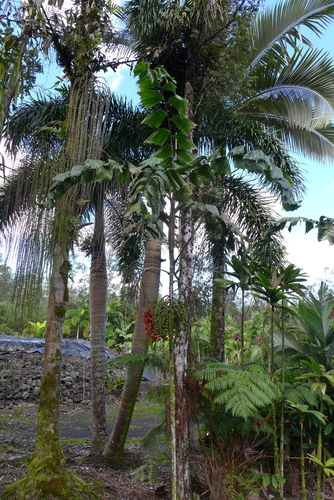
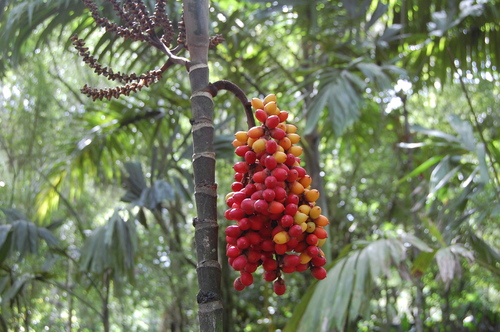
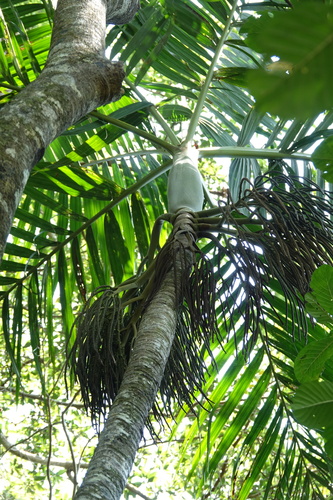
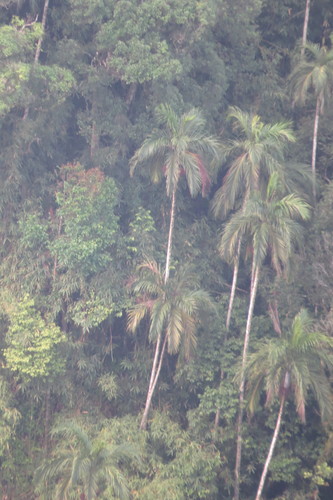
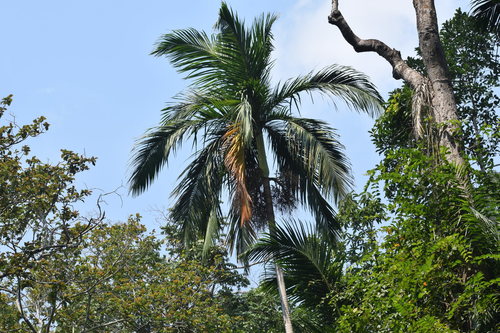
A solitary palm. The trunks are white and waxy. They grow 6 m high. They bulge above the mid point. It has distinct rings. The crown-shaft is dark green and 60-100 cm long. The leaf crown is open and forms a circle. The leaves are 2-2.6 m long. They are erect. They have brown scales on the lower surface. The flower stalk hangs down. The flower and fruit stalks are slender. The fruit are round and have 2-3 lobes. They are about 2 cm across and reddish.
Edible Uses
The sap is fermented to make a wine. The stem is cut down, the pith removed, especially from the swollen section of the stem, and the sap is squeezed out and then fermented. Harvesting this stem obviously means the death of the tree.
Traditional Uses
The sap removed from the stems is fermented into wine. This kills the tree.
This uses section is brief — help expand it
Known Hazards
Extracting sap for wine production kills the tree.
Distribution
A tropical plant. It grows in open savanna. It grows in low, dry calcareous hills.
Where It Grows
Central America, Dominican Republic, Haiti, West Indies,
Cultivation
Grows best in a sunny position. Prefers a moist, but well drained soil. Prefers a limestone based soil. A very slow growing plant,
Production
It is slow growing.
Notes
There are 4 Pseudophoenix species.
Also Known As
Cacheo de Oviedo
References (5)
- Haynes, J., & McLaughlin, J., 2000, Edible palms and Their Uses. University of Florida Fact sheet MCDE-00-50-1 p 12
- Henderson, A., Galeano, G and Bernal, R., 1995, Field Guide to the Palms of the Americas. Princeton. p 72
- Johnson, D.V., 1998, Tropical palms. Non-wood Forest products 10. FAO Rome. p 86
- Kermath, B. M., et al, 2014, Food Plants in the Americas: A survey of the domesticated, cultivated and wild plants used for Human food in North, Central and South America and the Caribbean. On line draft. p 720
- Riffle, R.L. & Craft, P., 2003, An Encyclopedia of Cultivated Palms. Timber Press. p 423