Euterpe catinga
Wallace
Catinga palm
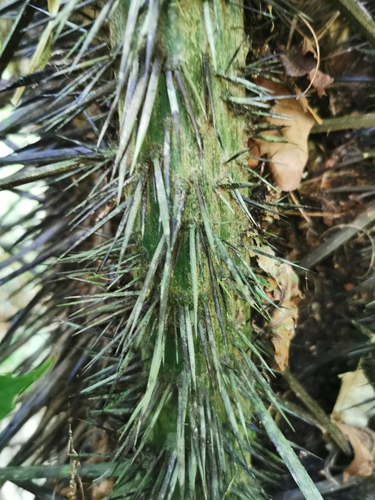
iNaturalist· cc-by-nc
(c) Santiago Mailhos, some rights reserved (CC BY-NC)
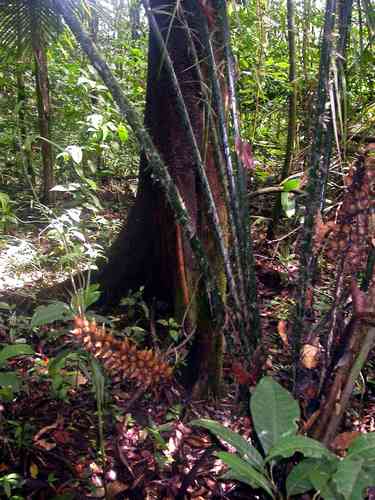
iNaturalist· cc-by-nc
(c) nelson_miranda, some rights reserved (CC BY-NC)
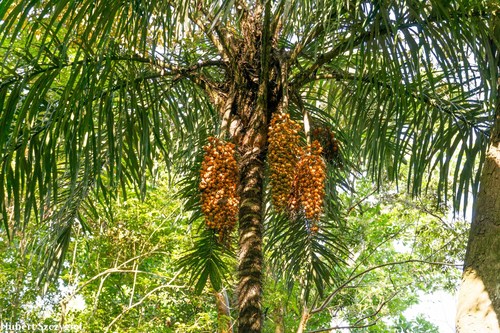
iNaturalist· cc-by-nc
(c) Santiago Mailhos, some rights reserved (CC BY-NC)
Summary
Source: WikipediaEuterpe catinga is a palm species in the genus Euterpe. It is found in forests of a dry, sandy soil and very peculiar vegetation, known as catinga forests or Campinarana in northern South America (Guyana, Venezuela, Colombia, Ecuador, Peru, Brazil). Two varieties are recognized: Euterpe catinga var. catinga - Venezuela, Colombia, Peru, northern Brazil Euterpe catinga var. roraimae (Dammer) A.J.Hend. & Galeano - Guyana, Venezuela, Ecuador, Peru, Brazil
Description
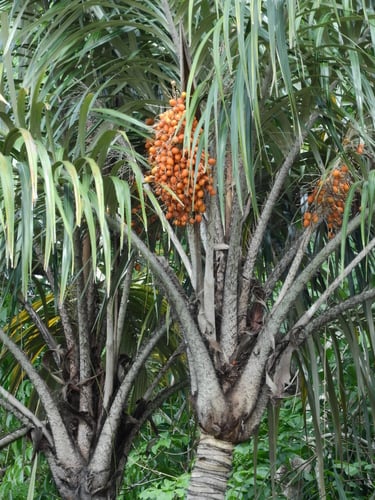
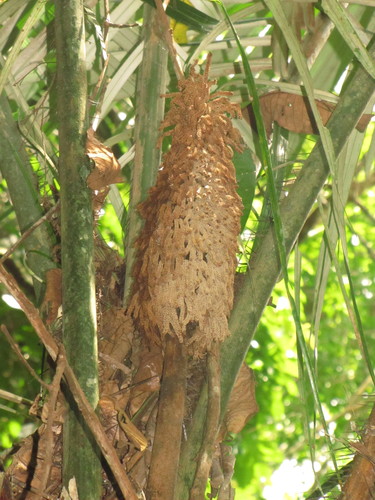
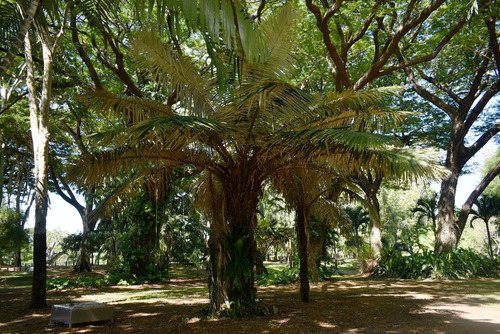
A palm. It can be in clusters or be solitary. It grows 4-16 m tall. The trunks are 3.5-15 cm across. They are grey and have a cone of roots at the base. There are 6-11 leaves. The crown-shaft is usually orange. It often has black fibres at the top. The leaf stalk has black scales. The leaflets spread horizontally. The flowering branches are 2.5-4 mm across. They are covered with light brown hairs. The fruit are round and purple-black. They are 0.8-1.3 cm across.
Edible Uses
Leaves - cooked. The apical bud, often known as a 'palm heart', is eaten as a vegetable. Eating this bud leads tot he death of the individual stem since it is unable to produce side shoots. However, in multi-stemmed species the plant is often able to replace this loss by producing more stems from below ground level. The fruits are used to make a drink.
Traditional Uses
Fruit pulp is used for drinks
This uses section is brief — help expand it
Distribution
A tropical plant. It grows in open forest on poorly drained acidic soils. It grows between 1,100-1,800 m altitude. In the Cairns Botanical Gardens.
Where It Grows
Amazon, Andes, Australia, Bolivia, Brazil, Colombia, Ecuador, Guyana, Peru, South America, Venezuela,
Other Uses
The leaves are used for thatching. The stems are used in construction.
Notes
There are between 7 and 18 Euterpe species.
Synonyms
Also Known As
Acaf de Catinga, Acaizinho, Asai de sabana, Asai paso, Guasi pequeno, Huasai de varillal, Manaca, Manaca banera
References (9)
- Grandtner, M. M. & Chevrette, J., 2013, Dictionary of Trees, Volume 2: South America: Nomenclature, Taxonomy and Ecology. Academic Press p 246
- Haynes, J., & McLaughlin, J., 2000, Edible palms and Their Uses. University of Florida Fact sheet MCDE-00-50-1 p 6
- Henderson, A., Galeano, G and Bernal, R., 1995, Field Guide to the Palms of the Americas. Princeton. p 122
- Johnson, D.V., 1998, Tropical palms. Non-wood Forest products 10. FAO Rome. p 86
- Kermath, B. M., et al, 2014, Food Plants in the Americas: A survey of the domesticated, cultivated and wild plants used for Human food in North, Central and South America and the Caribbean. On line draft. p 361
Show all 9 references Hide references
- Lopez-Diago, D. & Garcia, N., 2021, Wild edible fruits of Colombia. Biota ColomBiana 22 (2) p 31
- Marcia, M. J., et al, 2011, Palm Uses in Northwestern South America: A Quantitative Review. Bot. Rev. (2011) 77:462-570
- Roa, J. A. G. & Boada, D. S. G., 2018, Fundación para el Fortalecimiento de la Fruticultura y Plantas Alimenticias no Convencionales en Colombia.
- World Checklist of Useful Plant Species 2020. Royal Botanic Gardens, Kew