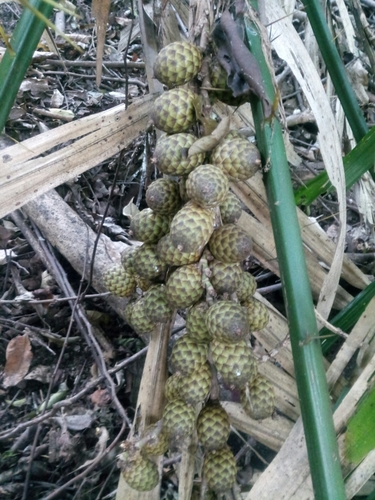
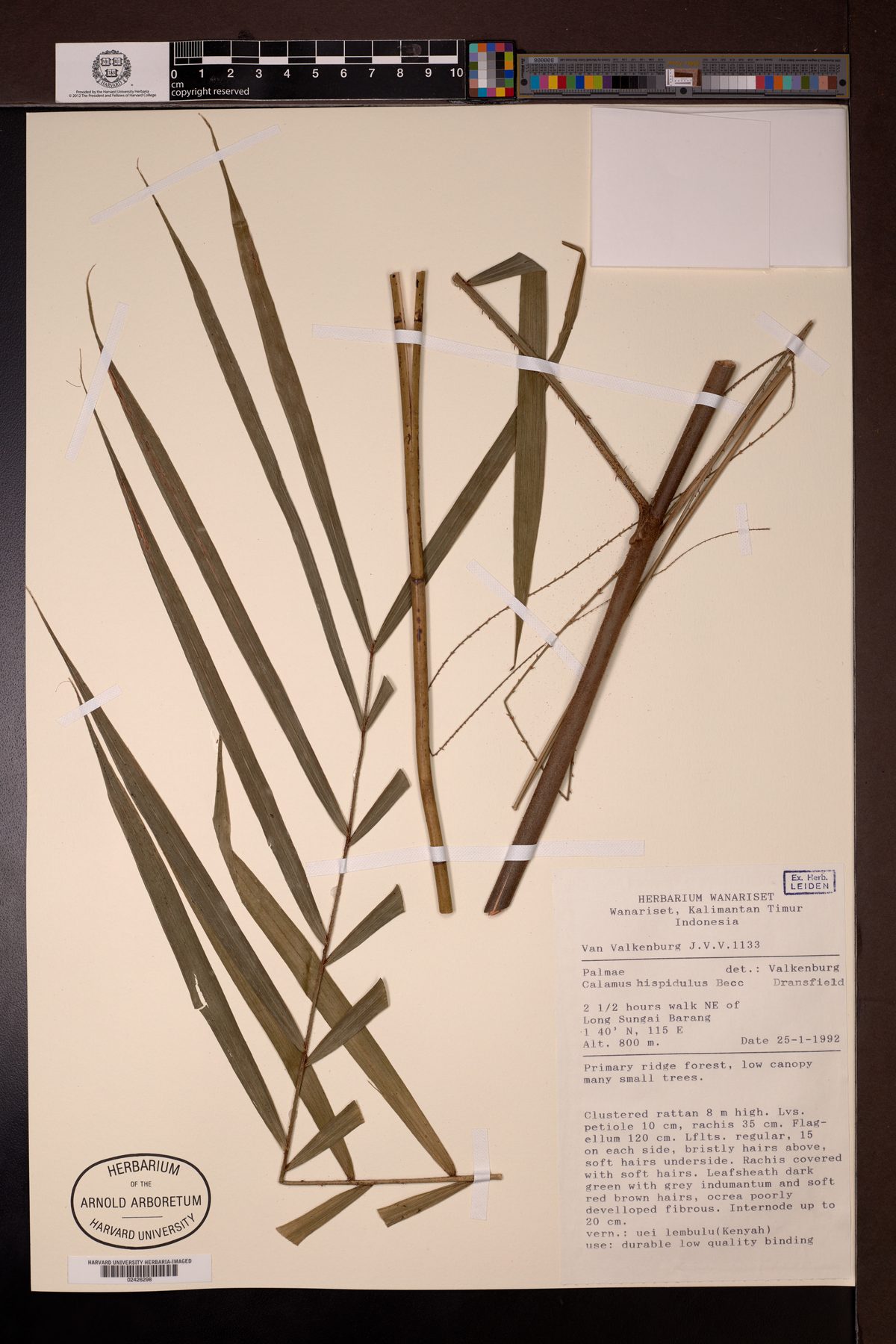
Astrocaryum murumuru
Mart.
Murumuru palm
iNaturalist· cc-by-nc
(c) Carlos G Velazco-Macias, some rights reserved (CC BY-NC), uploaded by Carlos G Velazco-Macias
iNaturalist· cc-by-nc-sa
(c) Rich Hoyer, some rights reserved (CC BY-NC-SA), uploaded by Rich Hoyer
iNaturalist· cc-by
(c) Jens-Christian Svenning, some rights reserved (CC BY), uploaded by Jens-Christian Svenning
Summary
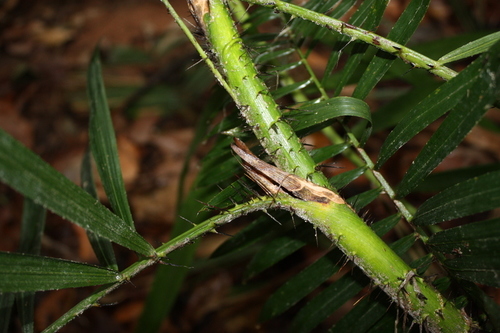
Source: WikipediaAstrocaryum murumuru (Portuguese common name: murumuru) is a palm native to Amazon rainforest vegetation in Brazil, which bears edible fruits. Murumuru butter, extracted from the seeds of the plant, may be used as a moisturizer. One remarkable feature of this palm is that it is covered with spines up to 30 cm (12 in) long. The murumuru palm tree grows in Brazil and around the Amazon and is one of the dominant trees in this region. It has a thick trunk and a shuttlecock-shaped, bushy crown. The nutritious, edible fruits are an important local food source and materials made from the tree, fruit, and seed kernels are commercially significant to the region. Hammocks are made from the tree's fibres. Murumuru butter is moisturizing (emollient). It is also film-forming and glossy. These qualities make it very protective. It contains vitamins and has a high content of oleic acid. The oil from the seeds is traditionally used to soften and protect hair. Murumuru butter is the white to yellowish fat obtained from the seeds of this palm.
Description
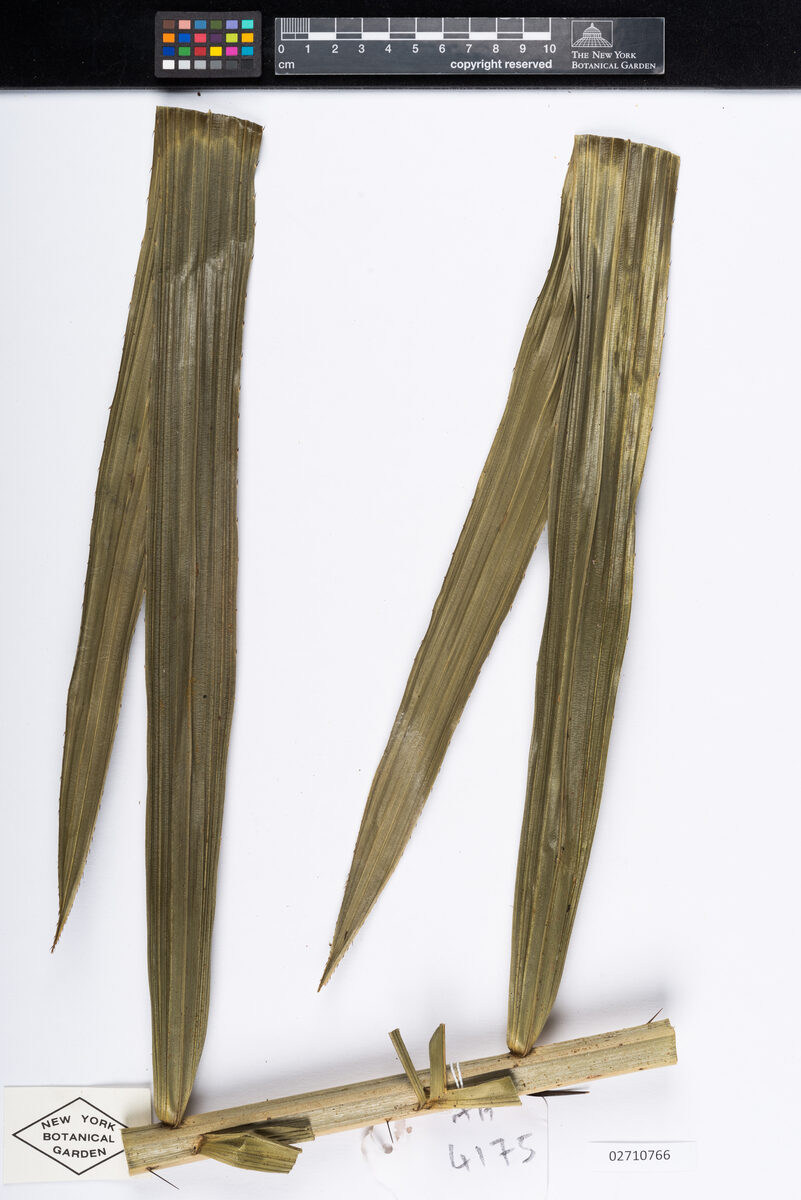
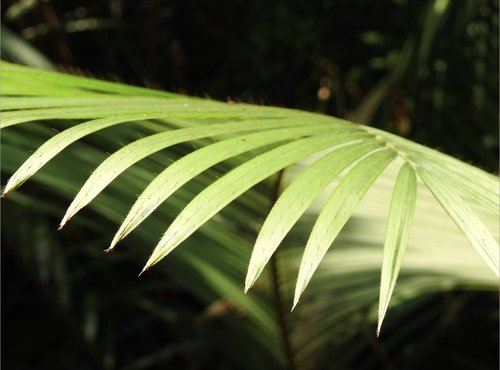
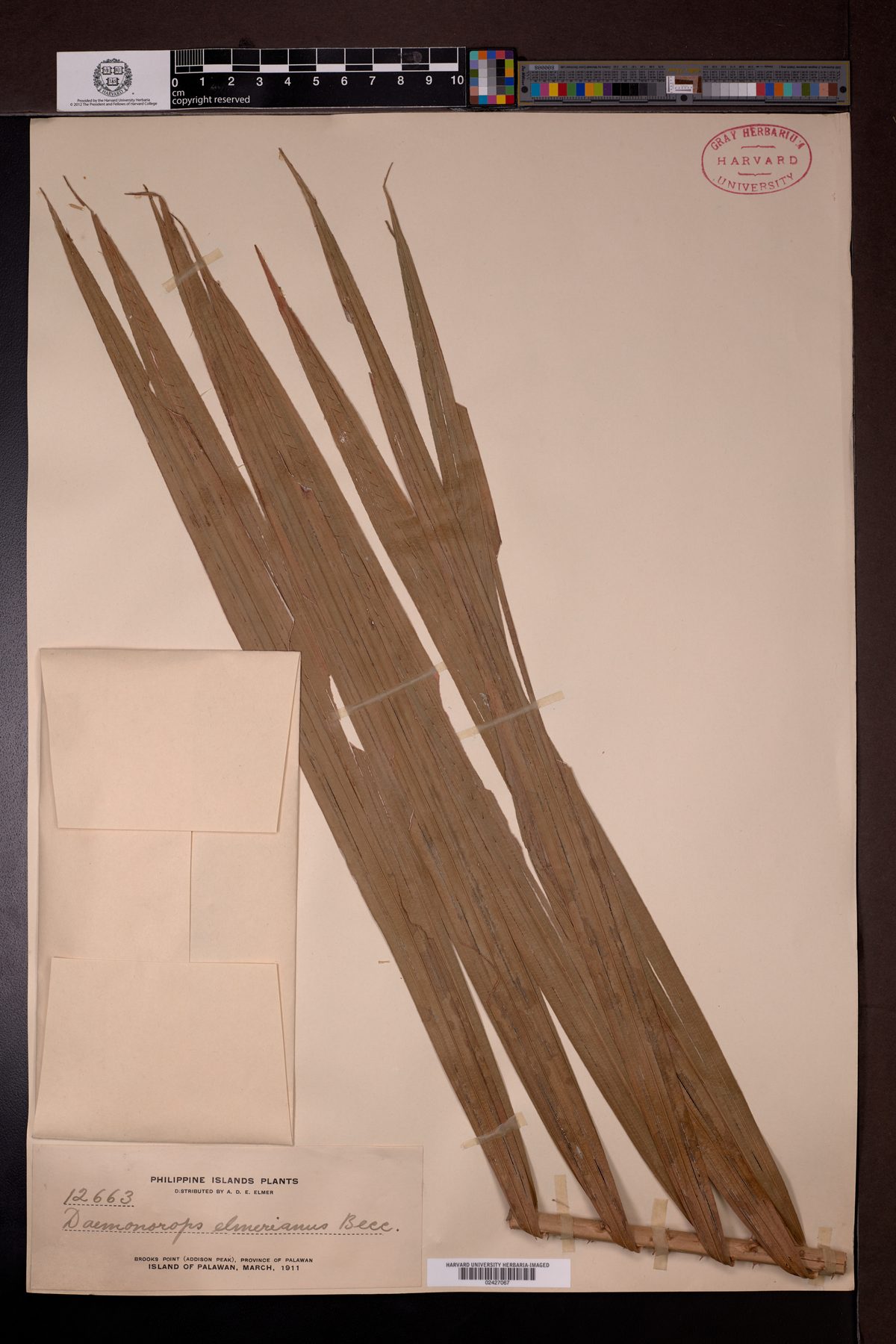
A spiny palm. It can be solitary or in clusters. The trunk can be short and underground or tall. It can be 1.5-15 m tall. The trunk can be 10-30 cm across. It has feather-like leaves. There are 38-133 leaflets on each side. The male and female flowers are separate on the same palm. The fruit are oval and 3.5-9 cm long by 2.5-4.5 cm wide. They have a brown covering. The fruit have a juicy flavour. There are several varieties.
Edible Uses
The fleshy fruit covering is eaten fresh for its juicy flavor. The seed kernels are pressed to yield oil. The cabbage (palm heart) and seeds are also edible portions.
Traditional Uses
The fleshy covering of the fruit is eaten. The seed kernels yield an oil.
This uses section is brief — help expand it
Medicinal Uses
The fleshy fruit is considered to be aromatic and aphrodisiac. A paste prepared from the fruit is used to treat sprains and fractures. (The fruit utilized for paste may actually be that of Astrocaryum sciophilum (Miquel) Pulle.)
Distribution
A tropical plant. It grows in lowland rainforest usually along the edges of rivers. They are often in areas which are regularly flooded. They grow at low altitudes but can be up to 900 m altitude in the Andes.
Where It Grows
Amazon, Asia, Bolivia, Brazil*, Colombia, Ecuador, Guiana, Indonesia, Peru, SE Asia, South America, Venezuela,
Cultivation
Plants are grown by seed. It can also be grown from suckers.
Other Uses
The kernel produces a very rich extract which is used by the beauty industry as an ingredient in shampoos, conditioners, and moisturizing skin care products. The oils extracted from the fruit and the seed are used as ingredients in commercial cosmetic preparations as emollients and skin conditioners. The powdered shell of the seeds is used as an ingredient in commercial cosmetic preparations as an abrasive. An extract of the flowers is used as an ingredient in commercial cosmetic preparations as a skin consitioner. The hard endocarp of various Amazonian species is commonly used to make beads and ornaments for necklaces The stems of new leaves are used for braiding hats and making baskets. Fibres from the leaves and petioles have been suggested as an alternative source for producing paper.
Production
The fleshy layer around the seed contains 40% fat.
Other Information
The fruit are popular.
Notes
There are about 40-50 Astrocaryum species.
Synonyms
Also Known As
Chonta, Chuchana, Huicungo, Palm murumuru
References (25)
- Balick, M.J. and Beck, H.T., (Ed.), 1990, Useful palms of the World. A Synoptic Bibliography. Colombia p 63, 90, 134, 389, 548, 561, 157 (Also as Astrocaryum chonta)
- Bircher, A. G. & Bircher, W. H., 2000, Encyclopedia of Fruit Trees and Edible Flowering Plants in Egypt and the Subtropics. AUC Press. p 46
- Brouk, B., 1975, Plants Consumed by Man. Academic Press, London. p 237
- Daly, D. C., An Index of Common Names of Plants in Acre, Brazil. New York Botanical Garden Universidade Federal do Acre.
- DeWalt, S. J., et al, 1999, Ethnobotany of the Tacana: Quantitative Inventories of Two Permanent Plots of Northwestern Bolivia. Economic Botany Vol. 53. No. 3. pp. 237-260 (As Astrocaryum granatum and Astrocaryum murmuru var. murumuru)
Show all 25 references Hide references
- Etkin, N.L. (Ed.), 1994, Eating on the Wild Side, Univ. of Arizona. p 121, 136
- Facciola, S., 1998, Cornucopia 2: a Source Book of Edible Plants. Kampong Publications, p 26
- Grandtner, M. M. & Chevrette, J., 2013, Dictionary of Trees, Volume 2: South America: Nomenclature, Taxonomy and Ecology. Academic Press p 50
- Haynes, J., & McLaughlin, J., 2000, Edible palms and Their Uses. University of Florida Fact sheet MCDE-00-50-1 p 2
- Hedrick, U.P., 1919, (Ed.), Sturtevant's edible plants of the world. p 84
- Henderson, A., Galeano, G and Bernal, R., 1995, Field Guide to the Palms of the Americas. Princeton. p 206 (Also as Astrocaryum gratum), 206
- Janick, J. & Paul, R. E. (Eds.), 2008, The Encyclopedia of Fruit & Nuts. CABI p 89
- Johnson, D.V., 1998, Tropical palms. Non-wood Forest products 10. FAO Rome. p 90
- Jones, D.L., 1994, Palms throughout the World. Smithtonian Institution, Washington. p 55, 57
- Kermath, B. M., et al, 2014, Food Plants in the Americas: A survey of the domesticated, cultivated and wild plants used for Human food in North, Central and South America and the Caribbean. On line draft. p 100
- Kew Plants of the World onLine
- Lorenzi, H., Bacher, L., Lacerda, M. & Sartori, S., 2006, Brazilian Fruits & Cultivated Exotics. Sao Paulo, Instituto Plantarum de Estuados da Flora Ltda. p 66
- Paz, F. S., et al, 2021, Edible Fruit Plant Species in the Amazon Forest Rely Mostly on Bees and Beetles as Pollinators. Journal of Economic Entomology, XX(XX), 2021, 1–13
- Philips, O., 1992, The potential for harvesting fruits in tropical rainforests: new data from Amazonian Peru. Biodiversity and Conservation 2, 18-38
- Purseglove, J.W., 1972, Tropical Crops. Monocotyledons. Longmans p 419
- Roa, J. A. G. & Boada, D. S. G., 2018, Fundación para el Fortalecimiento de la Fruticultura y Plantas Alimenticias no Convencionales en Colombia.
- Smith, N., et al, 2007, Amazon River Fruits. Flavors for Conservation. Missouri Botanical Gardens Press. p 38
- Sukarya, D. G., (Ed.) 2013, 3,500 Plant Species of the Botanic Gardens of Indonesia. LIPI p 756
- Torre, de la L., et al, 2008, Enciclopedia de las Plantas Útiles del Ecuador. Herbario QCA. Pontificia Universidad Católica del Ecuador. p 194
- Wickens, G.E., 1995, Edible Nuts. FAO Non-wood forest products. FAO, Rome. p 163