Eugeissona insignis
Beccari
gbif· cc-by
Royal Botanic Gardens, Kew
gbif· cc-by
Royal Botanic Gardens, Kew
gbif· cc-by
Royal Botanic Gardens, Kew
Description
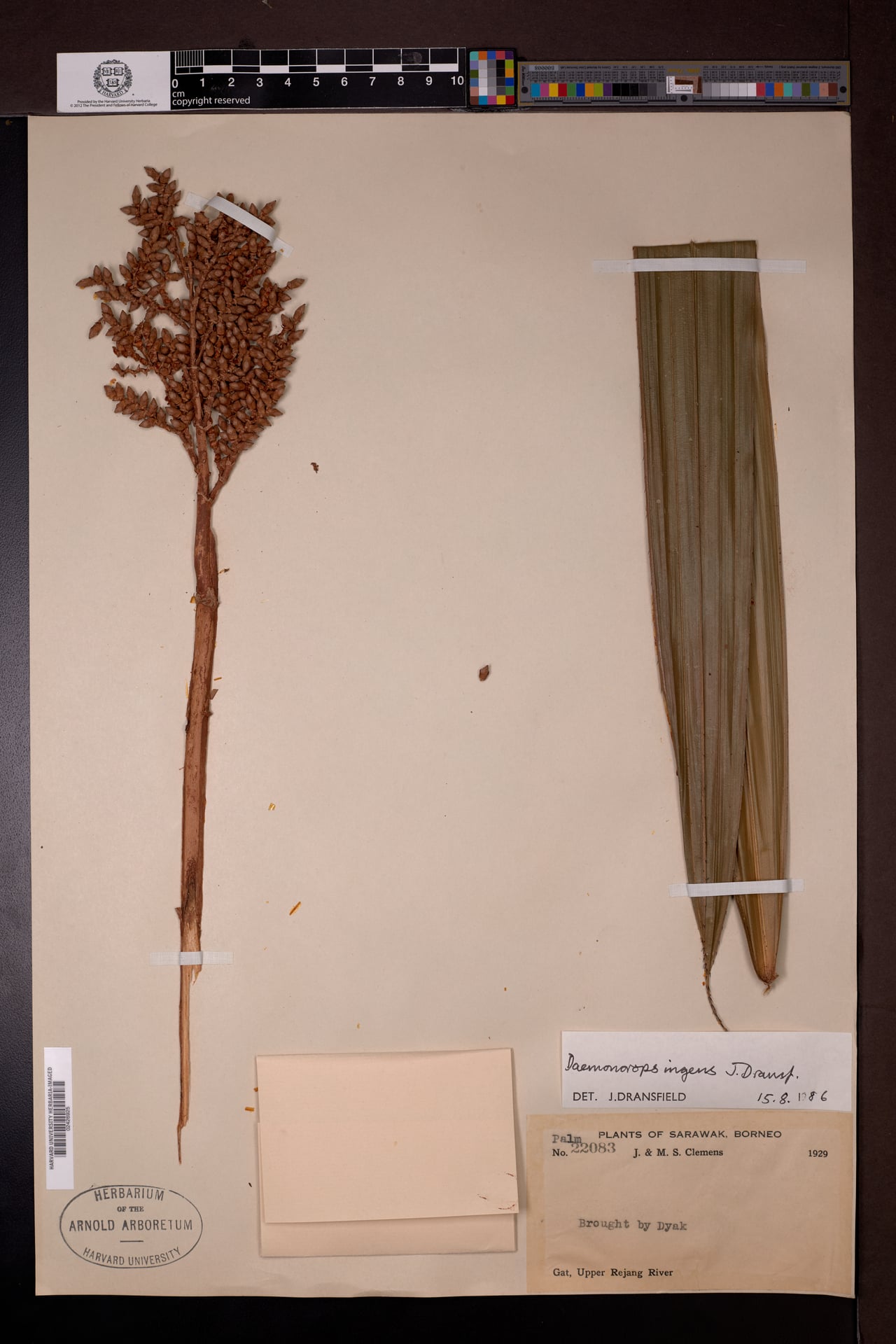
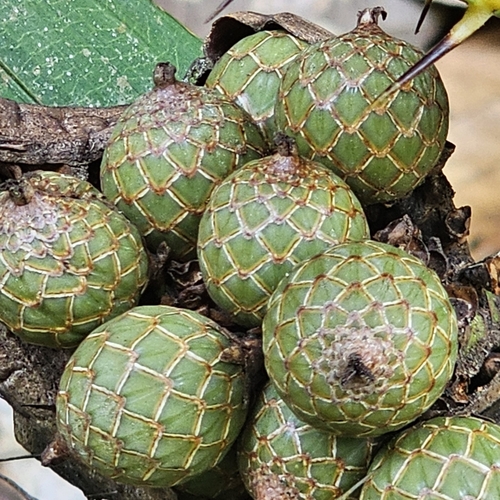
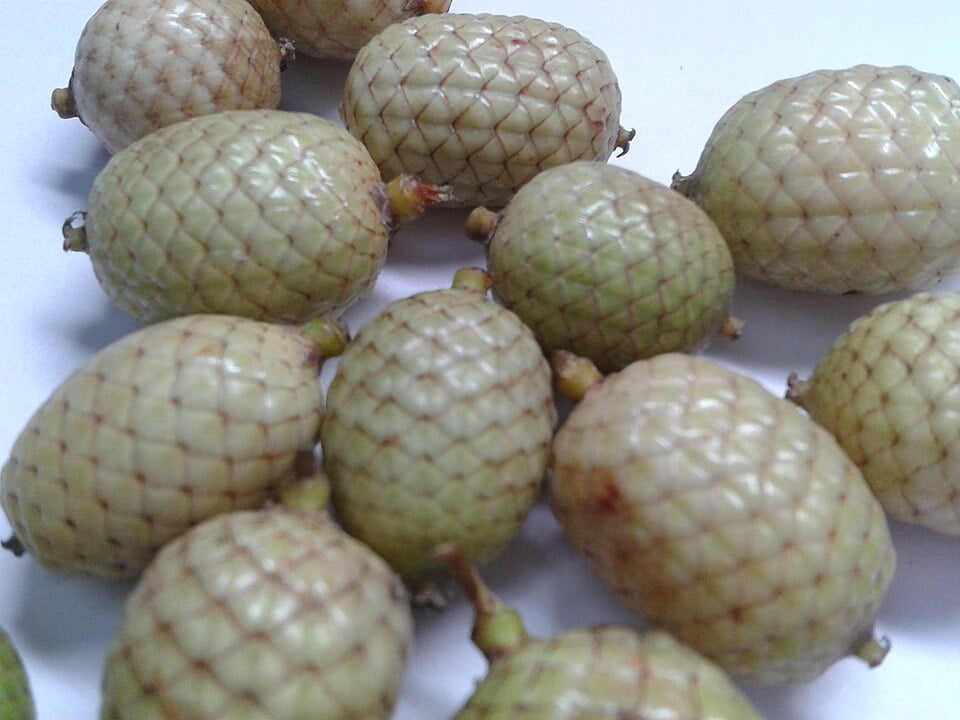
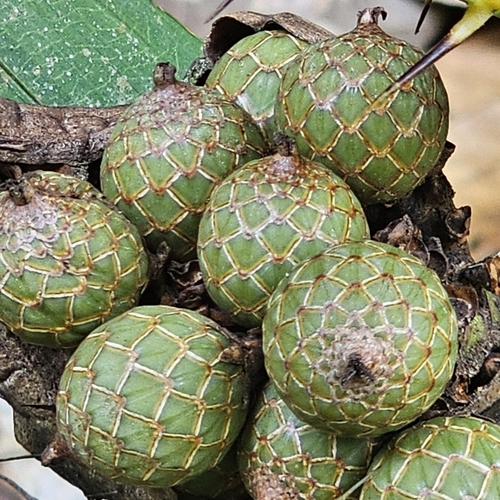
A palm. It forms clusters. It has stilt roots 1-3 m long. The stem is 2-5 m tall. The leaves are large and point upwards but curve over at the tips. They are 6.6 m long. They are spiny and can be 13 m long. The leaflets are regularly spaced and 1 m long and hang down. The flowering shoot can be 6-10 m tall. The flowers are 8-9 cm long. The fruit are 10 cm long and 6 cm wide.
Edible Uses
The young fruit and palm heart are edible, and starch can be extracted from the trunk.
Traditional Uses
The young fruit are edible. The palm heart is edible. Starch can be extracted from the trunk.
This uses section is brief — help expand it
Distribution
A tropical plant. It grows on steep slopes and cliffs in coastal forests near sea level. It can grow up to 700 m altitude.
Where It Grows
Asia, Brunei, Indonesia, Malaysia, Sarawak, SE Asia,
Notes
There are about 6 Eugeissona species.
Nutrition
| Part | Moisture | kJ | kcal | Protein | Vit A | Vit C | Iron | Zinc |
|---|---|---|---|---|---|---|---|---|
| Shoots | 91.9 | 125 | 30 | 0.9 | — | 0.1 | 5.1 | 15.8 |
Also Known As
Jato, Kajatao, Pantu kejatau, Pijatau
References (7)
- Balick, M.J. and Beck, H.T., (Ed.), 1990, Useful palms of the World. A Synoptic Bibliography. Colombia p 350, 617,
- Davis, S.D., Heywood, V.H., & Hamilton, A.C. (eds), 1994, Centres of plant Diversity. WWF. Vol 1 or 2. p 359
- Haynes, J., & McLaughlin, J., 2000, Edible palms and Their Uses. University of Florida Fact sheet MCDE-00-50-1 p 6
- Hoe, V. B. & Siong, K. H., 1999, The nutritional value of indigenous fruit and vegetables in Sarawak. Asia Pacific J. Clin. Nutr. 8(1):24-31
- Johnson, D.V., 1998, Tropical palms. Non-wood Forest products 10. FAO Rome. p 18
Show all 7 references Hide references
- PROSEA handbook Volume 9 Plants yielding non-seed carbohydrates. p 175
- Riffle, R.L. & Craft, P., 2003, An Encyclopedia of Cultivated Palms. Timber Press. p 336