Veitchia arecina
Becc.
Arecina palm, Montgomery palm
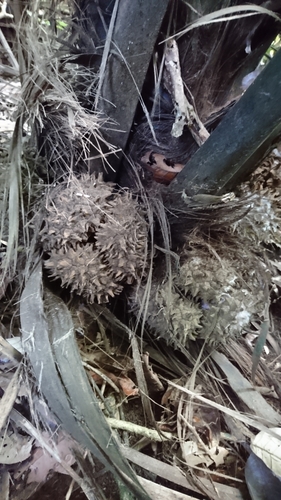
iNaturalist· cc-by
(c) Luis Diego Garcia, some rights reserved (CC BY)
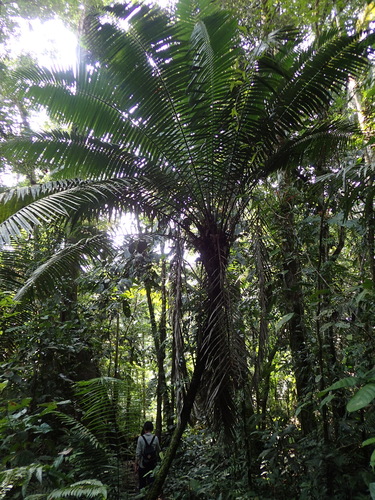
iNaturalist· cc-by-nc
(c) Geovane Siqueira, some rights reserved (CC BY-NC)
iNaturalist· cc-by-nc
(c) Geovane Siqueira, some rights reserved (CC BY-NC)
Summary
Source: WikipediaVeitchia arecina, commonly known as Montgomery palm, is a species of flowering plant in the family Arecaceae. It grows up to about 10 m (33 ft) tall and has white or yellow blooms. It is found only in Vanuatu. It is threatened by habitat loss. It is being offered as a landscape design suggestion in areas of Florida where the annual low temperatures do not exclude it as a choice.
Description
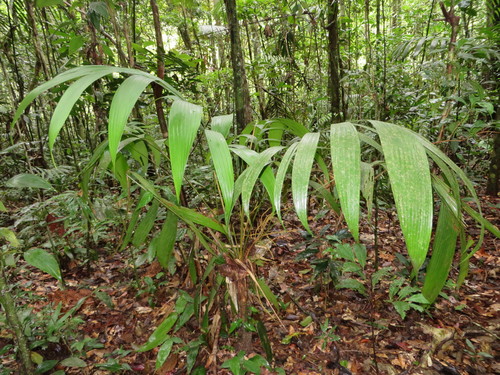
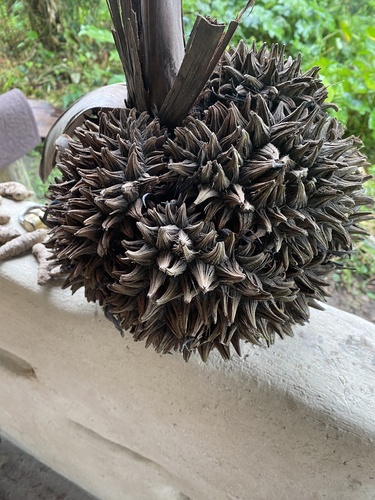
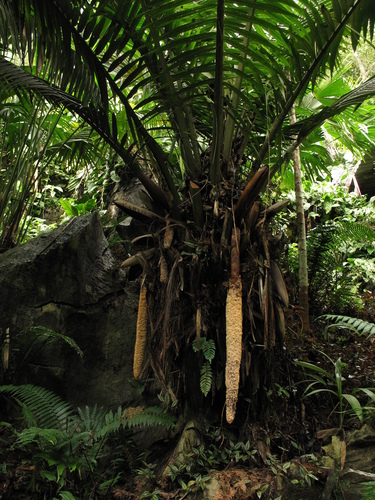
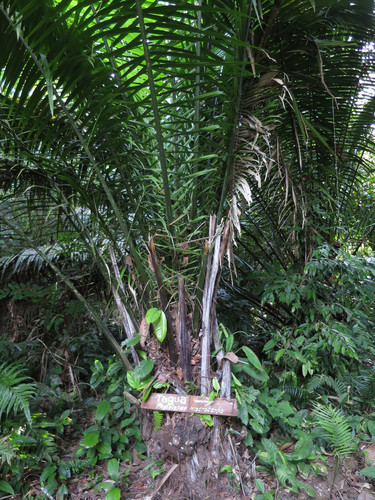
A tall slender palm. It grows about 12-30 m high. It spreads 6 m wide. The trunk is 20 cm across and enlarged near the base. The crown-shaft is green. The fronds are stiff and are horizontal or arch over slightly. The leaves are 2-3 m long. The leaflets spread widely. The end of the tip ends at an angle. The flowering stalk is stout and yellow. The flowers are green. The fruit are bright red and oblong. They are 4.5 cm long. They are produced below the crown-shaft.
Edible Uses
The palm hearts (also called cabbage) are eaten.
Traditional Uses
The palm hearts are eaten.
This uses section is brief — help expand it
Distribution
A tropical plant. It grows in moist rainforests and coastal forests. It can stand wind including salt laden winds. It suits coastal locations. It needs well drained soils. It suits plant hardiness zones 10-12. In Townsville palmetum.
Where It Grows
Asia, Australia, Fiji, Hawaii, Indonesia, North America, Pacific, SE Asia, Tonga, Vanuatu*, USA (Florida),
Cultivation
Plant can be grown from seeds.
Notes
There are 8 Veitchia species. They are palms in the Pacific.
Synonyms
Also Known As
Palem arecina, Palem montgomery, Palmtri
References (13)
- Blomberry, A. & Rodd, T., 1982, Palms. An informative practical guide. Angus & Robertson. p 176
- Cundall, P., (ed.), 2004, Gardening Australia: flora: the gardener's bible. ABC Books. p 1457
- Dowe, J.L., 1989, Palms of the South-West Pacific. Palm and Cycad Society of Australia. p 62
- Haynes, J., & McLaughlin, J., 2000, Edible palms and Their Uses. University of Florida Fact sheet MCDE-00-50-1 p 13
- Johnson, D.V., 1998, Tropical palms. Non-wood Forest products 10. FAO Rome. p 79
Show all 13 references Hide references
- Jones, D.L., 1994, Palms throughout the World. Smithtonian Institution, Washington. p 373
- Lebot, V. & Sam, C., Green desert or ‘all you can eat’? How diverse and edible was the flora of Vanuatu before human introductions?. Terra australis 52 p 409 (As Veitchia macdanielsii)
- Llamas, K.A., 2003, Tropical Flowering Plants. Timber Press. p 121
- Marinelli, J. (Ed), 2004, Plant. DK. p 379
- Palme Nuovo Caledonia 10. 1920 (Webbia 5:78. 1921)
- Staples, G.W. and Herbst, D.R., 2005, A tropical Garden Flora. Bishop Museum Press, Honolulu, Hawaii. p 629
- Sukarya, D. G., (Ed.) 2013, 3,500 Plant Species of the Botanic Gardens of Indonesia. LIPI p 821
- Townsville palmetum sign. (As Veitchia montgomeryana)