Wolffia arrhiza
(L.) Horkel ex Wimm.
Least duckweed, Spotless Watermeal, Rootless duckweed
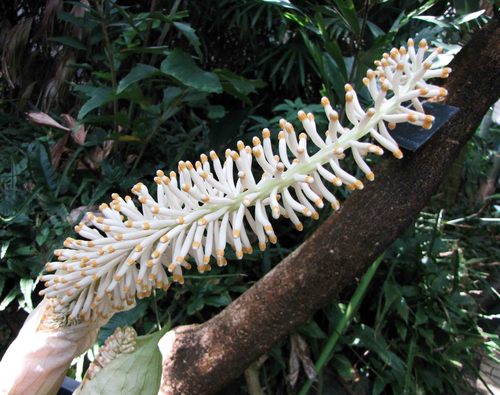
iNaturalist· cc-by-sa
(c) Christian Fischer, some rights reserved (CC BY-SA)
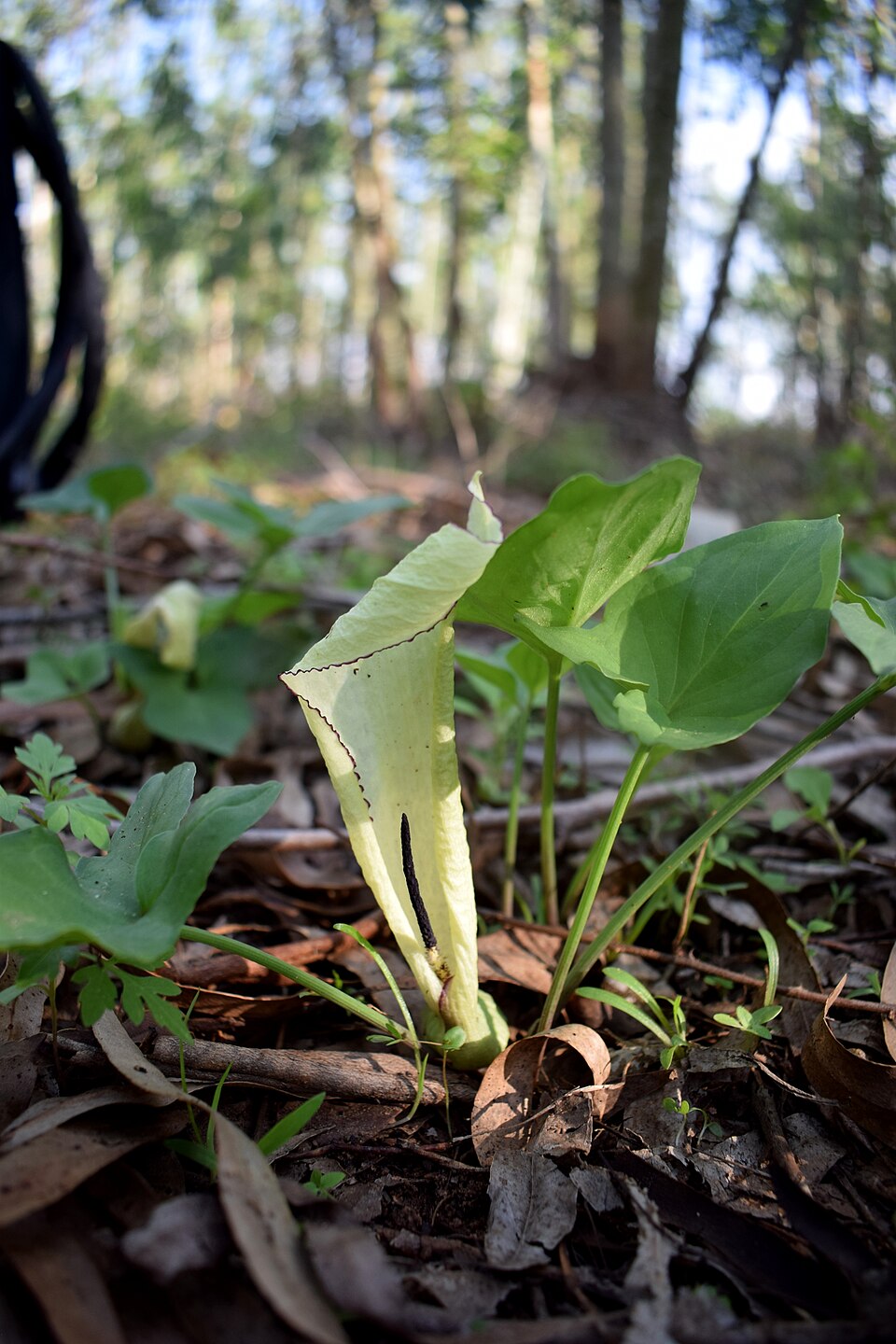
iNaturalist· cc-by-nc
(c) Susan J. Hewitt, some rights reserved (CC BY-NC), uploaded by Susan J. Hewitt
iNaturalist· cc-by-nc
(c) Susan J. Hewitt, some rights reserved (CC BY-NC), uploaded by Susan J. Hewitt
Summary
Source: WikipediaWolffia arrhiza, commonly known as rootless duckweed or spotless watermeal, is a species of flowering plant in the family Araceae, which includes other water-loving plants such as Lemna and Pistia. It is the smallest vascular plant on Earth. Native to Europe, Africa, and parts of Asia, it has also become naturalised in various other regions around the globe.
Description
A water plant. It is like a greenish tinge on the water surface. The vegetative part is less than 1 mm long. It is inflated. It is rounded and with 1 side pocket. It does not have roots. The flower breaks through the tip part of the vegetative body. It does not have a spathe or sheath like structure around it. This is made up of one female flower and one male flower.
Edible Uses
The leaves are edible cooked and have an excellent flavour described as somewhat like sweet cabbage. They are highly nutritious, containing approximately 20% protein, 44% carbohydrate, and 5% fat, and are rich in vitamins A, B2, B6, C, and nicotinic acid.
Traditional Uses
It is used for soup.
This uses section is brief — help expand it
Medicinal Uses
None known.
Distribution
A tropical and temperate plant. It grows on the water surface. It can float in rivers. It grows in wetlands.
Where It Grows
Africa, Asia, Botswana, Brazil, Canada, China, Europe, Guinea, Guinée, Guinea-Bissau, India, Indochina, Korea, Laos, Myanmar, North America, Pakistan, SE Asia, South America, Taiwan, Thailand, USA, West Africa,
Cultivation
They mostly spread by vegetative means. Daughter plants bud from adult plants. This takes about 3 days.
Propagation
No specific propagation information is available for this species, but as it spreads rapidly by division it requires no additional assistance once established in a pond.
Other Uses
None known.
Production
Plants are harvested at 4 day intervales from ponds enriched with animal manure.
Other Information
It is an important food in Myanmar and Thailand.
Notes
There are 11 Wolffia species. Wolffia are very small floating plants. Dried plants are 20% protein and 40% carbohydrate. Also in the family Lemnaceae.
Synonyms
Also Known As
Kaipwam, Thali
References (9)
- Fl. Schles. ed. 3, 140. 1857
- Flora of Pakistan. www.eFloras.org
- Plants for a Future database, The Field, Penpol, Lostwithiel, Cornwall, PL22 0NG, UK. http://www.scs.leeds.ac.uk/pfaf/
- Romanowski, N., 2007, Edible Water Gardens. Hyland House. p 45
- Sainty, G.R. & Jacobs, S.W.L., 1981, Waterplants of New South Wales. Water Resources Commission. NSW p 273
Show all 9 references Hide references
- Sainty, G., and Jacobs, S., 2003, Waterplants in Australia. A Field Guide. Sainty Books. p 8
- Slocum, P.D. & Robinson, P., 1999, Water Gardening. Water Lilies and Lotuses. Timber Press. p 68
- Srichaiwong, P., et al, 2014, A Study of the Biodiversity of Natural Food Production to Support Community Upstream of Chi Basin, Thailand. Asian Social Science 10 (2):
- Zhang, Y., et al, 2014, Diversity of wetland plants used traditionally in China: a literature review. Journal of Ethnobiology and Ethnomedicine. 10:72