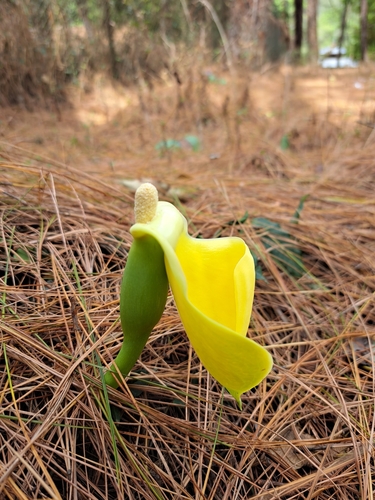
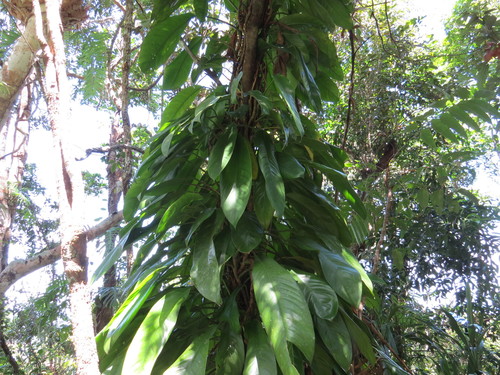
Typhonium bulbiferum
Dalzell in Hook
Rantiri
iNaturalist· cc-by-nc
(c) Rock Outcrops Network VBR test, some rights reserved (CC BY-NC), uploaded by Rock Outcrops Network VBR test
wikimedia· cc-by-sa
Wikimedia Commons - Enzo^
Description
A small herb. The corms are 1 cm across. There are 2 or 3 leaves. They are 4-6 cm long y 2-4 cm wide. They are oval to triangle shaped. The leaf stalk is 10 cm long. It is slender and has a bulbil at the tip. The spathe around the flower is pale purple. The male and female flowers are along a spadix or stalk. The fruit are oval berries.
Edible Uses
The tubers and leaves are eaten after boiling. The tubers, leaves, and roots are edible portions.
Traditional Uses
The tubers and leaves are eaten after boiling.
This uses section is brief — help expand it
Medicinal Uses
Used as a famine food.
Distribution
It is a tropical plant. It grows in grasslands and wet places.
Where It Grows
Asia, India,
Other Information
Famine food
Notes
There are about 50 Typhonium species.
References (4)
- Ambasta, S.P. (Ed.), 2000, The Useful Plants of India. CSIR India. p 659
- Lim, T. K., 2015, Edible Medicinal and Non Medicinal Plants. Volume 9, Modified Stems, Roots, Bulbs. Springer p 84
- Singh, H.B., Arora R.K.,1978, Wild edible Plants of India. Indian Council of Agricultural Research, New Delhi. p 40
- WATT