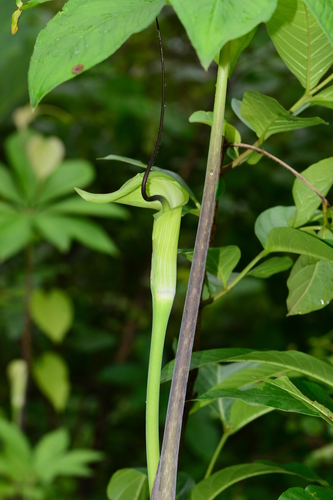
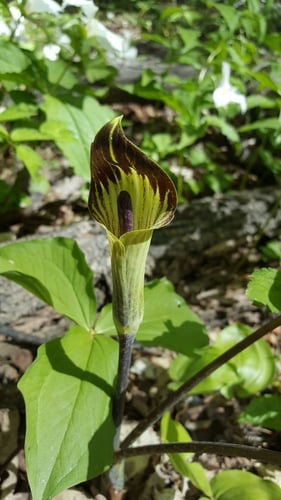
Typhonium liliifolium
F. Muell. ex Schott
Alamard
wikimedia· cc-by
Alvesgaspar (via Wikimedia Commons)
Summary
Source: WikipediaTyphonium liliifolium is a species of plant in the arum family that is endemic to Australia.
Description
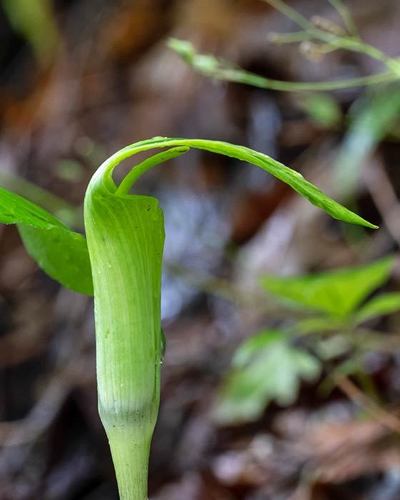
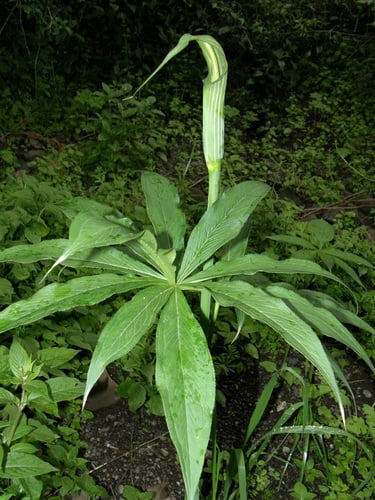
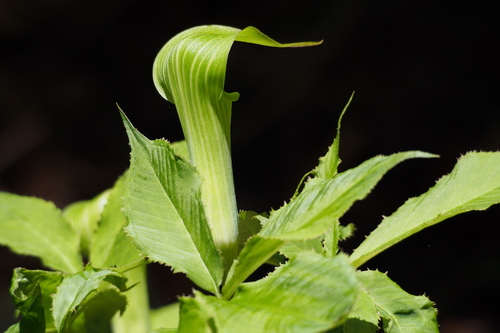
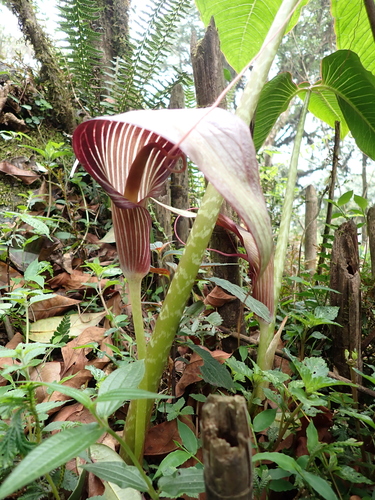
A herb that grows in clumps. It develops corms. It keeps growing from year to year. The leaves are like straps. The flowers are purple and red.
This description is brief — help expand it
Edible Uses
The roots and corms are edible after being crushed and cooked with three changes of water to remove oxalates.
Traditional Uses
The tuber needs to be crushed and then cooked with 3 changes of water to remove oxalates.
This uses section is brief — help expand it
Known Hazards
Contains oxalates that must be removed through cooking with multiple water changes before consumption.
Distribution
It is a tropical plant. It grows on loam soils.
Where It Grows
Australia*,
Notes
There are about 50 Typhonium species.
References (7)
- Checklist of NT Vascular Plant Species. January 2003.
- Crawford, I. M., 1982, Traditional Aboriginal Plant Resources in the Kalumburu Area: Aspects in Ethno-economics. Records of the Western Australian Museum Supplement No. 15
- Paczkowska, G. & Chapman, A.R., 2000, The Western Australian Flora. A Descriptive Calatogue. Western Australian Herbarium. p 36
- RIRDC, 2010, New Root Vegetables for the Native Food Industry, Australian Government RIRDC Publication 9/161
- Smith, N. M., 1991, Ethnobotanical Field Notes from the Northern Territory, Australia, J. Adelaide Bot. Gard. 14(1): 1-65
Show all 7 references Hide references
- Smith, Nicholas et al. 1993, Ngarinyman Ethnobotany: Aboriginal Plant Use from the Victoria River Area Northern Australia. Northern Territory Botanical Bulletin No 16. Parks and Wildlife Commission of the Northern Territory. p 47.
- Wheeler, J.R.(ed.), 1992, Flora of the Kimberley Region. CALM, Western Australian Herbarium, p