Vitis rotundifolia
Michaux
Muscadine grape
iNaturalist· cc-by-nc-sa
(c) Mary Keim, some rights reserved (CC BY-NC-SA)
iNaturalist· cc-by-nc
(c) Dakota Parish, some rights reserved (CC BY-NC)
iNaturalist· cc-by-nc
(c) Dakota Parish, some rights reserved (CC BY-NC)
Summary
Source: WikipediaVitis rotundifolia, or muscadine, is a grapevine species native to the southeastern and south-central United States. The growth range extends from Florida to New Jersey coast, and west to eastern Texas and Oklahoma. It has been extensively cultivated since the 16th century. The plants are well-adapted to their native warm and humid climate; they need fewer chilling hours than better known varieties, and thrive in summer heat. Muscadine berries may be bronze or dark purple or black when ripe. Wild varieties may stay green through maturity. Muscadines are typically used in making artisan wines, juice, hull pie and jelly. They are rich sources of polyphenols. In a natural setting, muscadine provides wildlife habitat as shelter, browse, and food for many birds and animals. It is also a larval host for the Nessus Sphinx Moth (Amphion floridensis) and the Mournful Sphinx Moth (Enyo lugubris).
Description
A vigorous deciduous vine. It can grow to 30 m long. They have a tight non shedding bark. The shoots are warty and the tendrils are unbranched. The leaves have slight lobes. The leaves are 6-12 cm long with toothed edges. The leaves are dark green on top and greenish yellow underneath. The leaves are glossy on both surfaces. Male and female flowers occur on separate plants. The flowers are small and green. Fruit occur in small loose clusters of 3-40 grapes. The fruit are round and 2-4 cm across and with a tough skin. These contain up to 5 hard oblong seeds. The fruit can range from green to bronze to red or purple. There are several different cultivated varieties.
Edible Uses
The fruit is thick-skinned with a pleasant musky flavour, enjoyable fresh and excellent in jellies and pies. It grows up to 25mm in diameter and is produced in small bunches, and can also be dried for winter use. Young leaves are cooked, often wrapped around other foods and baked to lend a pleasant flavour. Young tendrils can be eaten raw or cooked.
Traditional Uses
Fruit can be eaten fresh but are also used for jams, jellies, sauces, syrups and juices. They can be used for wine.
This uses section is brief — help expand it
Medicinal Uses
None known.
Distribution
They suit warm humid conditions. It cannot tolerate heavy frost. It should not be grown where winter temperatures regularly go below -4°C. They need full sunlight with good air flow. They can grow on a range of soils but do best on well drained sandy soils with a pH of 5.5 to 6.5. They will not tolerate wet ground. Plants are shallow rooted. It suits hardiness zones 5-9.
Where It Grows
Australia, Brazil, Cuba, Guam, Hawaii, Mexico, North America, Pacific, South America, USA*, West Indies,
Cultivation
Plants are normally propagated by layering as cuttings root with difficulty. In mid summer canes of the current seasons growth are bent down and covered with earth. When these have developed roots they can be cut from the parent. Annual pruning must be severe to keep new fruiting wood coming. The basic framework is for a trunk, permanent arms then fruiting spurs. Current seasons fruiting shoots need to be on last year's growth. Shoots from older wood are normally sterile.
Propagation
Seed is best sown in a cold frame as soon as it is ripe. Six weeks of cold stratification improves germination, so stored seed should also be sown in a cold frame as soon as it is obtained. Germination usually occurs in the first spring, but may take another 12 months. Prick out seedlings into individual pots once large enough to handle, grow on in a cold frame through their first winter, then plant out in early summer. Cuttings of mature wood from the current season's growth can be taken in December or January and rooted in a frame. These can be 15–30cm long, or short single-bud sections around 5cm long. For the shorter sections, remove a thin strip of bark about 3cm long from the lower half of one side to encourage callusing and root formation — these smaller cuttings need a more sheltered environment than the longer ones. Layering is also an option.
Other Uses
Grapevines can serve as ground cover to prevent soil erosion and support biodiversity, providing habitat for beneficial insects and wildlife. The plant is also suited to arbor plantings. A yellow dye is obtained from the fresh or dried leaves. The flowers produce nectar attractive to bees and other pollinators. The fruit is consumed by birds, mammals and insects, and the foliage and leaf litter offer shelter for various invertebrates.
Production
Fruit on a bunch normally ripen at separate times so need to be picked individually. Ripe fruit fall so can be caught with a cloth.
Other Information
It is a cultivated food plant.
Notes
There are 60 to 70 species of Vitis.
Dangerous Lookalikes
This plant can be confused with the following toxic species. Always verify identification carefully before consuming any wild plant.
Canadian Moonseed
Menispermum canadense
Cbaile19
Muscadine grape
Vitis rotundifolia
(c) Mary Keim, some rights reserved (CC BY-NC-SA)
Canadian Moonseed: No tendrils, single crescent/moon-shaped seed, leaf stem attaches to underside of leaf.
Muscadine grape: Vine with tendrils, round seeds, leaf stem at edge of leaf, bark that peels.
Synonyms
Also Known As
Bullace grape, Scuppernong, Southern fox grape, Uva muscadina
References (21)
- Crandall, C & Crandall, B., 1996, Flowering Fruiting and Foliage vines. Sterling. p 94
- Cundall, P., (ed.), 2004, Gardening Australia: flora: the gardener's bible. ABC Books. p 1478
- Facciola, S., 1998, Cornucopia 2: a Source Book of Edible Plants. Kampong Publications, p 246
- Fl. bor.-amer. 2:231. 1903
- Flowerdew, B., 2000, Complete Fruit Book. Kyle Cathie Ltd., London. p 92
Show all 21 references Hide references
- Hedrick, U.P., 1919, (Ed.), Sturtevant's edible plants of the world. p 685
- Heywood, V.H., Brummitt, R.K., Culham, A., and Seberg, O. 2007, Flowering Plant Families of the World. Royal Botanical Gardens, Kew. p 335
- Jackes, D. A., 2007, Edible Forest Gardens
- John, L., & Stevenson, V., 1979, The Complete Book of Fruit. Angus & Robertson p 142
- Kiple, K.F. & Ornelas, K.C., (eds), 2000, The Cambridge World History of Food. CUP p 1818
- Lorenzi, H., Bacher, L., Lacerda, M. & Sartori, S., 2006, Brazilian Fruits & Cultivated Exotics. Sao Paulo, Instituto Plantarum de Estuados da Flora Ltda. p 633
- Miguel, E., et al, 1989, A checklist of the cultivated plants of Cuba. Kulturpflanze 37. 1989, 211-357
- Moerman, D. F., 2010, Native American Ethnobotany. Timber Press. p 599
- Plants for a Future database, The Field, Penpol, Lostwithiel, Cornwall, PL22 0NG, UK. http://www.scs.leeds.ac.uk/pfaf/
- Segura, S., et al, 2018, The edible fruit species in Mexico. Genet Resour Crop Evol (2018) 65:1767–1793
- Small, E., 2009, Top 100 Food Plants. The world's most important culinary crops. NRC Research Press. p 279
- Staples, G.W. and Herbst, D.R., 2005, A tropical Garden Flora. Bishop Museum Press, Honolulu, Hawaii. p 574
- USDA, ARS, National Genetic Resources Program. Germplasm Resources Information Network - (GRIN). [Online Database] National Germplasm Resources Laboratory, Beltsville, Maryland. Available: www.ars-grin.gov/cgi-bin/npgs/html/econ.pl (10 April 2000)
- van Wyk, B., 2005, Food Plants of the World. An illustrated guide. Timber press. p 384
- Wiersema, J. H. & Leon, B., 2013, World Economic Plants. A Standard Reference CRC Press. 2nd Ed. p 725
- World Checklist of Useful Plant Species 2020. Royal Botanic Gardens, Kew
More from Vitaceae
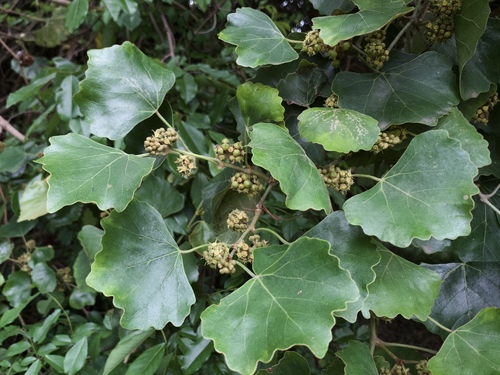
Rhoicissus capensis
Cape grape, Evergreen grape
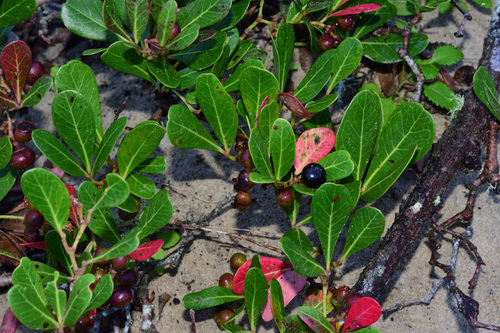
Rhoicissus digitata
South African grape, Baboon grape
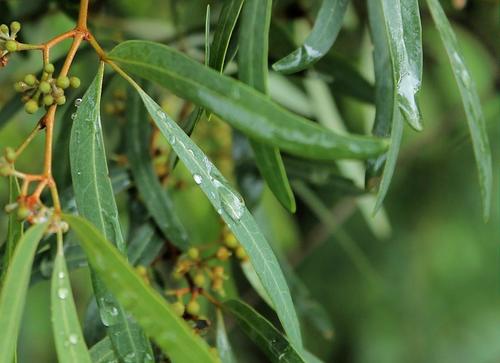
Rhoicissus revoilii
Bushveld grape, Warty grape
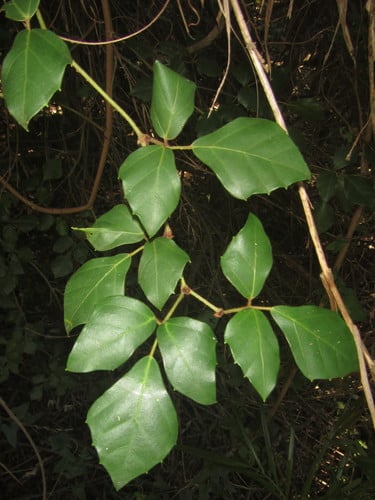
Rhoicissus rhomboidea
Rope-wood grape, Glossy forest grape
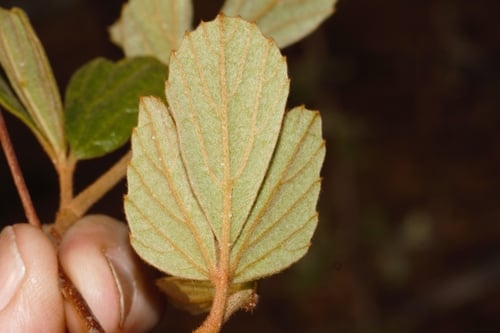
Rhoicissus tridentata
Droog-my-keel grape, Bitter grape, Bushman's grape
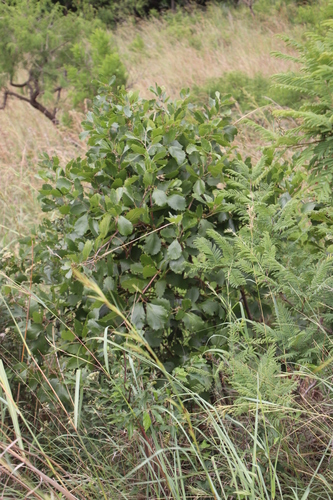
Rhoicissus tridentata subsp. cuneifolia