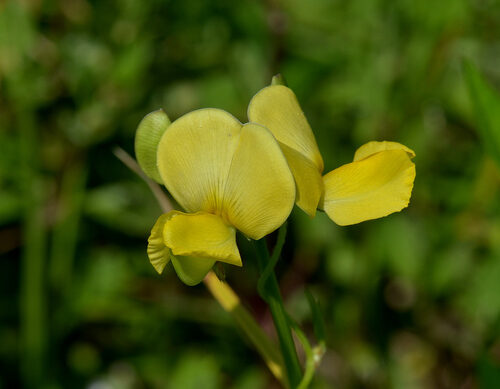
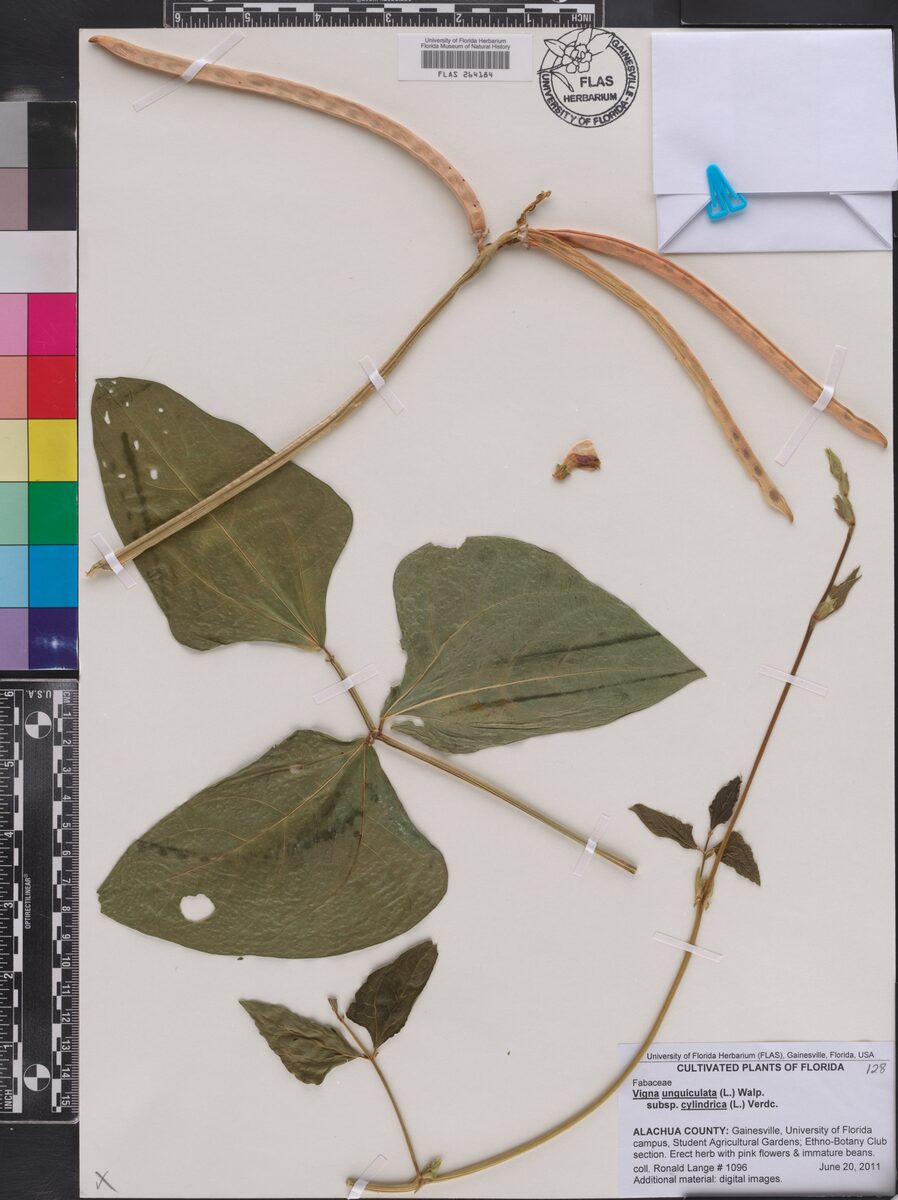
Vigna lobatifolia
Baker
Fabaceae Edible: Roots, Tubers
gbif· cc-by
Meise Botanic Garden
gbif· cc-by
Meise Botanic Garden
gbif· cc-by
Meise Botanic Garden
Description
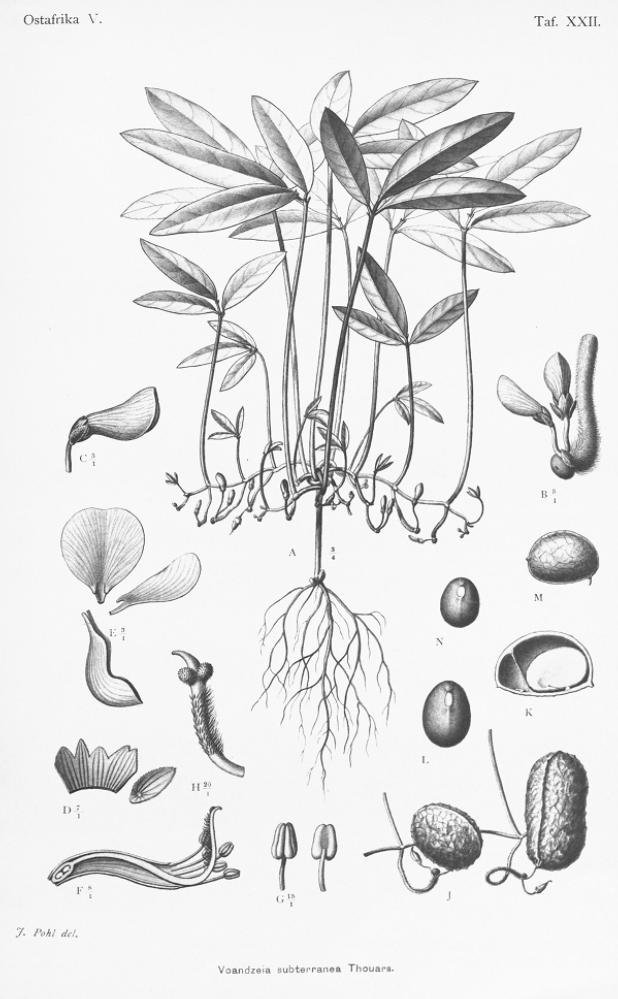
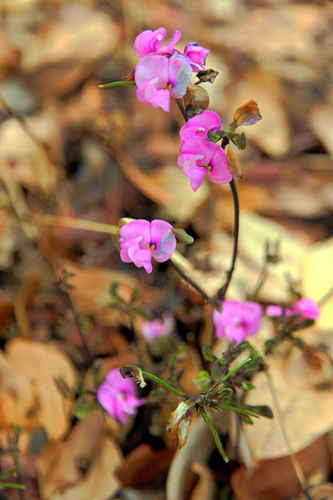
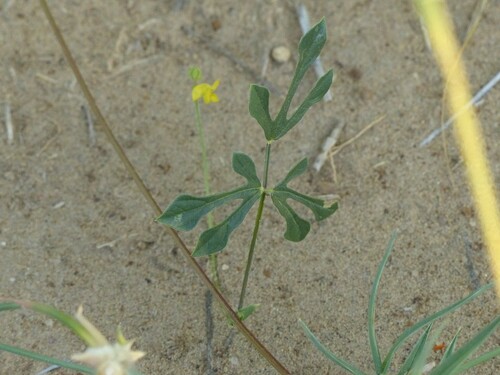
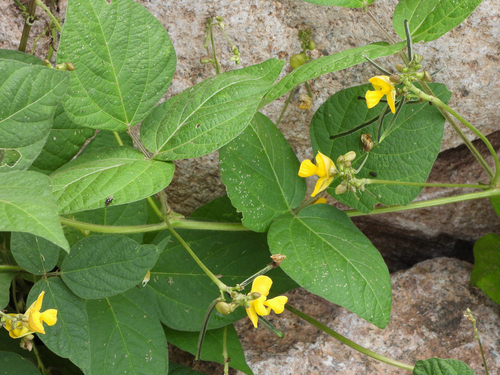
A herb. It is a climber and can keep growing from year to year. It has a deep fleshy taproot. The leaves have 3 leaflets and the end leaflet has 3 lobes. The flowers are in groups in the axils of leaves. The seeds are brown.
Edible Uses
The root tubers are eaten raw or cooked.
Traditional Uses
The root tubers are eaten raw or cooked.
This uses section is brief — help expand it
Distribution
A tropical plant. It can grow in dry sandy soils. It grows between 300-450 m above sea level. It can grow in arid places.
Where It Grows
Africa, Angola, Botswana, Central Africa, East Africa, Namibia, Southern Africa, Zambia,
Notes
There are about 150 Vigna species. They are mostly in the tropics.
Synonyms
Vigna dinteri Harms
Also Known As
Muyimbo, Ombibio
References (14)
- Dakora, F. D., 2013, Biogeographic Distribution, Nodulation and Nutritional Attributes of Underutilized Indigenous Agrican Legumes. Acta Horticulturae Number 979 Vol. 1. p 53
- Fox, F. W. & Young, M. E. N., 1982, Food from the Veld. Delta Books. p 222
- Lee, 1979,
- Macmillan, H.F. (Revised Barlow, H.S., et al) 1991, Tropical Planting and Gardening. Sixth edition. Malayan Nature Society. Kuala Lumpur. p 330
- Maguire, 1978,
Show all 14 references Hide references
- Marshall, 1976, (As Vigna dinteri)
- D. Oliver, Fl. trop. Afr. 2:199. 1871
- Peters, C. R., O'Brien, E. M., and Drummond, R.B., 1992, Edible Wild plants of Sub-saharan Africa. Kew. p 139
- Rodin, 1985,
- Royal Botanic Gardens, Kew (1999). Survey of Economic Plants for Arid and Semi-Arid Lands (SEPASAL) database. Published on the Internet; http://www.rbgkew.org.uk/ceb/sepasal/internet [Accessed 1st May 2011]
- Silberbauer, 1981,
- Story, 1958, (As Vigna dinteri)
- USDA, ARS, National Genetic Resources Program. Germplasm Resources Information Network - (GRIN). [Online Database] National Germplasm Resources Laboratory, Beltsville, Maryland. Available: www.ars-grin.gov/cgi-bin/npgs/html/econ.pl (10 April 2000)
- Wiersema, J. H. & Leon, B., 2013, World Economic Plants. A Standard Reference CRC Press. 2nd Ed. p 720