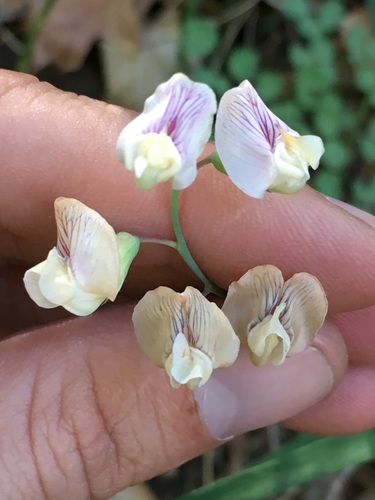
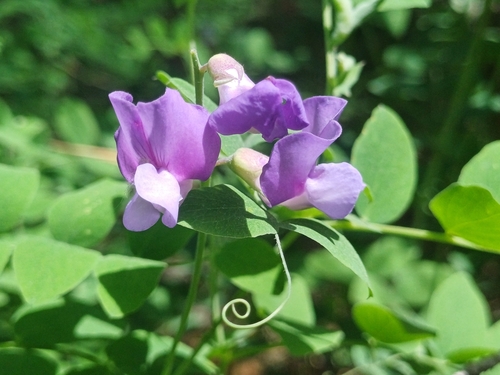
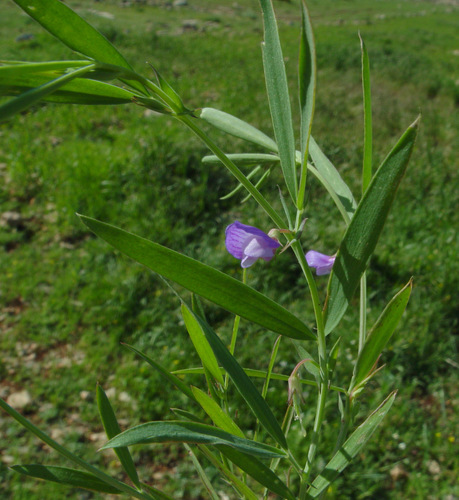
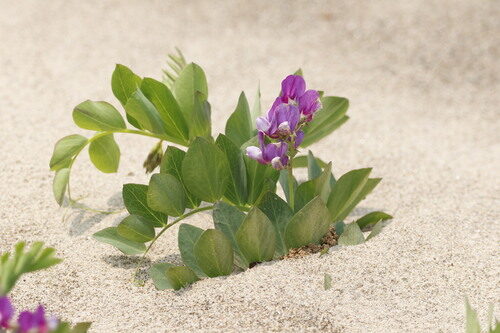
Inocarpus fagifer - (Parkinson) Fosberg.
(Parkinson) Fosberg.
Tahiti Chestnut, Polynesian Chestnut
gbif· cc-by
Eric Knight
gbif· cc-by
Eric Knight
gbif· cc-by
Eric Knight
Description
Inocarpus fagifer is an evergreen Tree growing to 20 m (65ft) by 20 m (65ft) at a medium rate. See above for USDA hardiness. It is hardy to UK zone 10. The flowers are pollinated by Bats. It can fix Nitrogen. Suitable for: light (sandy), medium (loamy) and heavy (clay) soils and can grow in nutritionally poor soil. Suitable pH: mildly acid, neutral and basic (mildly alkaline) soils and can grow in very acid, very alkaline and saline soils. It can grow in full shade (deep woodland) semi-shade (light woodland) or no shade. It prefers moist or wet soil and can tolerate drought.
Edible Uses
Seed - raw or cooked. Boiled before they are quite ripe, they resemble chestnuts in flavour and are very nutritious. They can be boiled or baked. The grated seeds are used for making flat cakes, breads and puddings. Although quite palatable, the seeds are reputed to be somewhat indigestible even when cooked. The kernels (seeds) are large, each weighing 5 - 50 g, and measuring 20 - 70mm in length by 16 - 40mm in width. The kernel is edible when cooked but is highly perishable and has a short shelf life. It rapidly changes colour from white to reddish brown after being extracted from the shell.
Medicinal Uses
Antidiarrhoeal Mouthwash Skin Stomachic. The tahiti chestnut is often used in traditional medicine, where it has a range of applications. The bark is used to treat sickness relapses. An infusion of the bark is used to treat burns; diarrhoea and teething problems in infants. A decoction of the bark is used in treating scabies. Extracts from heated bark scrapings are used in a treatment for pneumonia. The dried inner bark mixed with coconut oil is applied to bone fractures. The root is used to treat stomach-ache. Liquid from the stems is used to treat pain in the bones. Weakness after childbirth and fish poisoning are treated with the fluid from the leaves. The plant is also said to stop internal bleeding.
Distribution
E. Asia - Malaysia to Australia and the southwest Pacific.
Where It Grows
TROPICAL ASIA: Papua New Guinea,
Cultivation
It is found in areas where the mean annual rainfall ranges from 1,500 - 4,300mm and there is only a small or no dry season. The mean annual temperature is around 27°c, with the hottest month ranging from 29.4 - 34.5°c and the coolest month 20 - 23°c. Plants are fairly shade tolerant, although heavy shade can reduce yields of seeds. The plant succeeds in a wide range of soils that include highly calcareous and saline soils and poorly drained seasonal to permanently waterlogged valleys, swamps, and marshes. It occurs in soils with medium to very low fertility rating. It can grow in mildly acidic to very alkaline coastal soils with a pH up to 14. It has medium to high tolerance of steady and strong winds and is windfirm due to a strong lateral root system including buttresses. The plant has a moderate to fast rate of growth, with annual increases in height when young of up to 2 metres per year. Trees can commence flowering when around 3 - 5 years old. Yields of up to 75 kilos of fruits per tree per annum can be obtained from trees 25 or more years old. Trees can live for 80 - 90 years. The tree responds well to coppicing. Although many species within the family Fabaceae have a symbiotic relationship with soil bacteria, this species is said to be devoid of such a relationship and therefore does not fix atmospheric nitrogen.
Propagation
Seed - it does not tolerate dessication and has a very short viability of a few weeks. The seeds are large and can be sown directly into their permanent positions or into deep, individdual containers. Young plants require shade from strong sun. Germination can take place within 7 days, with almost 100% of the seeds sprouting. Nursery sown seeds can be transplanted to their permanent positions about 2 months after germinating, when about 20 - 30cm tall. Single-node cuttings, taken from stems of the current year's growth, can root within 14 days, with almost 100% success rate.
Other Uses
Fuel Shelterbelt Soil stabilization Wood. Agroforestry Uses: The tree has a good network of lateral roots including three or four structured buttresses at the base of the trunk; it is used to stabilize soils, especially near the coast and along the banks of rivers. A good medium-height tree for windbreaks because it tolerates strong winds and resists breakage. The tree can be used to provide shade for plantation crops. It has a dense canopy, which makes it unsuitable for close planting between light-demanding agricultural crops such as sweetpotato (Ipomoea batatas), taro (Colocasia esculenta), sugarcane (Saccharum officinarum), and corn (Zea mays). However, it is suitable as a boundary tree to provide shade and shelter for more shade-tolerant crops. Some types are compatible with other trees such as vi (Spondias cyathera), canarium nut (Canariumspp.), and breadfruit (Artocarpus altilis).It also grows together well with cutnut (Barringtoniaspp.),sago palm (Metroxylon salomonense), betel nut palm (Areca catechu),and coconut (Cocos nucifera). Other Uses: The wood is fairly durable, but may be more susceptible to termites as sawn timber. It is used for crafts, tool handles, canoes, and light construction. Fallen branches are used for fuel.
Synonyms
Also Known As
Tahiti Chestnut, Polynesian Chestnut, Ailali, Arau, Booi, Dola, Dulafa, Gatet, Gayam, Gnuilaba, I'i, Ifi, Ihi, Isi, Ivi, Julapa, Kayam, Keam, Kurak, Mabe, Mape, Marap, Marare, Marau, Mwaqe, Mworopw, Namambe, Naqi, Nokomo, Nyia oki, Otaheite chestnut, Paravu, Paravua, Rata, Te ibi, Te karaka, Tolok, Zulapa