Vicia faba subsp. equina
Pers.
Horsebean
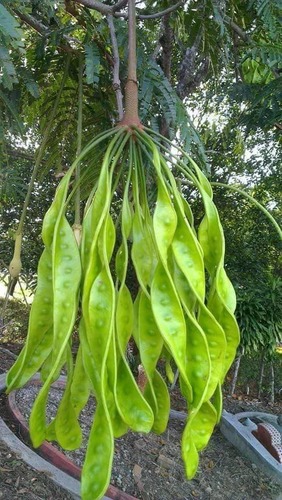
iNaturalist· cc-by-nc-sa
(c) John Poulakis, some rights reserved (CC BY-NC-SA)
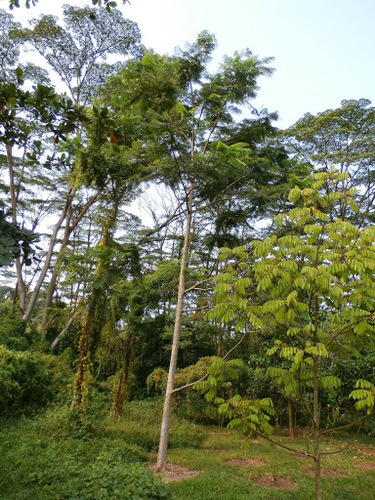
iNaturalist· cc-by-sa
(c) Lies Van Rompaey, some rights reserved (CC BY-SA)
iNaturalist· cc-by-sa
(c) pamsai, 200K views, thank you, some rights reserved (CC BY-SA)
Summary
Source: WikipediaVicia faba, commonly known as the broad bean, fava bean, or faba bean, is a species of vetch, a flowering plant in the pea and bean family Fabaceae. It is widely cultivated as a crop for human consumption, and also as a cover crop. Varieties with smaller, harder seeds that are fed to horses or other animals are called field bean, tic bean or tick bean. This legume is commonly consumed in many national and regional cuisines. Some people have favism, a hemolytic response to the consumption of broad beans, a condition linked to a metabolic disorder known as G6PDD. Otherwise the beans, with the outer seed coat removed, can be eaten raw or cooked. With young seed pods, the outer seed coat can be eaten, and in very young pods, the entire seed pod can be eaten.
Description
A bean plant.
This description is brief — help expand it
Edible Uses
Raw mature broad beans are 11% water, 58% carbohydrates, 26% protein, and 2% fat. A 100-gram reference amount supplies 1,425 kJ (341 kcal; 341 Cal) of food energy and numerous essential nutrients in high content (20% or more of the Daily Value, DV). Folate (26% DV), and dietary minerals, such as manganese, phosphorus, magnesium, and iron (range of 52 to 77% DV), have considerable content. B vitamins have moderate to rich content (19 to 48% DV). Broad beans present the highest protein-to-carbohydrate ratio among other popular pulse crops, such as chickpea, pea and lentil. Moreover, their consumption is recommended along with cereals as both foods are complementary in supplying all essential amino acids. Broad beans are generally eaten while still young and tender, enabling harvesting to begin as early as the middle of spring for plants started under glass or overwintered in a protected location, but even the main crop sown in early spring will be ready from mid to late summer. Horse beans, left to mature fully, are usually harvested in the late autumn, and are then eaten as a pulse. The immature pods are also cooked and eaten, and the young leaves of the plant can also be eaten, either raw or cooked as a pot herb (like spinach). Preparing broad beans involves first removing the beans from their pods, then steaming or boiling the beans, either whole or after parboiling them to loosen their exterior coating, which is then removed. The beans can be fried, causing the skin to split open, and then salted and/or spiced to produce a savory, crunchy snack.
Known Hazards
Beans generally contain phytohaemagglutinin, a lectin that occurs naturally in plants, animals, and humans. Most of the relatively low toxin concentrations found in V. faba can be destroyed by boiling the beans for 10 minutes. Broad beans are rich in levodopa, and should thus be avoided by those taking irreversible monoamine oxidase inhibitors to prevent a pressor response.
Distribution
It is a temperate plant.
Where It Grows
Europe, Finland, Scandinavia,
Notes
There are about 140 Vicia species. They are mostly temperate.
Synonyms
References (2)
- Plants for a Future database, The Field, Penpol, Lostwithiel, Cornwall, PL22 0NG, UK. http://www.scs.leeds.ac.uk/pfaf/
- Syn. pl. 2:308. 1807