Parkia speciosa
Hassk.
Pete, Bitter bean tree
iNaturalist· cc-by-sa
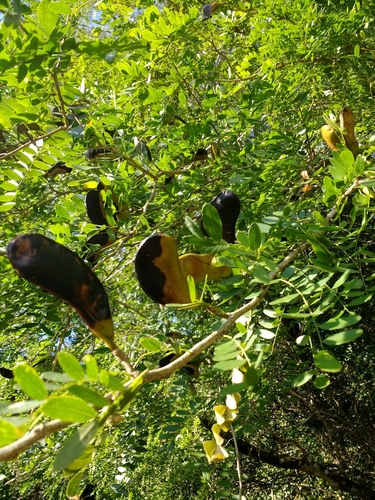
(c) Ong Jyh Seng, some rights reserved (CC BY-SA), uploaded by Ong Jyh Seng
iNaturalist· cc-by-nc
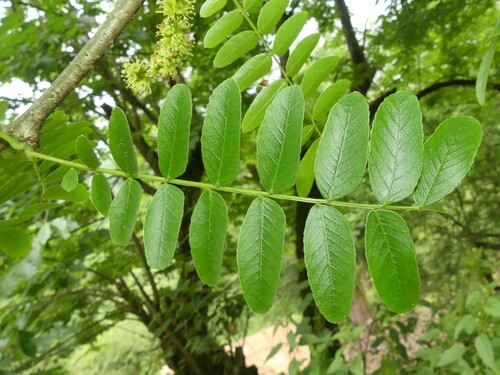
(c) 黑乎乎君, some rights reserved (CC BY-NC)
iNaturalist· cc-by-nc
(c) Adriel D.K, some rights reserved (CC BY-NC)
Summary
Source: WikipediaParkia speciosa, the bitter bean, twisted cluster bean, sator bean, stink bean, or petai is a plant of the genus Parkia in the family Fabaceae. It bears long, flat edible beans with bright green seeds the size and shape of plump almonds which have a rather peculiar smell, similar to, but stronger than that of the shiitake mushroom, due to sulfur-containing compounds also found in shiitake, truffles and cabbage.
Description
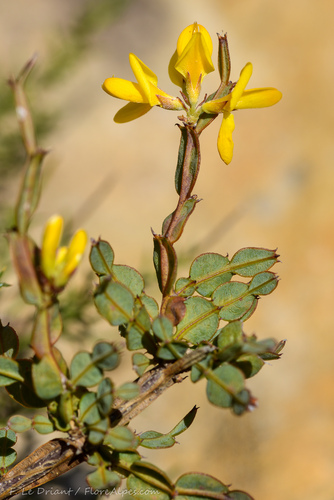
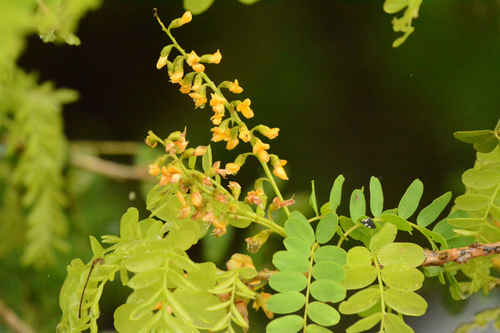
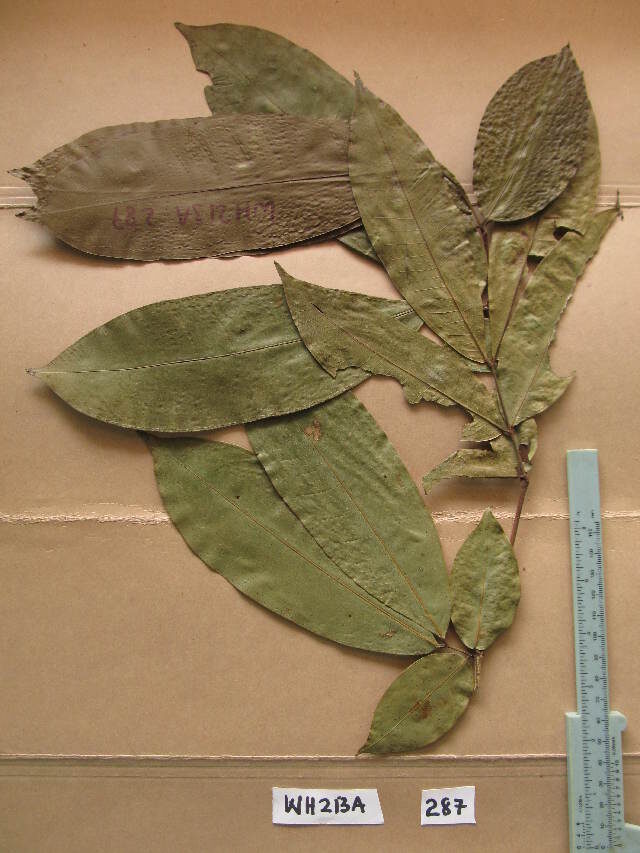
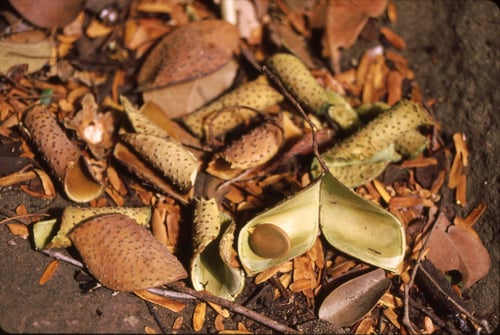
A tree. It can grow 35-45 m high. It can spread 8-15 m wide. The trunk can be 1 m across. It can have buttresses. The leaves occur alternately along the stalk. The leaf and leaf stalk can be 21-40 cm long. There is a single gland on the leaf stalk about half way between the base and the first pair of leaflets. It is about 1-3 cm from the base. There are also small circular lands near the last leaflets. There are 11-20 or 25 pairs of leaflets. These are 5-10 cm long by 1-2 cm wide. The edges of nearby leaflets overlap. The tip of the leaflet is rounded and the base is expanded around the stem on one side. The flower stalks are 7-57 cm long and hang down on the tree. On the end of these are 4-10 flowers crowded together and then pods develop. Flowers contain both sexes. The pods are strap shaped and usually twisted. The pods are swollen over the seeds and constricted between the seeds. The pods are 20-40 cm long by 2-5 cm wide. There are about 18 seeds per pod. They lie across the width of the pod. They are up to 23 mm long. They have a strong smell. The seed coat is soft and green.
Edible Uses
The beans of other Parkia species (for example, Parkia javanica and Parkia singularis) are also popular as culinary ingredient in Indonesia, Malaysia, Singapore, Brunei, Laos, southern Thailand, Burma, and northeastern India, especially Assam, Nagaland, Manipur, Mizoram and Tripura (consumed mostly by the Tiprasa people). They are sold in bunches, still in the pod, or the seeds are sold in plastic bags. Pods are gathered from the wild, or from cultivated trees: they are exported in jars or cans, pickled in brine, or frozen. The vegetable is known as petai, pete in Indonesia, Malaysia and Singapore. In the marketplace, depending on the country of origin, Parkia species may be labelled Wakerec, Petai, in Assamese Gachhua uri, in Rongmei Kamv, in Meitei Yongchak, in Thadou Jongla,. They are best when combined with other strongly flavoured foods such as garlic, chili peppers, dried shrimp or shrimp paste, as in sambal petai. When young, the pods are flat because the seeds have not yet developed, and they hang like a bunch of slightly twisted ribbons, pale green, almost translucent. At this stage they may be eaten raw, fried or pickled. Young tender pods with undeveloped beans can be used whole in stir-fried dishes. The seeds are also dried and seasoned for later consumption. When dried, the seeds turn black. Petai beans or seeds look like broad beans. Like mature broad beans, they may have to be peeled before cooking. Petai has earned its nickname 'stink bean' because its strong smell is very pervasive. It lingers in the mouth and body. Like asparagus, it contains certain amino acids that give a strong smell to one's urine, an effect that can be noticed up to two days after consumption. Like other beans, their complex carbohydrates can also cause strong-smelling rectal gas.
Traditional Uses
The seeds are used as flavouring stews. Dried seeds are peeled and fried in oil. Young pods are eaten cooked as a vegetable. They are eaten with poultry, fish or stir-fried vegetable dishes. Young seeds can be eaten pickled, raw or cooked. They are roasted, boiled or added to soups. Young leaves are also eaten raw. They are packed in brine. The receptacle around the flowers is cut into slices and eaten raw.
Medicinal Uses
The seeds are known to be hypoglycaemic and are used traditionally for treating kidney pain, cancer, diabetes, hepatalgia, oedema, nephritis, colic, cholera and as an anthelmintic. The seeds are also valued as a carminative. The seeds are applied externally to wounds and ulcers. The inner red bark is applied as a dressing on burns, followed several hours later by an infusion of the pounded white wood, which is used to wash the skin.
Distribution
A tropical plant. It is native to SE Asia. They grow in lowland rainforest. It suits a humid climate. They are mostly between sea level and 900 m altitude. It suits hardiness zones 11-12.
Where It Grows
Asia, Australia, Hawaii, India, Indochina, Indonesia, Laos, Malaysia, Myanmar, Northeastern India, Pacific, Philippines, Sarawak, SE Asia, Singapore, Thailand, USA,
Cultivation
Plants are grown from seeds.
Propagation
Seed - needs to be sown as soon as possible because it has a short viability. Fresh, soft seeds can be sown immediately, pre-soak any with harder skins for 24 hours in warm water prior to sowing. The seed is often sown in situ, with about 90% germinating within 3 - 15 days. Cuttings of ripe wood Budding
Other Uses
The wood is used for pulp in the manufacture of paper. Wood is non-durable with a service life of about 1 year, but preservative treatment is easy. It has an unpleasant garlic or beanlike odour when fresh. Shrinkage upon seasoning is low. The wood is used locally for temporary light construction, carpentry, furniture and cabinet making, mouldings, interior finish, cladding, concrete shuttering, boxes and crates, matches, clogs, disposable chopsticks and fishnet floats. General utility plywood has been manufactured from the wood. The tree is sometimes planted to provide shade tree for coffee plantations, nurseries etc.
Production
Trees first flower when about 15 m high.
Other Information
Popular and common in Indonesia and Malaysia as a cultivated tree and market food.
Notes
Also as Mimosaceae. The seeds are high in folates. Fruit are high in folates 100μg/100.
Nutrition
| Part | Moisture | kJ | kcal | Protein | Vit A | Vit C | Iron | Zinc |
|---|---|---|---|---|---|---|---|---|
| Pods | 70.7 | 543 | 130 | 8 | — | — | 0.7 | — |
Synonyms
Also Known As
Betar, Chou dou, Cong dou, Nejire-fusamame, Nitta tree, Nyiring, Patag, Patai, Petah, Petai, Pete, Peteh, Peuteuy, Pohon petai, Sataw, Sato, Sator dan, Sator kow, Sindutan, U'pang
References (52)
- Altschul, S.V.R., 1973, Drugs and Foods from Little-known Plants. Notes in Harvard University Herbaria. Harvard Univ. Press. Massachusetts. no. 1649
- Argent, G et al, nd, Manual of the Larger and More important non Dipterocarp Trees of Central Kalimantan Indonesia. Volume 2 Forest Research Institute, Samarinda, Indonesia. p 365
- Arora, R. K., 2014, Diversity in Underutilized Plant Species - An Asia-Pacific Perspective. Bioversity International. p 50, 107, 129
- Barwick, M., 2004, Tropical and Subtropical Trees. A Worldwide Encyclopedic Guide. Thames and Hudson p 310
- Burkill, I.H., 1966, A Dictionary of the Economic Products of the Malay Peninsula. Ministry of Agriculture and Cooperatives, Kuala Lumpur, Malaysia. Vol 2 (I-Z) p 1700
Show all 52 references Hide references
- Chai, P. P. K. (Ed), et al, 2000, A checklist of Flora, Fauna, Food and Medicinal Plants. Lanjak Entimau Wildlife Sanctuary, Sarawak. Forestry Malaysia & ITTO. p 159
- Chin, H. F., 1999, Malaysian Vegetables in Colour. Tropical Press. p 96
- Ching, L. S. & Mohamed, S., 2001, Alpha-Tocopherol Content in 62 Edible Tropical Plants. J. Agric. Food Chem. 2001, 49, 3101−3105
- Cundall, P., (ed.), 2004, Gardening Australia: flora: the gardener's bible. ABC Books. p 987
- Etherington, K., & Imwold, D., (Eds), 2001, Botanica's Trees & Shrubs. The illustrated A-Z of over 8500 trees and shrubs. Random House, Australia. p 511
- Facciola, S., 1998, Cornucopia 2: a Source Book of Edible Plants. Kampong Publications, p 153
- Flora 25(Beibl. 2):55. 1842
- Foo, J.T.S.(ed), 1996, A Guide to Common Vegetables. Singapore Science Foundation. p 88
- Food Composition Tables for use in East Asia FAO http://www.fao.org/infoods/directory No. 635
- Hanum, F. I., 1999, Plant Diversity and Conservation Value of Ayer Hitam Forest, Selangor, Peninsula Malaysia. Pertanika J. Trop. Agric. Sci. 22(2):73-83
- Hariyadi, B., 2008, The Entwined Tree: Traditional Natural Resource Management of Serampas, Jambi, Indonesia. Ph. D thesis. Univ. or Hawaii. p 444
- Hopkins, 1992, Flora Malesiana ser 1, 11(1) p 198
- Jacquat, C., 1990, Plants from the Markets of Thailand. D.K. Book House p 41
- Japanese International Research Centre for Agricultural Science www.jircas.affrc.go.jp/project/value_addition/Vegetables
- Jiwajinda, S., et al, 2002, Suppressive Effects of Edible Thai Plants on Superoxide and Nitric Oxide Generation. Asian Pacific Journal of Cancer Prevention, Vol 3, 2002
- Kew Plants of the World Online
- Kiple, K.F. & Ornelas, K.C., (eds), 2000, The Cambridge World History of Food. CUP p 1829
- Lembogi Biologi Nasional, 1980, Sayur-sayuran. Balai Pustaka, Jakarta. p 88
- Macmillan, H.F. (Revised Barlow, H.S., et al) 1991, Tropical Planting and Gardening. Sixth edition. Malayan Nature Society. Kuala Lumpur. p 327
- Maisuthisakul, P., 2012, Phenolic Constituents and Antioxidant Properties of some Thai Plants. Chp. 9 in Book Phytochemicals - A Global Perspective of Their Role in Nutrition and Health
- Martin, F.W. & Ruberte, R.M., 1979, Edible Leaves of the Tropics. Antillian College Press, Mayaguez, Puerto Rico. p 200
- Martin, F. W., et al, 1987, Perennial Edible Fruits of the Tropics. USDA Handbook 642 p 35
- McMakin, P.D., 2000, Flowering Plants of Thailand. A Field Guide. White Lotus. p 53
- Menninger, E.A., 1977, Edible Nuts of the World. Horticultural Books. Florida p 98
- Nakahara, K. et al, 2002, Antimutagenicity of Some Edible Thai Plants, and a Bioactive Carbazole Alkaloid, Mahanine, Isolated from Micromelum minutum. Journal of Agricultural and Food Chemistry. 50: 4796-4892
- Neilsen, 1992, Flora Malesiana ser 1 Vol 11(1) p 198
- Ochse, J.J. et al, 1931, Vegetables of the Dutch East Indies. Asher reprint. p 404
- Ong, H., et al, 2012, Traditional knowledge and usage of edible plants among the Semai community of Kampung Batu 16, Tapah, Perak, Malaysia. Scientific Research and Essays Vol. 7(4), pp. 441-445, 30 January, 2012
- Owen, S., 1993, Indonesian Food and Cookery, INDIRA reprints. p 78
- Pawera, L., et al, 2020, Wild Food Plants and Trends in Their Use: From Knowledge and Perceptions to Drivers of Change in West Sumatra, Indonesia, Foods. 2020, 9, 1240
- PROSEA handbook Volume 13 Spices. p 279 and p 278 (As Parkia harbesonii)
- Sakunpak, A. & Panichayupakaranant, P., 2012, Antibacterial activity of Thai edible plants against gastrointestinal pathogenic bacteria and isolation of a new broad spectrum antibacterial polyisoprenylated benzophenone, chamuangone. Food Chemistry 130 (2012) 826–831
- Saw, L.G., LaFrankie, J. V. Kochummen, K. M., Yap S. K., 1991, Fruit Trees in a Malaysian Rain Forest. Economic Botany, Vol. 45, No. 1, pp. 120-136
- Siong, K. H., 2003, Indigenous Fruits of Sarawak. ITTO & Sarawak Forest Department. p 78
- Slik, F., www.asianplant.net
- Solomon, C., 2001, Encyclopedia of Asian Food. New Holland. p 210, 271
- Staples, G.W. and Herbst, D.R., 2005, A tropical Garden Flora. Bishop Museum Press, Honolulu, Hawaii. p 334
- Striegel, L., et al, 2019, Promising Tropical Fruits High in Folates. Foods 2019, 8, 363; doi:10.3390/foods8090363. www.mdpi.com/journal/foods
- Sukarya, D. G., (Ed.) 2013, 3,500 Plant Species of the Botanic Gardens of Indonesia. LIPI p 433
- Tanaka,
- Terra, G.J.A., 1973, Tropical Vegetables. Communication 54e Royal Tropical Institute, Amsterdam, p 64
- Uphof,
- USDA, ARS, National Genetic Resources Program. Germplasm Resources Information Network - (GRIN). [Online Database] National Germplasm Resources Laboratory, Beltsville, Maryland. Available: www.ars-grin.gov/cgi-bin/npgs/html/econ.pl (10 April 2000)
- van Wyk, B., 2005, Food Plants of the World. An illustrated guide. Timber press. p 278
- Wiersema, J. H. & Leon, B., 2013, World Economic Plants. A Standard Reference CRC Press. 2nd Ed. p 496
- www.worldagroforestrycentre.org/treedb/
- Zawiah, N. & Othaman, H., 2012, 99 Spesies Buah di FRIM. Institut Penyelidikan Perhutanan Malaysia. p 188