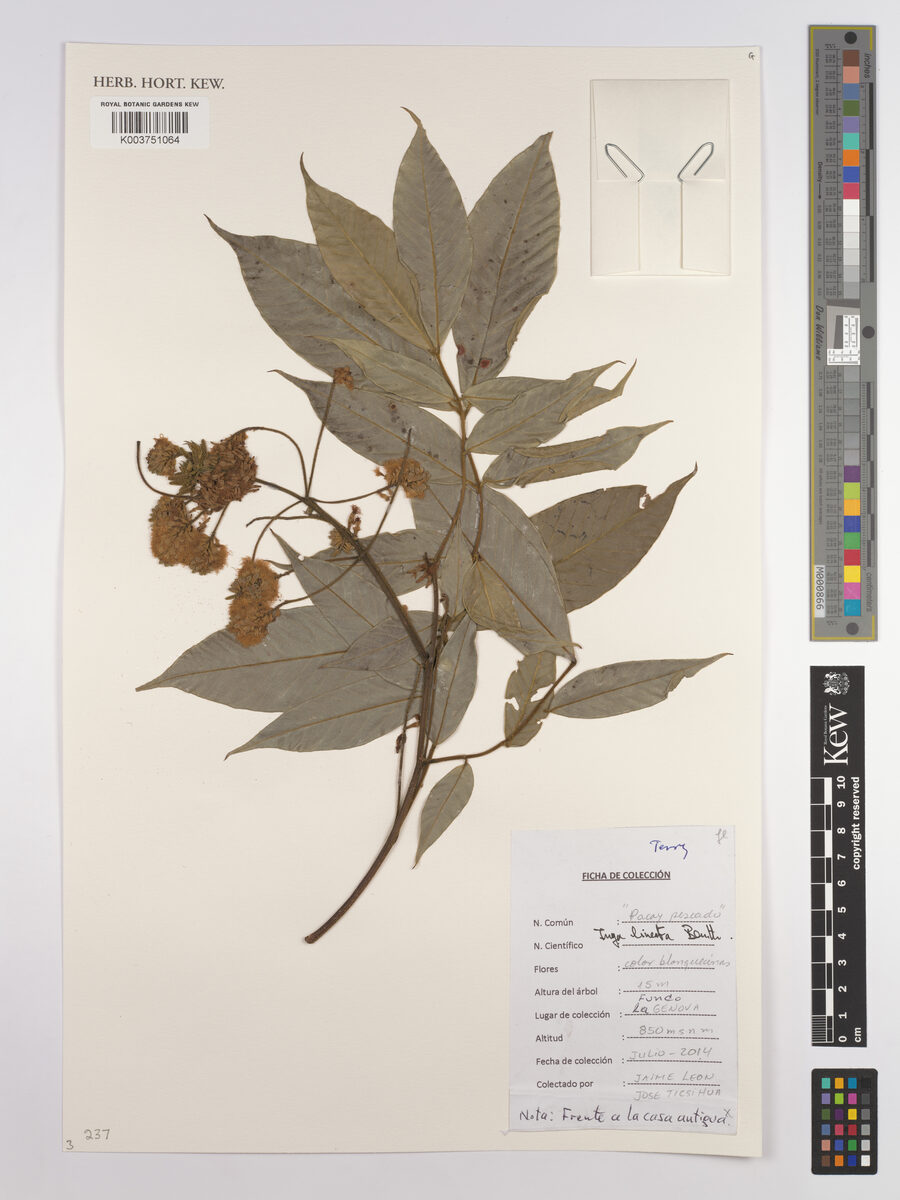
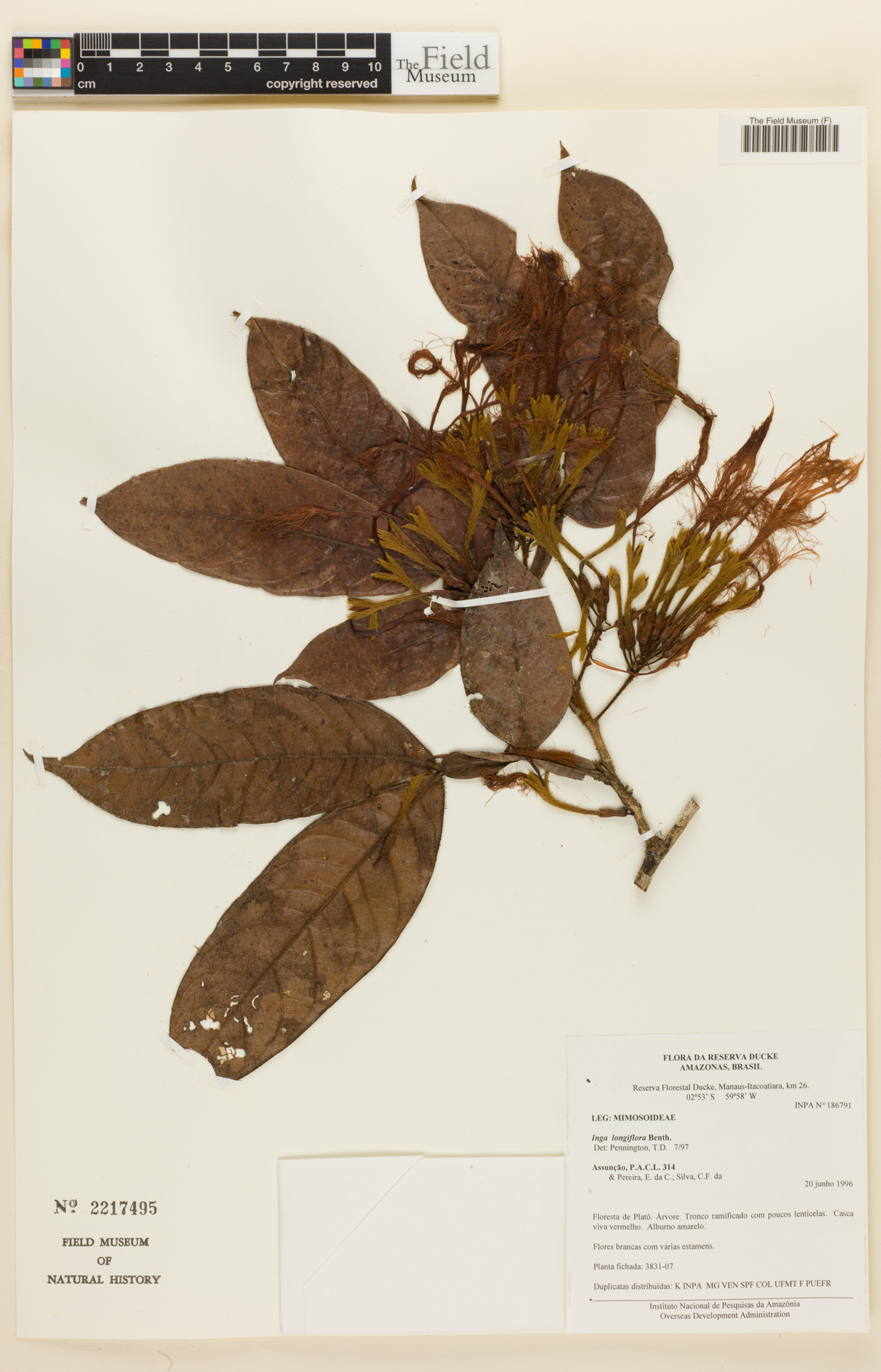
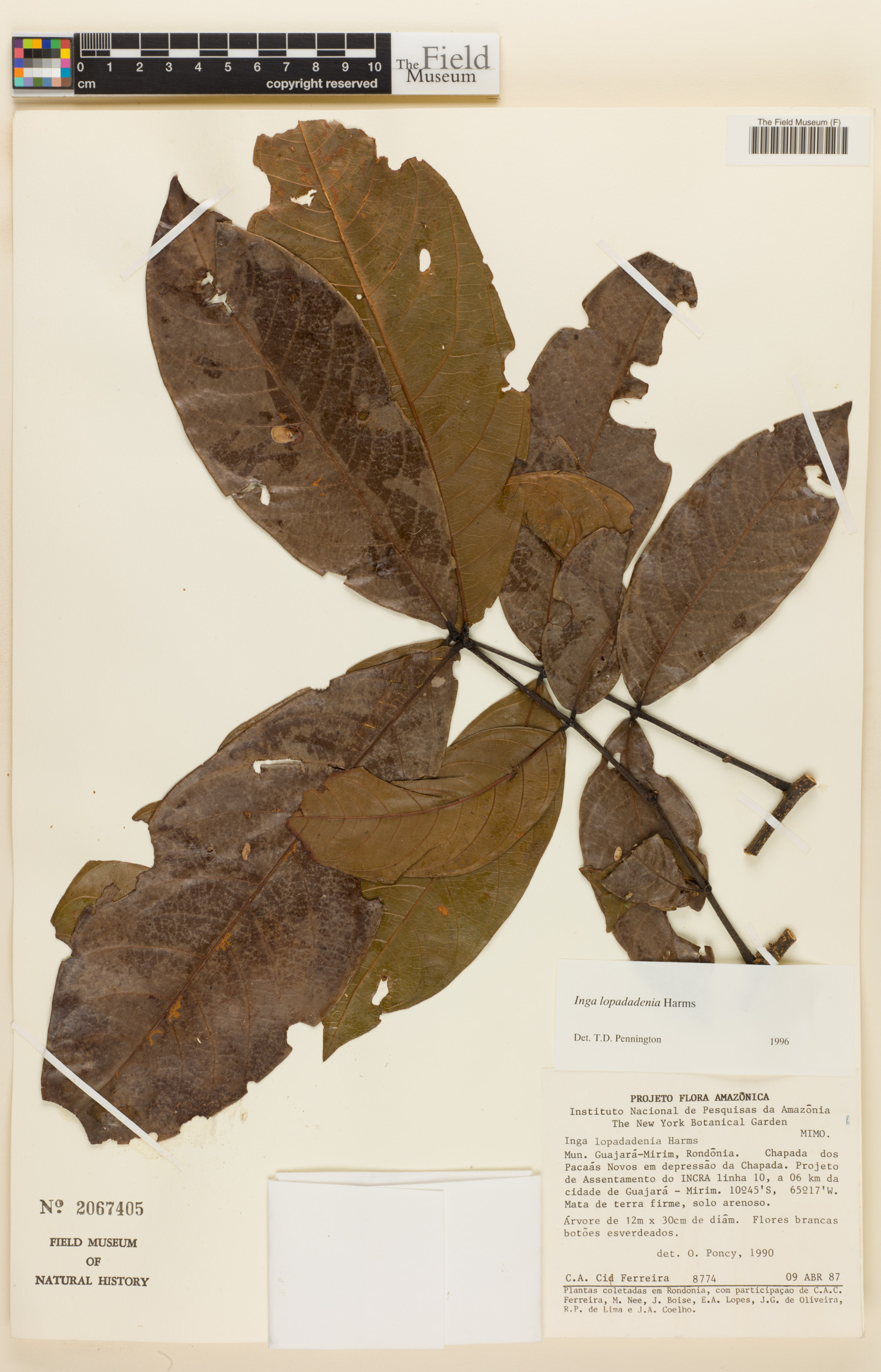
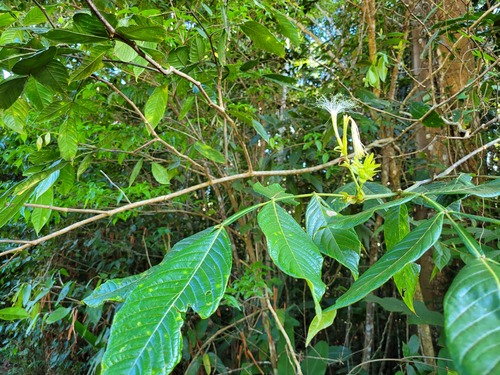
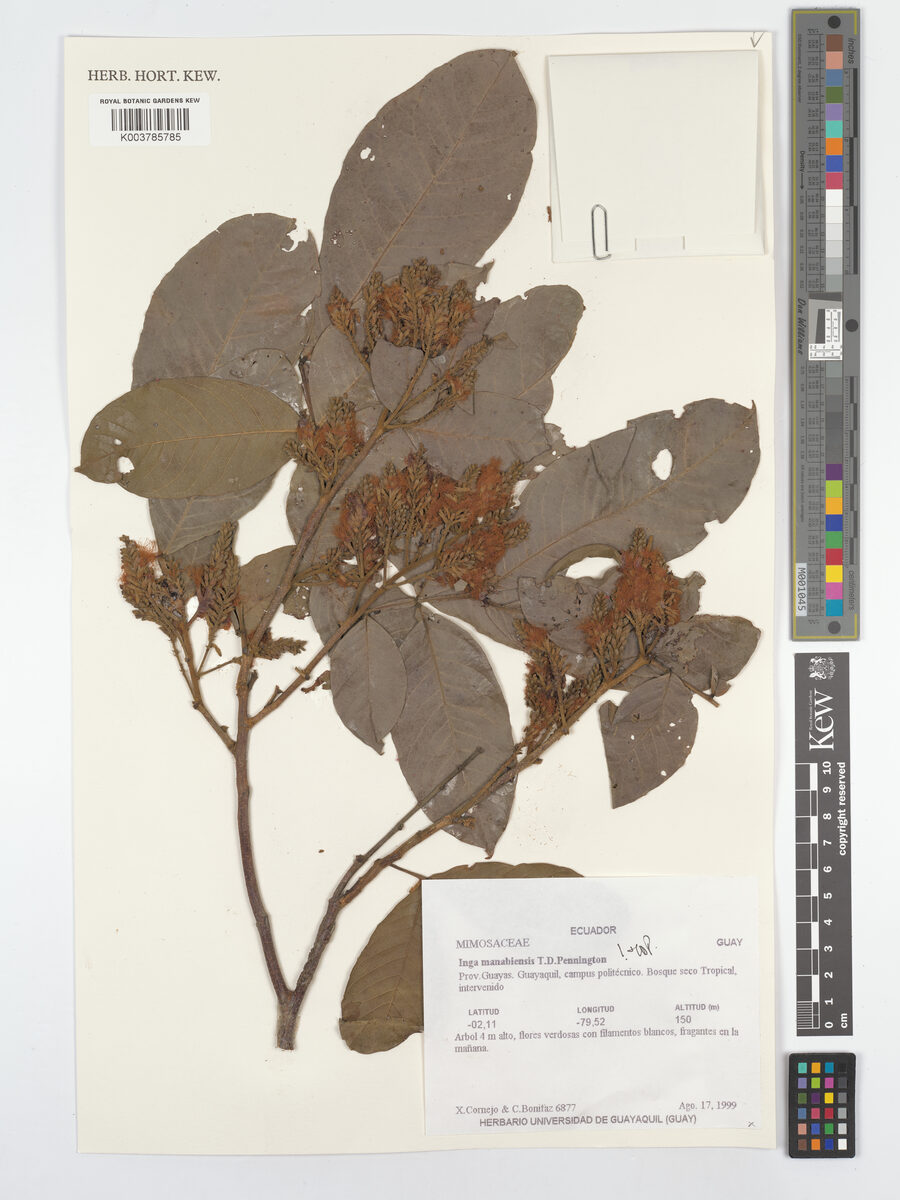
Parkia sumatrana
Miq
Royoong, Cay thoi
iNaturalist· cc-by-nc-sa
(c) 106611639464075912591, some rights reserved (CC BY-NC-SA), uploaded by 106611639464075912591
iNaturalist· cc-by-nc
(c) Vatcharavee Sriprasertsil, some rights reserved (CC BY-NC)
gbif· cc0
President and Fellows of Harvard College
Description
A tree. It grows up to 35 m tall. The trunk can be 40 cm across. The bark is black. The leaves are alternate. The primary leaf stalk and axis is 36 cm long. There is a gland on the leaf stalk 2 cm from the base. There are 12-20 pairs of leaflets on the first set of leaf stalks. These leaflets are 16-21 mm long by 6-8 mm wide. About 8 pods occur per head. These are 45 cm long by 4-5 cm wide. They are covered with dense yellow hairs. There are 26-33 seeds per pod. There are 2 varieties of this tree. One has more narrow pods and more leaflets along the stalks.
Edible Uses
The young leaves are eaten, young seeds are eaten, and the fruit pulp is eaten, sometimes used as a spice.
Traditional Uses
The young leaves are eaten. The young seeds are eaten. The fruit pulp is eaten.
This uses section is brief — help expand it
Medicinal Uses
Traditional uses recorded for young leaves, young seeds, and fruit pulp.
Distribution
A tropical plant. Trees grow along rivers in lowland areas. It suits wet dense forest. They grow on a range of soils. The small podded variety grows between 100 and 600 m altitude but occasionally up to 900 m.
Where It Grows
Asia, Cambodia, Indochina, Indonesia, Laos, Malaysia, Myanmar, Pacific, Philippines, SE Asia, Thailand, Vietnam,
Cultivation
Trees commence flowering when they are about 12 - 15 metres tall.
Other Uses
The powdered bark is used as a leech repellent. The wood is used for construction purposes598].
Notes
Also as Mimosaceae.
Synonyms
Also Known As
Cay thoi, Hua lon, Som poy luang, Thui
References (7)
- Forest Inventory and Planning Institute, 1996, Vietnam Forest Trees. Agriculture Publishing House p 445
- Gardner, S., et al, 2000, A Field Guide to Forest Trees of Northern Thailand, Kobfai Publishing Project. p 160
- Hopkins, 1992, Flora Malesiana ser 1, 11(1) p 199
- Pham-Hoang Ho, 1999, An Illustrated Flora of Vietnam. Nha Xuat Ban Tre. p 816
- Phon, P., 2000, Plants used in Cambodia. © Pauline Dy Phon, Phnom Penh, Cambodia. p 490
Show all 7 references Hide references
- PROSEA handbook Volume 13 Spices. p 279
- Sam, H. V. et al, 2004, Trees of Laos and Vietnam: A Field Guide to 100 Economically or Ecologically Important Species. BLUMEA 49: 201-349