Viburnum prunifolium
L.
Black Haw
iNaturalist· cc0
no rights reserved, uploaded by mefisher
iNaturalist· cc-by
(c) Mark Jones, some rights reserved (CC BY)
iNaturalist· cc-by
(c) Nick Block, some rights reserved (CC BY), uploaded by Nick Block
Summary
Source: WikipediaViburnum prunifolium (known as blackhaw or black haw, blackhaw viburnum, sweet haw, and stag bush) is a species of Viburnum native to eastern North America, from Connecticut west to eastern Kansas, and south to Alabama and Texas.
Description
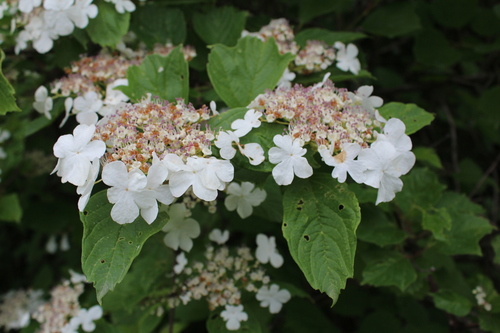
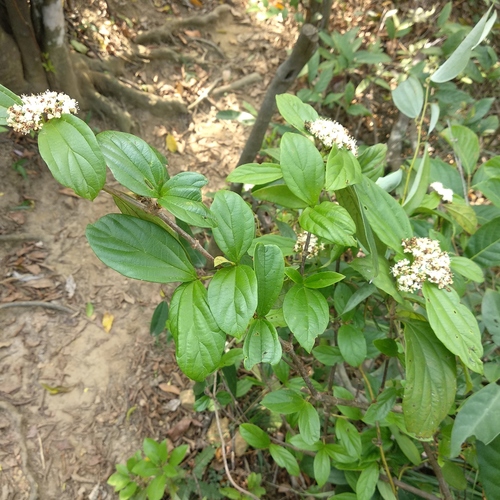
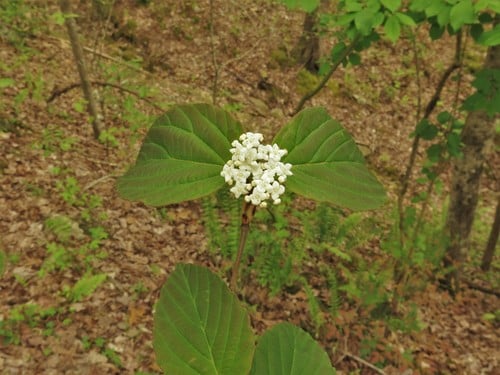
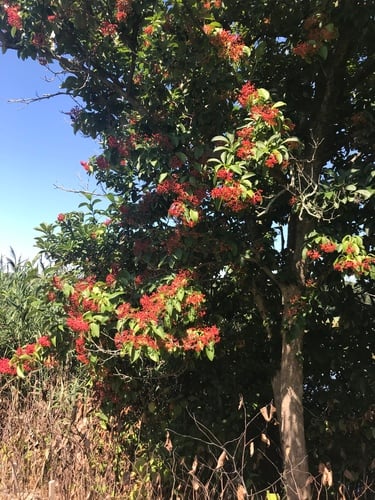
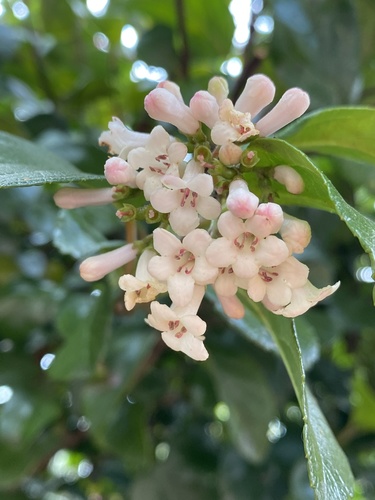
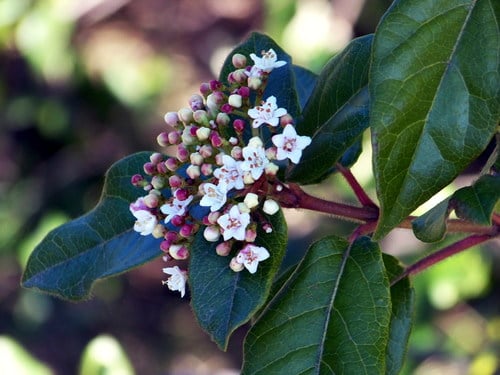
A shrub or small tree. It grows 6 m high and spreads 3.5 m wide. It loses its leaves during the year. The leaves are 4-7.5 cm long by 2-5 cm wide. The leaves are round or oval and have fine sharp teeth. They are shiny green above and dull light green underneath. The flower buds are red and the flowers are white. The flowers are 6 mm wide. They are in flat topped clusters. The fruit are small and yellow-green but ripen to blue-black. They are 12 mm long and have a sweetish edible pulp.
Edible Uses
The fruit can be eaten raw or cooked and has a thin, dry flesh with a sweet taste. Quality varies between plants — the best forms are pleasant raw, while others are better suited to preserves and similar uses. Flavour improves after a frost. The ovoid fruit is about 17mm long and contains a single large seed.
Traditional Uses
The fruit are used for preserves, jams, jellies and drinks. The best kinds can be eaten raw. The leaves are also eaten.
This uses section is brief — help expand it
Medicinal Uses
Stagberry was used by North American Indians to treat dysentery and to arrest uterine haemorrhage. It is now considered a specific treatment for menstrual pain. The bark contains scopoletin, a coumarin that has a sedative effect on the uterus, and salicin, a painkiller used in making aspirin. The bark of both the root and stems is abortifacient, anodyne, antispasmodic, astringent, nervine, and sedative. A bark tea is taken internally for painful or heavy menstruation, prolapse of the uterus, morning sickness, threatened miscarriage, and spasms after childbirth. It is also used for convulsive disorders, colic and other cramping pains affecting the bile ducts, hysteria, asthma, and palpitations of nervous origin. Stem bark is harvested in autumn before the leaves change colour, or in spring before the leaf buds open. Root bark is harvested in autumn only. Both can be dried for later use.
Known Hazards
Like many other plants, including many food plants and those used as culinary herbs, black haw contains salicin, a chemical relative of aspirin. Those who are allergic to that substance should not use black haw. In addition, due to the connection between aspirin and Reye syndrome, young people or people afflicted with a viral disease should not use black haw. The chemicals in black haw do relax the uterus and therefore probably prevent miscarriage; however, the salicin may be teratogenic. Consequently, pregnant women should not use black haw in the first two trimesters. Although it has been used traditionally to prevent miscarriage. Furthermore, anyone using herbs for medical reasons should only use them under the supervision of a qualified medical professional. Black haw is not on the "generally recognized as safe list" of the U.S. Food and Drug Administration (FDA).
Distribution
It is a temperate plant. It grows in moist soils especially in river valleys. In SE of the USA it grows to 910 m altitude. It suits hardiness zones 3-9.
Where It Grows
Australia, Britain, Europe, India, North America*, Turkey, Türkiye, USA,
Cultivation
An easily grown plant, succeeding in most soils. Unlike other members of the genus, this species grows well on poor soils and in dry situations. Prefers a deep rich loamy soil in sun or semi-shade. Best if given shade from the early morning sun in spring. A very hardy plant, tolerating temperatures down to about -40°c. Plants are self-incompatible and need to grow close to a genetically distinct plant in the same species in order to produce fruit and fertile seed.
Propagation
Seed is best sown in a cold frame as soon as it is ripe. Germination can be slow, sometimes taking more than 18 months. Seed harvested green — fully developed but not yet fully ripe — and sown immediately in a cold frame should germinate the following spring. Stored seed needs 2 months of warm stratification followed by 3 months of cold, and may still take 18 months to germinate. Prick seedlings into individual pots when large enough to handle, grow on in a cold frame or greenhouse, and plant out in late spring or early summer of the following year. Softwood cuttings taken in early summer in a frame should be potted individually once rooting begins and planted out the following late spring or early summer. Half-ripe cuttings, 5–8 cm long with a heel if possible, taken in July or August in a frame should be potted as soon as they start to root. These can be difficult to overwinter and are best kept under glass until the following spring. Mature wood cuttings taken in winter in a frame should root in early spring; pot when large enough and plant out in summer if sufficient new growth has been made, otherwise overwinter in a cold frame and plant out the following spring. Layering of the current season's growth in July or August takes 15 months.
Other Uses
Plants can be grown as a hedge and sheared into a formal screen. The wood is heavy, hard, strong, brittle, and close-grained, weighing 52 lb per cubic foot, though it is of no commercial importance due to the small size of the trees.
Other Information
It is cultivated.
Notes
There are about 150 Viburnum species. Also put in the family Caprifoliaceae.
Synonyms
Also Known As
Nanny-berry, Sheepberry, Stagberry, Stagbush, Sweet haw
References (20)
- Beckstrom-Sternberg, Stephen M., and James A. Duke. "The Foodplant Database." http://probe.nalusda.gov:8300/cgi-bin/browse/foodplantdb.(ACEDB version 4.0 - data version July 1994)
- Bodkin, F., 1991, Encyclopedia Botanica. Cornstalk publishing, p 1016
- Cundall, P., (ed.), 2004, Gardening Australia: flora: the gardener's bible. ABC Books. p 1469
- Elias, T.S. & Dykeman P.A., 1990, Edible Wild Plants. A North American Field guide. Sterling, New York p 227
- Facciola, S., 1998, Cornucopia 2: a Source Book of Edible Plants. Kampong Publications, p 73
Show all 20 references Hide references
- Flowerdew, B., 2000, Complete Fruit Book. Kyle Cathie Ltd., London. p 172
- Glowinski, L., 1999, The Complete Book of Fruit Growing in Australia. Lothian. p 183
- Grandtner, M. M., 2008, World Dictionary of Trees. Wood and Forest Science Department. Laval University, Quebec, Qc Canada. (Internet database http://www.wdt.qc.ca)
- Hedrick, U.P., 1919, (Ed.), Sturtevant's edible plants of the world. p 673
- Hibbert, M., 2002, The Aussie Plant Finder 2002, Florilegium. p 306
- Kermath, B. M., et al, 2014, Food Plants in the Americas: A survey of the domesticated, cultivated and wild plants used for Human food in North, Central and South America and the Caribbean. On line draft. p 907
- Kiple, K.F. & Ornelas, K.C., (eds), 2000, The Cambridge World History of Food. CUP p 1734
- Little, E.L., 1980, National Audubon Society Field Guide to North American Trees. Alfred A. Knopf. p 675
- Lord, E.E., & Willis, J.H., 1999, Shrubs and Trees for Australian gardens. Lothian. p 269
- Moerman, D. F., 2010, Native American Ethnobotany. Timber Press. p 595
- Plants for a Future database, The Field, Penpol, Lostwithiel, Cornwall, PL22 0NG, UK. http://www.scs.leeds.ac.uk/pfaf/
- Ryan, S., 2008, Dicksonia. Rare Plants Manual. Hyland House. p 61
- Sp. pl. 1:268. 1753
- Wiersema, J. H. & Leon, B., 2013, World Economic Plants. A Standard Reference CRC Press. 2nd Ed. p 717
- World Checklist of Useful Plant Species 2020. Royal Botanic Gardens, Kew