Viburnum nudum
L.
Smooth withe rod, Naked Viburnum, Possum-haw
iNaturalist· cc-by-nc
(c) Janet Novak, some rights reserved (CC BY-NC)
iNaturalist· cc-by-nc
(c) Jake Smith, some rights reserved (CC BY-NC), uploaded by Jake Smith
iNaturalist· cc-by-nc
(c) chris buelow, some rights reserved (CC BY-NC), uploaded by chris buelow
Summary
Source: WikipediaViburnum nudum is a deciduous shrub in the genus Viburnum within the muskroot family, Adoxaceae (It was formerly part of Caprifoliaceae, the honeysuckle family). One variety of the species is Viburnum nudum var. cassinoides; synonyms for this variety Viburnum nitidum Aiton, Viburnum cassinoides, Viburnum cassinoides var. harbisonii, Viburnum cassinoides var. nitidum, and Viburnum nitidum. Common names for the plant include withe-rod, witherod viburnum, possumhaw, and wild raisin.
Description
An erect shrub. It grows 3 m high and spreads 1.8 m wide. It loses its leaves during the year. The leaves are 5-13 cm long by 2.5-6 cm wide. The leaves are oval and glossy and have prominent veins. There are small teeth along the edge. The leaves are shiny green above and paler and with hairs underneath. The leaves turn reddish-purple in autumn. The flowers are white or pale yellow. They are 12 mm wide. The fruit is about 0.5 cm long. It is deep blue.
Edible Uses
The fruit can be eaten raw or cooked. It usually has a sweetish flavour but is sometimes bitter and is generally unpalatable. The ovoid fruit is about 8mm long and contains a single large seed.
Traditional Uses
The fruit can be eaten raw.
This uses section is brief — help expand it
Medicinal Uses
A tea made from the bark is antispasmodic, diuretic, tonic, and a uterine sedative.
Distribution
It grows in moist soils near streams. In the SE of the USA it can grow to 910 m altitude. It suits hardiness zones 6-9.
Where It Grows
Australia, Canada, North America, USA,
Cultivation
An easily grown plant, it succeeds in most soils but is ill-adapted for poor soils and for dry situations. It prefers a deep rich loamy soil in sun or semi-shade. Best if given shade from the early morning sun in spring. Plants often grow in quite acid soils in the wild. Plants are self-incompatible and need to grow close to a genetically distinct plant in the same species in order to produce fruit and fertile seed. This species is closely related to V. cassinoides.
Propagation
Seed is best sown in a cold frame as soon as it is ripe. Germination can be slow, sometimes taking more than 18 months. Seed harvested green — fully developed but not yet fully ripe — and sown immediately in a cold frame should germinate the following spring. Stored seed needs 2 months of warm stratification followed by 3 months of cold, and may still take 18 months to germinate. Prick seedlings into individual pots when large enough to handle, grow on in a cold frame or greenhouse, and plant out in late spring or early summer of the following year. Softwood cuttings taken in early summer in a frame should be potted individually once rooting begins and planted out the following late spring or early summer. Half-ripe cuttings, 5–8 cm long with a heel if possible, taken in July or August in a frame should be potted as soon as they start to root. These can be difficult to overwinter and are best kept under glass until the following spring. Mature wood cuttings taken in winter in a frame should root in early spring; pot when large enough and plant out in summer if sufficient new growth has been made, otherwise overwinter in a cold frame and plant out the following spring. Layering of the current season's growth in July or August takes 15 months.
Other Uses
None known Special Uses
Notes
There are about 150 Viburnum species. Also put in the family Caprifoliaceae.
Synonyms
References (7)
- Cundall, P., (ed.), 2004, Gardening Australia: flora: the gardener's bible. ABC Books. p 1468
- Facciola, S., 1998, Cornucopia 2: a Source Book of Edible Plants. Kampong Publications, p 72
- Flowerdew, B., 2000, Complete Fruit Book. Kyle Cathie Ltd., London. p 172
- Hedrick, U.P., 1919, (Ed.), Sturtevant's edible plants of the world. p 673
- Little, E.L., 1980, National Audubon Society Field Guide to North American Trees. Alfred A. Knopf. p 673
Show all 7 references Hide references
- Plants for a Future database, The Field, Penpol, Lostwithiel, Cornwall, PL22 0NG, UK. http://www.scs.leeds.ac.uk/pfaf/
- Sp. pl. 1:268. 1753
More from Adoxaceae
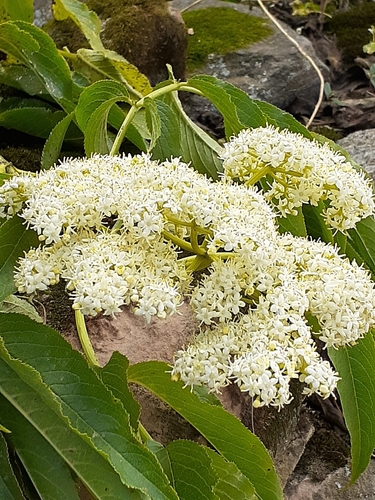
Sambucus peruviana
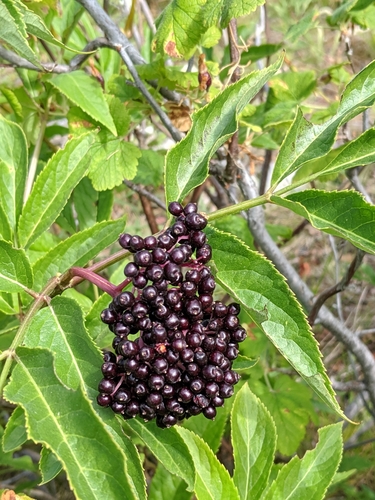
Sambucus pubens
American red elder, Eastern Red Elderberry, Eastern red-berry elder
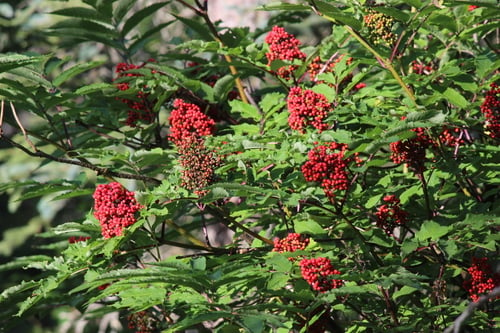
Sambucus racemosa
Red Elder, Red-berried elder, Alpine elder
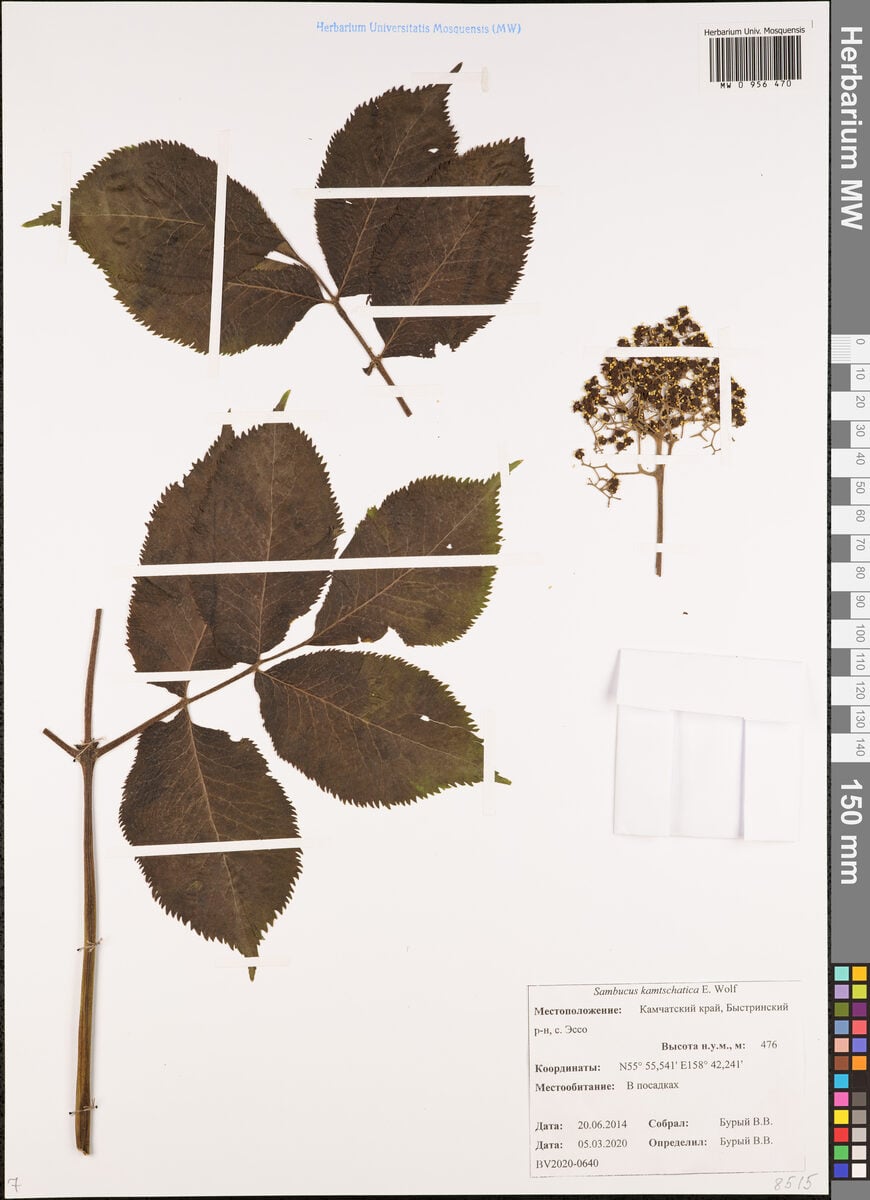
Sambucus racemosa subsp. kamtschatica
Red elder
Sambucus racemosa subsp. pubens
American red elder, Red-berry elder, Scarlet elder, Stinking elder
Sambucus sibirica
Siberian elder