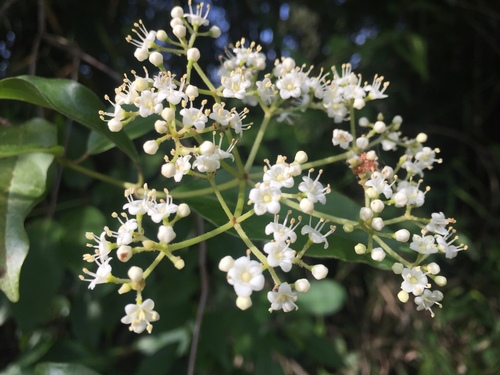
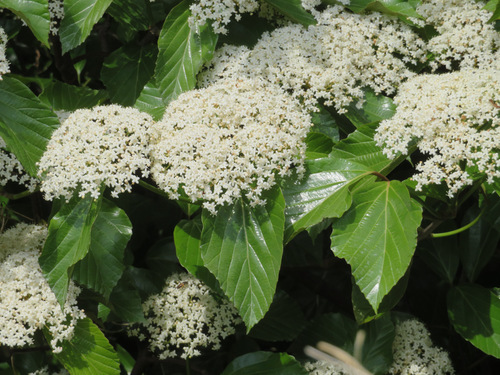
Sambucus pubens
Michx.
American red elder, Eastern Red Elderberry, Eastern red-berry elder
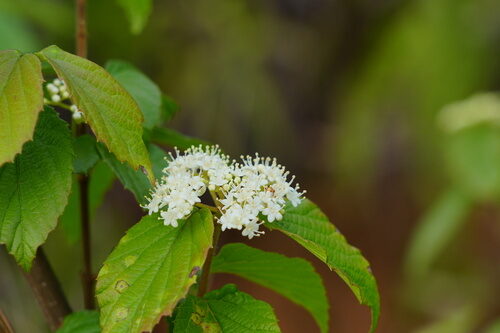
iNaturalist· cc-by-nc
(c) Michael Woodruff, some rights reserved (CC BY-NC)
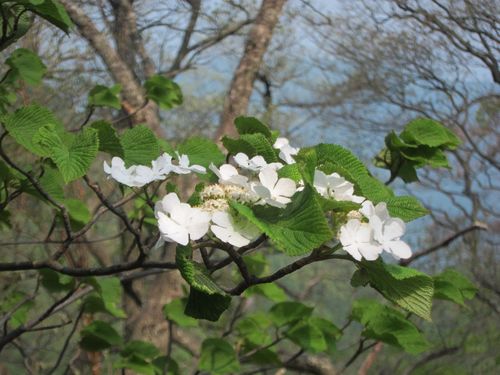
iNaturalist· cc-by-nc-sa
(c) Liv MW, some rights reserved (CC BY-NC-SA)
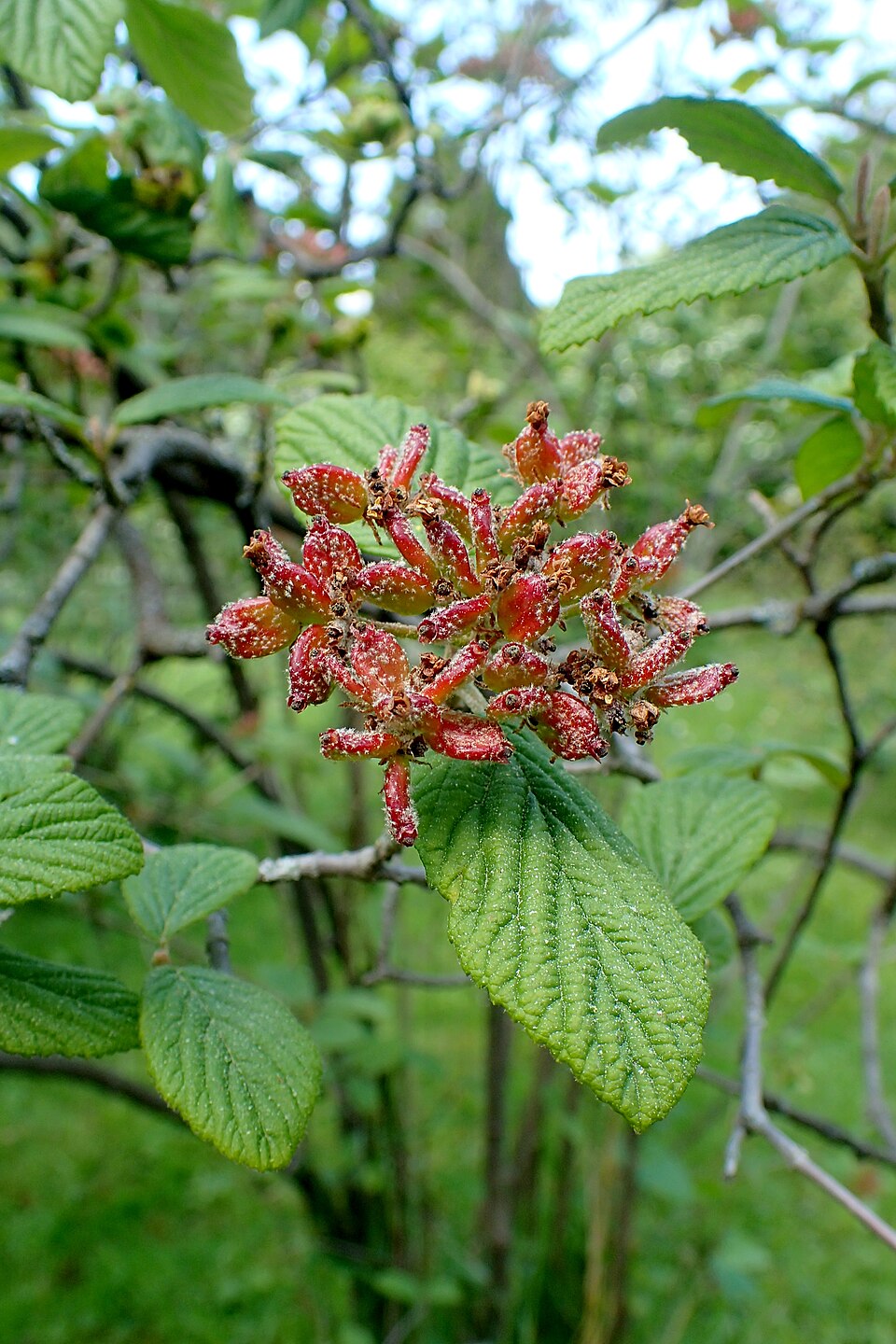
iNaturalist· cc-by-nc
(c) Stanley Wood, some rights reserved (CC BY-NC)
Summary
Source: WikipediaRed elderberry is a deciduous shrub reaching 4 m tall, hardy to UK zone 4. It produces hermaphrodite flowers from June to July, pollinated by insects. The plant thrives in light sandy, medium loamy, or heavy clay soils across a wide pH range from mildly acidic to mildly alkaline. It tolerates semi-shade or full sun, prefers moist conditions, and withstands strong winds and atmospheric pollution, though it cannot tolerate maritime exposure.
Description
A shrub. It grows 1-3.1 m tall. The leaves have 5-7 leaflets. These taper to the tip. The buds are plump and reddish. The flowers occur in clusters shaped like a pyramid. These appear as the leaves unfold. The fruit are red. They are probably edible but not attractive.
Edible Uses
The flowers are edible raw or cooked. The fruit, about 5mm in diameter and borne in large clusters, is edible raw or cooked but has a bitter flavour. It is quite nutritious, with a relatively high fat, protein, and carbohydrate content. Drying the fruit before use reduces some of its rank taste, and the large clusters make harvesting straightforward. Some caution is advised regarding toxicity. The root can be made into a tea-like beverage.
Traditional Uses
The bitter fruit are used for making pies, jelly and wine. The roots are used for a tea like drinks.
This uses section is brief — help expand it
Medicinal Uses
The bark and leaves are used as a diuretic and purgative. The blossoms have been used in the treatment of measles.
Known Hazards
Although no specific mention has been seen for this species, the leaves and stems of some, if not all, members of this genus are poisonous. The fruit of many species (although no records have been seen for this species) has been known to cause stomach upsets to some people. Any toxin the fruit might contain is liable to be of very low toxicity and is destroyed when the fruit is cooked. NC State University have noted Cyanogenic glycoside and alkaloids can cause low toxity if eaten.
Distribution
It grows in damp places on the edge of woods.
Where It Grows
Canada, North America, USA,
Cultivation
Tolerates most soils, including chalk, but prefers a moist loamy soil. Grows well in heavy clay soils. Tolerates some shade but is best in a sunny position. Tolerates atmospheric pollution and coastal situations. Closely related to S. racemosa and considered part of that species by some botanists. Plants in this genus are notably resistant to honey fungus.
Propagation
Seed is best sown as soon as it is ripe in autumn in a cold frame, where it should germinate in early spring. Stored seed sown in spring will likely germinate better with 2 months warm followed by 2 months cold stratification. Prick seedlings into individual pots when large enough to handle. If growth is good, young plants can go into permanent positions in early summer; otherwise, overwinter them in a sheltered nursery bed or in pots and plant out the following spring. Cuttings of half-ripe wood, 7–10cm with a heel, can be taken in July/August in a frame. Cuttings of mature wood from the current season's growth, 15–20cm with a heel, can be taken in late autumn in a frame or sheltered outdoor bed.
Other Uses
The stem is easily hollowed and can be used to make a whistle.
Notes
There are about 25 Sambucus species. Also put in the family Sambucaceae.
Dangerous Lookalikes
This plant can be confused with the following toxic species. Always verify identification carefully before consuming any wild plant.
Pokeweed
Phytolacca americana
Jakec
American red elder
Sambucus pubens
(c) Michael Woodruff, some rights reserved (CC BY-NC)
Pokeweed: Thick red/purple herbaceous stems (no bark), berries in a line (raceme), simple large leaves, large white taproot.
American red elder: Woody bark, berries in broad flat clusters (cymes), compound leaves with 5-7 leaflets.
Synonyms
References (8)
- Beckstrom-Sternberg, Stephen M., and James A. Duke. "The Foodplant Database." http://probe.nalusda.gov:8300/cgi-bin/browse/foodplantdb.(ACEDB version 4.0 - data version July 1994)
- Cormack, R. G. H., 1967, Wild Flowers of Alberta. Commercial Printers Edmonton, Canada. p 331
- Facciola, S., 1998, Cornucopia 2: a Source Book of Edible Plants. Kampong Publications, p 223
- Farrar, J.L., 1995, Trees of the Northern United States and Canada. Iowa State University press/Ames p 173
- Fl. bor.-amer. 1:181. 1803
Show all 8 references Hide references
- Moerman, D. F., 2010, Native American Ethnobotany. Timber Press. p 511 (As Sambucus racemosa subsp. pubens)
- Plants for a Future database, The Field, Penpol, Lostwithiel, Cornwall, PL22 0NG, UK. http://www.scs.leeds.ac.uk/pfaf/
- Toupal, R. S. & Hollenback, K., 2009, An Ethnobotany of Indiana Dunes National Lakeshore: Plant Uses of the Ojibwa People. Bureau of Applied Research in Anthropology. University of Arizona