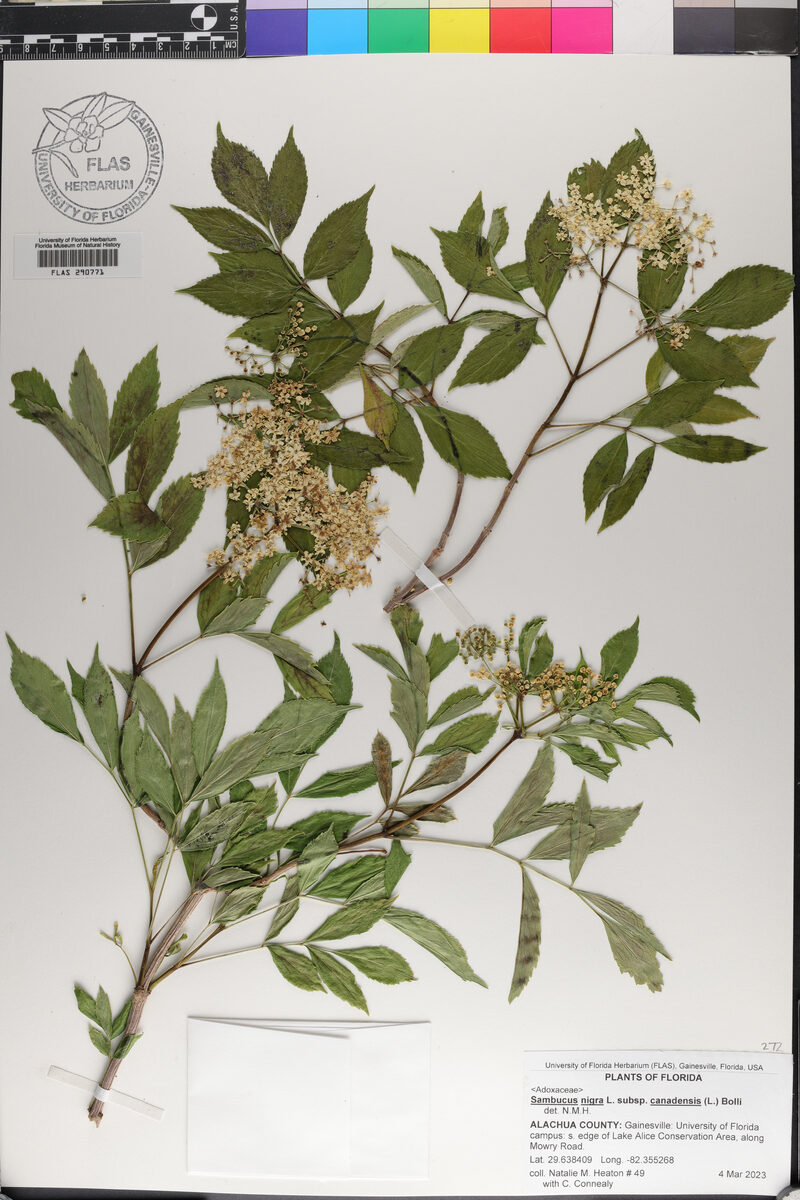
Viburnum mullaha
Buch.-Ham. ex D. Don
iNaturalist· cc-by-nc
(c) T. Abe Lloyd, some rights reserved (CC BY-NC), uploaded by T. Abe Lloyd
iNaturalist· cc-by
(c) Sagnik Dutta Roy, some rights reserved (CC BY)
Summary
A deciduous shrub reaching 3m tall, hardy to UK zone 9 and frost tender. Flowers in June. Hermaphroditic and insect-pollinated, not self-fertile. Grows in light sandy, medium loamy, and heavy clay soils with mildly acid, neutral, or basic pH. Adapts to semi-shade or full sun, preferring moist soil.
Description
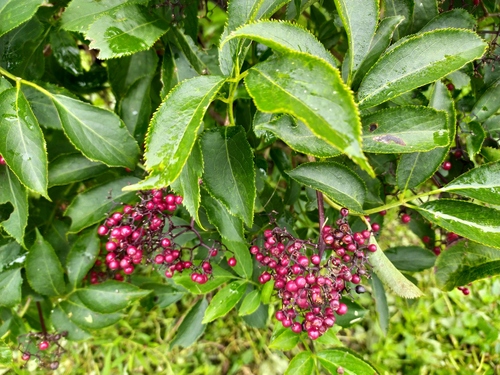
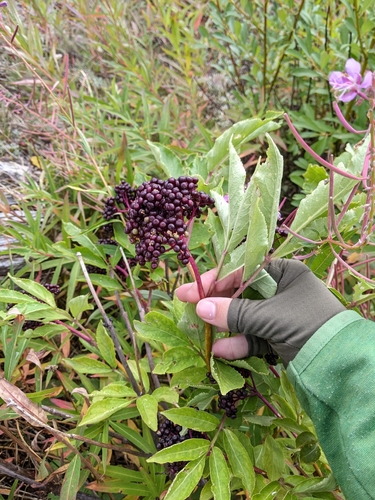
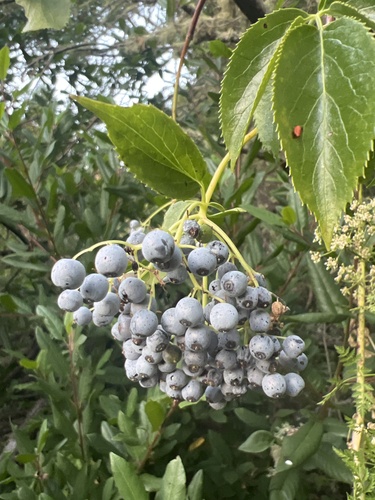
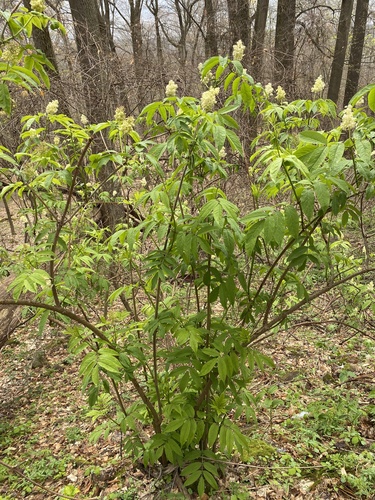
A tree. It grows to about 9 m high. The leaves have stalks. They are opposite. The leaves are 6-14 cm long by 3-5.5 cm wide. They are oval to sword shaped. They taper to the tip. There are teeth along the edge. There are hairs underneath. The flowers are white. They occur in flat topped arrangements at the ends of branches. The fruit is fleshy with a hard covering over the seed. They are oblong and bright red. The fruit are acidic and edible.
Edible Uses
The fruit can be eaten raw or cooked and has an acid taste.
Traditional Uses
Ripe fruit are acidic and are eaten fresh. The dried fruit powder are used in pickles. The leaves are used as flavouring.
This uses section is brief — help expand it
Medicinal Uses
Eating the crushed fruit acts as a stimulant, and the fruit juice is used to treat indigestion.
Distribution
It is a temperate plant. In SW China it grows in broad-leaved mixed forests between 2,200-2,700 m above sea level. In Nepal they grow between 1600-2700 m altitude. They grow in moist, shady places in oak forests.
Where It Grows
Asia, Bhutan, China, Himalayas, India, Indochina, Nepal, Northeastern India, Pakistan, Tibet,
Cultivation
An easily grown plant, succeeding in most soils but ill-adapted for poor soils and dry situations. Prefers a deep rich loamy soil in sun or semi-shade. Best if given shade from the early morning sun in spring. Plants are self-incompatible and need to grow close to a genetically distinct plant in the same species in order to produce fruit and fertile seed. Plants are given a hardiness zone of 9 (only tolerating light frosts) in, this is a bit surprising since they are found at elevations of up to 3000 metres in the Himalayas. This species is closely related to V. wilsonii.
Propagation
Seed is best sown in a cold frame as soon as it is ripe. Germination can be slow, sometimes taking more than 18 months. Seed harvested green — fully developed but not yet fully ripe — and sown immediately in a cold frame should germinate the following spring. Stored seed needs 2 months of warm stratification followed by 3 months of cold, and may still take 18 months to germinate. Prick seedlings into individual pots when large enough to handle, grow on in a cold frame or greenhouse, and plant out in late spring or early summer of the following year. Softwood cuttings taken in early summer in a frame should be potted individually once rooting begins and planted out the following late spring or early summer. Half-ripe cuttings, 5–8 cm long with a heel if possible, taken in July or August in a frame should be potted as soon as they start to root. These can be difficult to overwinter and are best kept under glass until the following spring. Mature wood cuttings taken in winter in a frame should root in early spring; pot when large enough and plant out in summer if sufficient new growth has been made, otherwise overwinter in a cold frame and plant out the following spring. Layering of the current season's growth in July or August takes 15 months.
Other Uses
A dye can be obtained from the fruit. The wood is moderately hard, and the straight branches are used for making walking sticks.
Notes
There are about 150 Viburnum species. Also put in the family Caprifoliaceae.
Synonyms
Also Known As
Anliacha, Asarey, Ensi, Eri, Gorakhuri, Hera, Ira, Jal boge, Kabase, Kanda malau, Kavase, Lal-tit-maliya, Lei-dum, Mahelo, Maleo, Malo, Molo, Phulsel, Richhoi, Richi, Tihanj, Titmalewa, Titmelau, Titmuya
References (20)
- Ambasta, S.P. (Ed.), 2000, The Useful Plants of India. CSIR India. p 674
- Aryal, K. P., et al, 2018, Diversity and use of wild and non-cultivated edible plants in the Western Himalaya. Journal of Ethnobiology and Ethnomedicine (2018) 14:10
- Bajracharya, D., 1980, Nutritive Values of Nepalese Edible Wild Fruits. Z. Lebensm. Unters. Forsch. 171: 363-366
- Dangol, D. R. et al, 2017, Wild Edible Plants in Nepal. Proceedings of 2nd National Workshop on CUAOGR, 2017.
- Flora of Pakistan. www.eFlora.org
Show all 20 references Hide references
- Gautam, R. S., et al, 2020, Wild Edible Fruits of Nepal. Int. J. Appl. Sci. Biotechnol. Vol 8(3): 289-304
- Gautam, R. S., et al, 2022, Ethnobotanical Review of Wild Edible Plants of Nepal. Journal of Natural History Museum Volume 32, 2021-22 p 100
- Hedrick, U.P., 1919, (Ed.), Sturtevant's edible plants of the world. p 674 (As Viburnum stellulatum)
- Kar, A., et al, 2013, Wild Edible Plant Resources used by the Mizos of Mizoram, India. Kathmandu University Journal of Science, Engineering and Technology. Vol. 9, No. 1, July, 2013, 106-126
- Khakurel, D., et al, 2021, Foods from the wild: Local knowledge, use pattern and distribution in Western Nepal. PLOS ONE.
- Manandhar, N.P., 2002, Plants and People of Nepal. Timber Press. Portland, Oregon. p 475
- Masoodi, H. U. R. & Sundriyal, R. C., 2020, Richness of non-timber forest products in Himalayan communities—diversity, distribution, use pattern and conservation status. Journal of Ethnobiology and Ethnomedicine 16:56
- Mehta, P. S. et al, 2010, Native plant genetic resources and traditional foods of Uttarakhand Himalaya for sustainable food security and livelihood. Indian Journal or Natural products and Resources. Vol 1(1), March 2010 pp 89-96
- Plants for a Future database, The Field, Penpol, Lostwithiel, Cornwall, PL22 0NG, UK. http://www.scs.leeds.ac.uk/pfaf/
- Prodr. 4:327. 1830 (As Viburnum stellulatum)
- Prodr. fl. nepal. 141. 1825
- Rana, D., et al, 2019, Ethnobotanical knowledge among the semi-pastoral Gujjar tribe in the high altitude (Adhwari’s) of Churah subdivision, district Chamba, Western Himalaya. Journal of Ethnobiology and Ethnomedicine (2019) 15:10
- Rawat, G.S., & Pangtey, Y.P.S., 1987, A Contribution to the Ethnobotany of Alpine Regions of Kumaon. J. Econ. Tax. Bot. Vol. 11 No. 1 pp 139-147
- Reis, S. V. and Lipp, F. L., 1982, New Plant Sources for Drugs and Foods from the New York Botanical Garden herbarium. Harvard. p 295
- Upreti, K., et al, 2010, Diversity and Distribution of Wild Edible Fruit Plants of Uttarakhand. Bioversity Potentials of the Himalaya. p 192