Viburnum erubescens
Wall. ex DC.
Reddish viburnum
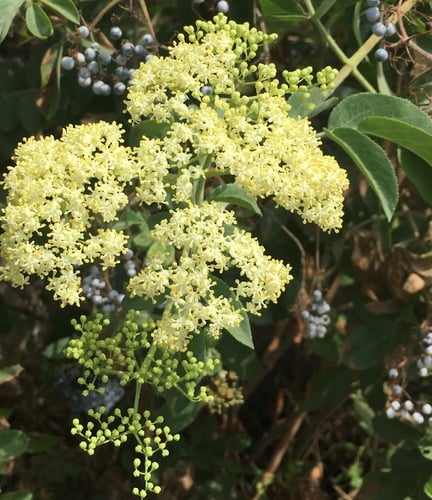
iNaturalist· cc-by-nc
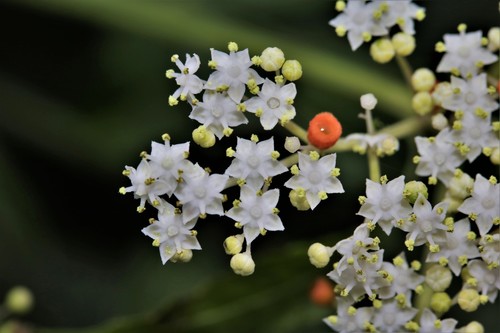
(c) Morten Ross, some rights reserved (CC BY-NC), uploaded by Morten Ross
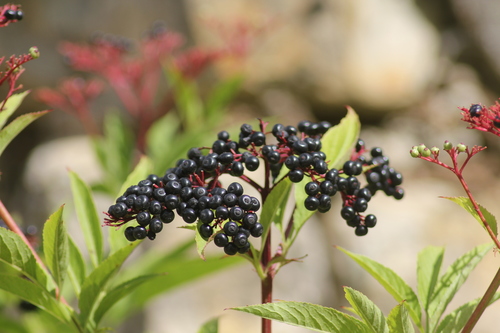
iNaturalist· cc-by-nc
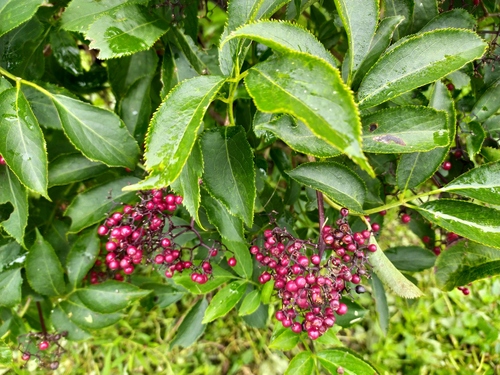
(c) Elizabeth Byers, some rights reserved (CC BY-NC)
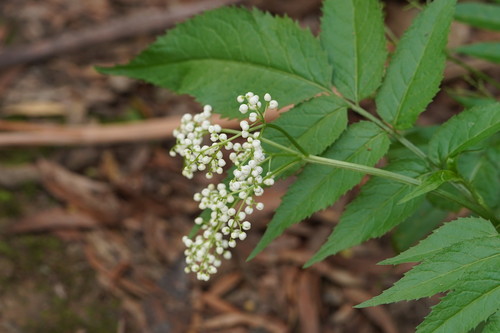
iNaturalist· cc-by-nc
(c) Elizabeth Byers, some rights reserved (CC BY-NC)
Summary
Source: WikipediaViburnum erubescens, the reddish viburnum, is a species of flowering plant in the family Viburnaceae. It is native to Sri Lanka, India, Nepal, Bangladesh, China, Myanmar, and Vietnam. It is a deciduous shrub that grows in forests and scrub. Flowers are fragrant and bloom April to June. The unimproved species is available from commercial suppliers, as is a putative variety, Viburnum erubescens var. gracilipes, the slender blushing viburnum, and a number of cultivars, including 'Foster', 'Lloyd Kenyon', 'Milke Danda', and 'Ward van Teylingen'.
Description
A tree. It grows to about 6 m high. It spreads 3 m wide. The leaves have stalks. They are opposite. The leaves are 2-13.5 cm long by 1-6.5 cm wide. They are oblong and taper to the tip. There are teeth along the edge. They are hairy underneath. The flowers are white or pinkish. The fruit is fleshy with a hard covering over the seed. It is oval and red.
Edible Uses
The fruit can be eaten raw or cooked. It has a sweet flavour, though there is very little flesh relative to the size of the single large seed.
Traditional Uses
The ripe fruit are eaten raw. The seed oil is used in cooking.
This uses section is brief — help expand it
Medicinal Uses
The juice of the roots is used in the treatment of coughs.
Distribution
It is a temperate to subtropical plant. In Nepal it grows between 1300-3300 m altitude. It grows in open places. It suits hardiness zones 6-11.
Where It Grows
Asia, Australia, Bhutan, China, Himalayas, India, Indochina, Myanmar, Nepal, SE Asia, Sikkim, Sri Lanka, Tibet,
Cultivation
An easily grown plant, it succeeds in most soils but is ill-adapted for poor soils and for dry situations. It prefers a deep rich loamy soil in sun or semi-shade. Best if given shade from the early morning sun in spring. Not all forms of this species are hardy in Britain. Plants are self-incompatible and need to grow close to a genetically distinct plant in the same species in order to produce fruit and fertile seed. The flowers are deliciously scented. A polymorphic species. The sub-species V. erubescens gracilipes. Rehd. fruits freely in Britain.
Propagation
Seed is best sown in a cold frame as soon as it is ripe. Germination can be slow, sometimes taking more than 18 months. Seed harvested green — fully developed but not yet fully ripe — and sown immediately in a cold frame should germinate the following spring. Stored seed needs 2 months of warm stratification followed by 3 months of cold stratification, and may still take 18 months to germinate. Prick seedlings into individual pots when large enough to handle and grow on in a cold frame or greenhouse, planting out in late spring or early summer the following year. Softwood cuttings taken in early summer in a frame should be potted individually once rooting begins and planted out the following late spring or early summer. Half-ripe cuttings, 5–8cm long with a heel if possible, taken in July or August in a frame, should be potted as soon as they root. These can be difficult to overwinter and are best kept under glass until spring before planting out. Mature wood cuttings taken in winter in a frame should root in early spring; pot when large enough and plant out in summer if sufficient new growth has formed, otherwise overwinter in a frame and plant out the following spring. Layering of the current season's growth in July or August takes 15 months.
Other Uses
The wood is soft to hard, with a close and even grain. It is hardest in the cooler parts of the plant's range, and the Himalayan form is considered a possible substitute for boxwood (Buxus spp.).
Notes
There are about 150 Viburnum species. Also put in the family Caprifoliaceae.
Synonyms
Also Known As
Asare, Asarey, Ashare, Bajrang, Ban chulo, Bhamar, Damshing, Ganaule, GandheyGannee, Ganni, Kancha, Masino kanike, Nakovli, Tseh-za-klu-shing
References (13)
- Ambasta, S.P. (Ed.), 2000, The Useful Plants of India. CSIR India. p 674
- Aryal, K. P., et al, 2018, Diversity and use of wild and non-cultivated edible plants in the Western Himalaya. Journal of Ethnobiology and Ethnomedicine (2018) 14:10
- Cundall, P., (ed.), 2004, Gardening Australia: flora: the gardener's bible. ABC Books. p 1466
- Gautam, R. S., et al, 2020, Wild Edible Fruits of Nepal. Int. J. Appl. Sci. Biotechnol. Vol 8(3): 289-304
- Gautam, R. S., et al, 2022, Ethnobotanical Review of Wild Edible Plants of Nepal. Journal of Natural History Museum Volume 32, 2021-22 p 100
Show all 13 references Hide references
- Ghimeray, A. K., Lamsal, K., et al, 2010, Wild edible angiospermic plants of the Illam Hills (Eastern Nepal) and their mode of use by local community. Korean J. Pl. Taxon. 40(1)
- Ghimire, S. K., et al, 2008, Non-Timber Forest Products of Nepal Himalaya. WWF Nepal p 39
- Li, S., et al, 2020, Monpa, memory, and change: an ethnobotanical study of plant use in Mêdog County, South-east Tibet, China. Journal of Ethnobiology and Ethnomedicine. (2020) 16:5 p 16
- Manandhar, N.P., 2002, Plants and People of Nepal. Timber Press. Portland, Oregon. p 474
- Plants for a Future database, The Field, Penpol, Lostwithiel, Cornwall, PL22 0NG, UK. http://www.scs.leeds.ac.uk/pfaf/ (Also as Viburnum erubescens subsp. gracilipes)
- Prodr. 4:329. 1830 (N. Wallich, Pl. asiat. rar. 2:29, t. 134. 1831)
- C. S. Sargent, Pl. wilson. 1:107. 1911 (As Viburnum erubescens subsp. gracilipes)
- Uprety, Y., et al, 2016, Traditional use and management of NTFPs in Kangchenjunga Landscape: implications for conservation and livelihoods. Journal of Ethnobiology and Ethnomedicine (2016) 12:19