Sambucus javanica
Reinw. ex Blume
Chinese elder, Java elderberry, Himalayan elder
iNaturalist· cc-by-nc
(c) 方伊琳(阿鈣), some rights reserved (CC BY-NC), uploaded by 方伊琳(阿鈣)
iNaturalist· cc-by-nc
(c) 謝忠良, some rights reserved (CC BY-NC), uploaded by 謝忠良
iNaturalist· cc-by-nc
(c) Lijin Huang (紫楝), some rights reserved (CC BY-NC), uploaded by Lijin Huang (紫楝)
Summary
Source: WikipediaSambucus javanica, the Chinese elder, is a species of elderberry in the family Viburnaceae native to subtropical and tropical Asia. It is native to Bhutan, Burma, Cambodia, China (except in the north), India, Indonesia, Japan, Laos, Malaysia (in Sabah), the Philippines, southern Thailand, and Vietnam. It is a perennial herb or a small shrub 1–2 m (3 ft 3 in – 6 ft 7 in) tall. Parts of the plant are used as analgesics, blood purifiers, bowel and bladder stimulants, or even for poison. It is also believed to be an aid against numbness, rheumatism, spasms, swelling, and trauma, as well as for general bone and circulatory health.
Description
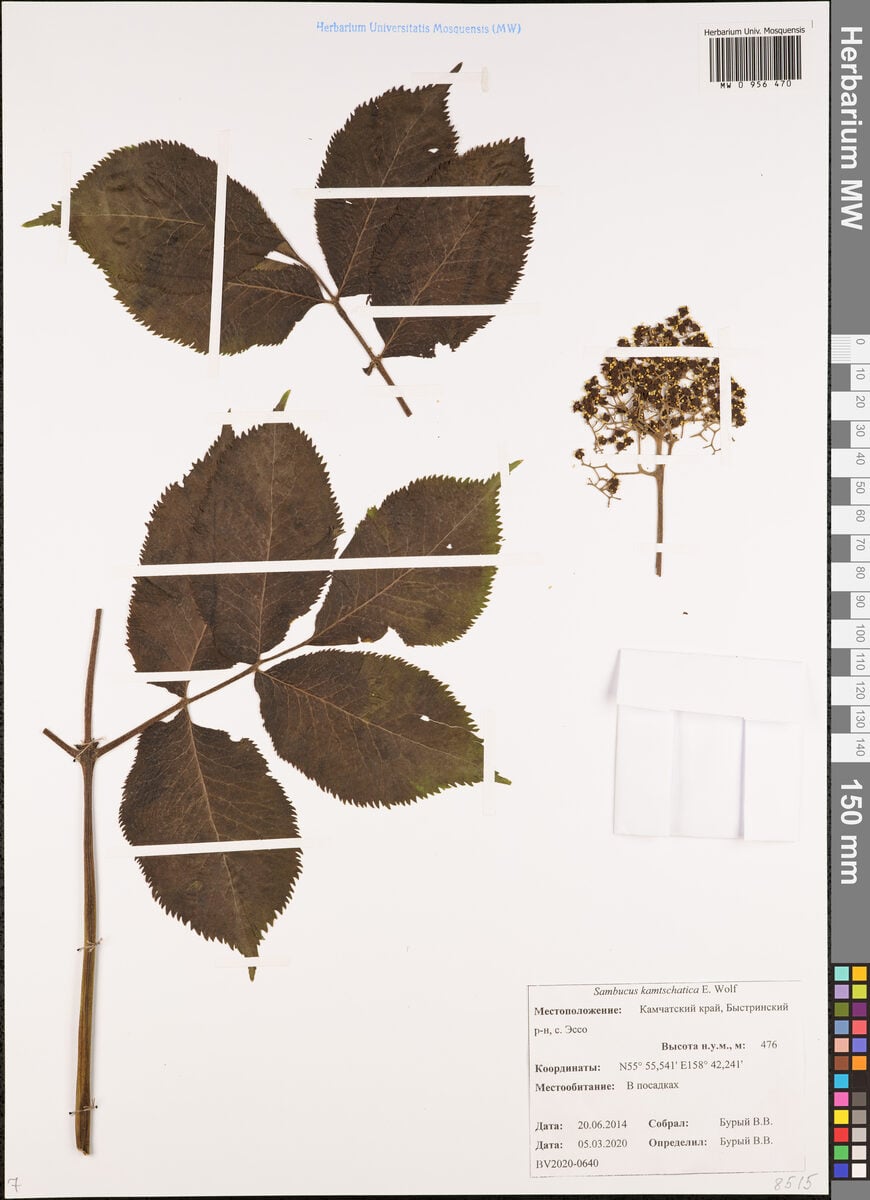
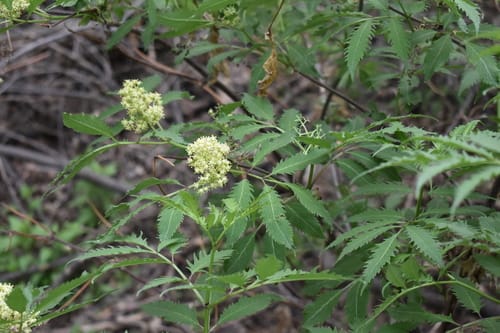
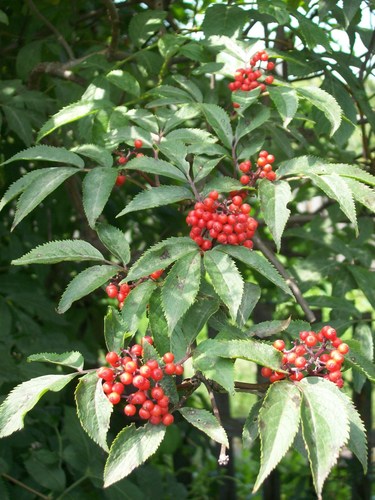
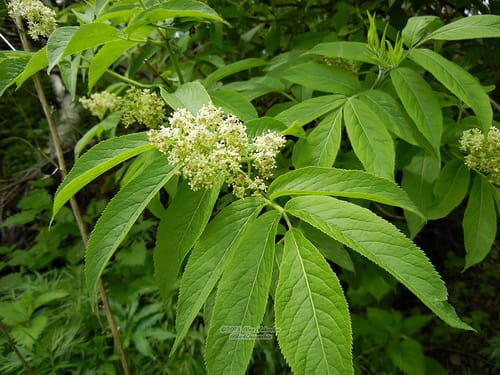
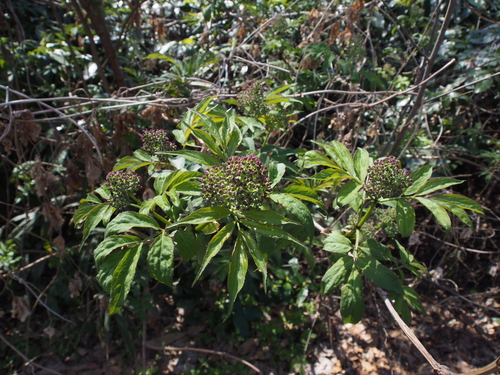
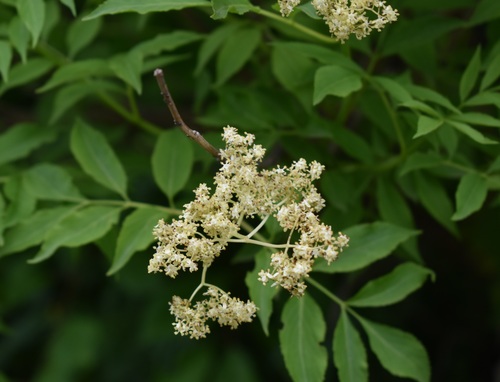
An evergreen shrub. It grows 70-100 cm high. The roots are fibrous. The bark is brown. The leaves are 6-12 cm long and 2.5-3 cm wide. The flowers are small and white. The fruit are small and round. They are red when ripe.
Edible Uses
The fruit is small but borne in large clusters, making it easy to harvest, and can be eaten raw or cooked. Some caution is advised regarding toxicity. The flowers can be eaten raw or cooked. The leaves and young stems can be cooked, though eating the leaves is probably unwise given the toxicity notes. The root can be cooked, though whether it is poisonous is uncertain.
Traditional Uses
The fruit are eaten fresh. The fruit are also preserved, used in confectionary, or made into drinks. The stems, leaves and shoots are parboiled and eaten. The roots are parboiled and eaten.
Medicinal Uses
The leaves and root are used to treat pain and numbness, bone diseases, and rheumatic problems. The fruit is depurative and purgative; a decoction of the fruit is used to treat injuries, skin diseases, and swellings. A decoction of the whole plant is anodyne, depurative, and diuretic.
Known Hazards
Although no specific mention has been seen for this species, the leaves and stems of some, if not all, members of this genus are poisonous. The fruit of many species (although no records have been seen for this species) has been known to cause stomach upsets to some people. Any toxin the fruit might contain is liable to be of very low toxicity and is destroyed when the fruit is cooked.
Distribution
It is a tropical plant. It grows near streams and grasslands between 300-2,600 m above sea level in southern China. It grows by creeks and ponds and in humid areas. In Sichuan and Yunnan.
Where It Grows
Asia, Bangladesh, China, India, Indochina, Indonesia, Japan, Laos, Malaysia, Myanmar, Northeastern India, Philippines, SE Asia, Taiwan, Thailand, Tibet, Vietnam,
Cultivation
We have very little information on this species and do not know if it will be hardy in Britain, though judging by its native range it is only likely to be hardy outdoors in the mildest areas of the country. There is some confusion over the true identity of this plant. Some authorities suggest that this name is a synonym of S. chinensis, and we also have two different authors for the name of this species, the name mentioned above, from, and also Blume, which is mentioned in. The following notes are based on the general needs of the genus. Tolerates most soils, including chalk, but prefers a moist loamy soil. Tolerates some shade but is best in a sunny position. Tolerates atmospheric pollution and coastal situations. Plants in this genus are notably resistant to honey fungus.
Propagation
Seed is best sown as soon as ripe in autumn in a cold frame, where it should germinate in early spring. Stored seed sown in spring will germinate more reliably after 2 months of warm followed by 2 months of cold stratification. Prick seedlings into individual pots when large enough; if growth is strong, plant out in early summer, otherwise hold in a sheltered nursery bed or pots and plant out the following spring. Half-ripe cuttings of 7–10cm with a heel can be taken in July or August in a frame. Hardwood cuttings of 15–20cm with a heel from the current season's growth can be taken in late autumn in a frame or sheltered outdoor bed.
Other Uses
None known
Production
In Yunnan fruit are harvested from July to September.
Notes
There are about 25 Sambucus species. Also put in the family Sambucaceae.
Dangerous Lookalikes
This plant can be confused with the following toxic species. Always verify identification carefully before consuming any wild plant.
Pokeweed
Phytolacca americana
Jakec
Chinese elder
Sambucus javanica
(c) 方伊琳(阿鈣), some rights reserved (CC BY-NC), uploaded by 方伊琳(阿鈣)
Pokeweed: Thick red/purple herbaceous stems (no bark), berries in a line (raceme), simple large leaves, large white taproot.
Chinese elder: Woody bark, berries in broad flat clusters (cymes), compound leaves with 5-7 leaflets.
Synonyms
Also Known As
Chieh-ku-ts'ao, Debangqiongjie, Elderberi jawa, Galeni, Hoklati, Munongzi, Sangitan putih, Thuoc moi
References (15)
- Anderson, E. F., 1993, Plants and people of the Golden Triangle. Dioscorides Press. p 220
- Bijdr. 13:657. 1826
- Dobriyal, M. J. R. & Dobriyal, R., 2014, Non Wood Forest Produce an Option for Ethnic Food and Nutritional Security in India. Int. J. of Usuf. Mngt. 15(1):17-37
- Facciola, S., 1998, Cornucopia 2: a Source Book of Edible Plants. Kampong Publications, p 222
- Gardner, S., et al, 2000, A Field Guide to Forest Trees of Northern Thailand, Kobfai Publishing Project. p 217
Show all 15 references Hide references
- Geng, Y., et al, 2016, Traditional knowledge and its transmission of wild edibles used by the Naxi in Baidi Village, northwest Yunnan province. Journal of Ethnobiology and Ethnomedicine. 12:10
- Hani Medicine of Xishuangbanna, 1999, p 31 (As Sambucus chinensis)
- Ju, Y., et al, 2013, Eating from the wild: diversity of wild edible plants used by Tibetans in Shangri-la region, Yunnan, China, Journal of Ethnobiology and Ethno medicine 9:28 (As Sambucus chinensis)
- Lim, T. K., 2015, Edible Medicinal and Non Medicinal Plants. Volume 9, Modified Stems, Roots, Bulbs. Springer p 74
- Pasha, M. K. & Uddin, S. B., 2019, Minor Edible Fruits of Bangladesh. Bangladesh J. Plant Taxon. 26(2): 299–313
- Plants for a Future database, The Field, Penpol, Lostwithiel, Cornwall, PL22 0NG, UK. http://www.scs.leeds.ac.uk/pfaf/ (As Sambucus chinensis)
- Plants for a Future database, The Field, Penpol, Lostwithiel, Cornwall, PL22 0NG, UK. http://www.scs.leeds.ac.uk/pfaf/
- Sawian, J. T., et al, 2007, Wild edible plants of Meghalaya, North-east India. Natural Product Radiance Vol. 6(5): p 421
- Singh, H.B., Arora R.K.,1978, Wild edible Plants of India. Indian Council of Agricultural Research, New Delhi. p 37
- Sukarya, D. G., (Ed.) 2013, 3,500 Plant Species of the Botanic Gardens of Indonesia. LIPI p 709