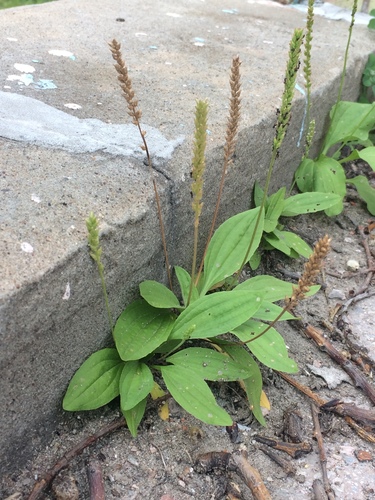
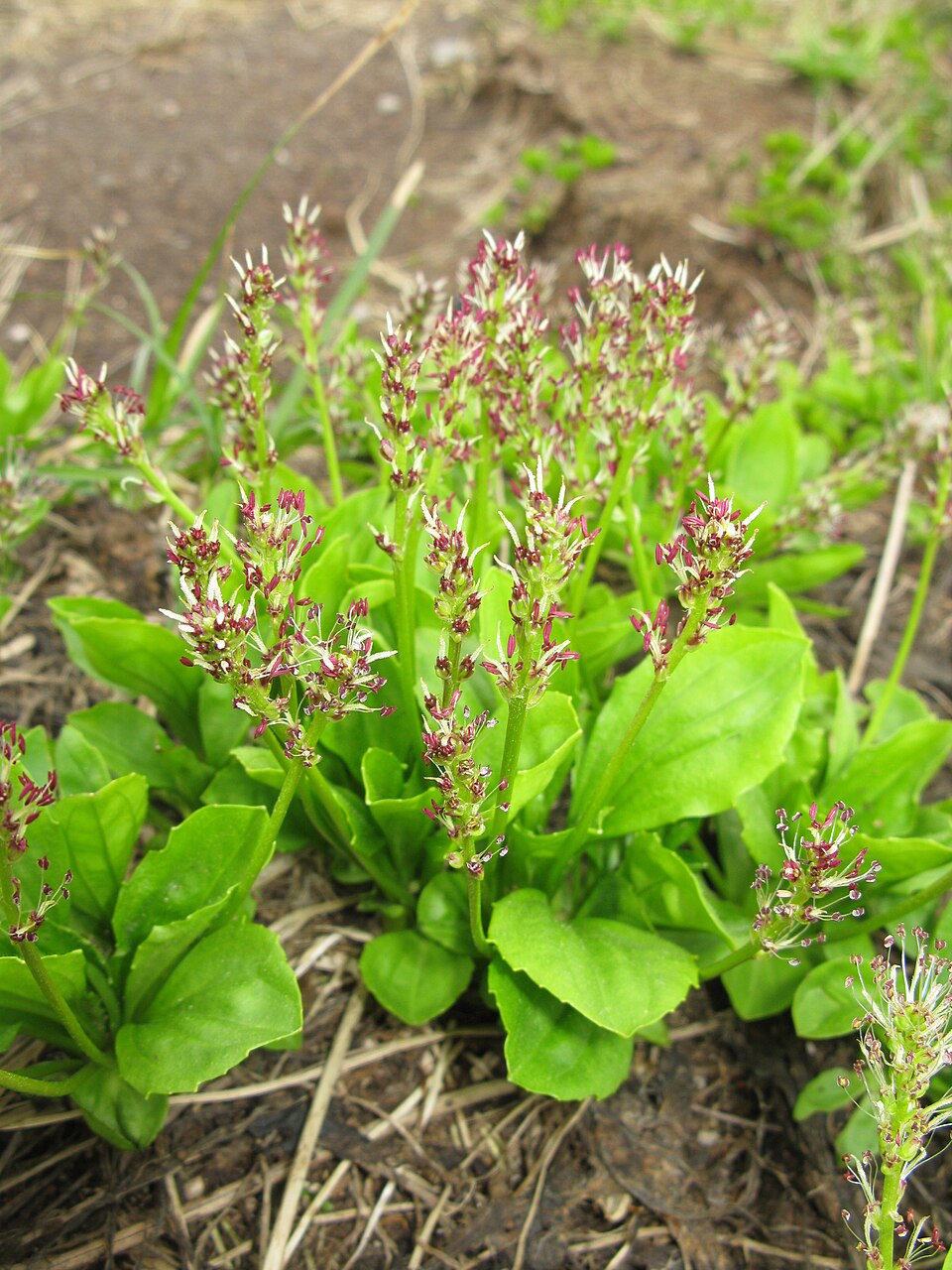
Veronica americana
Schwein. ex Benth.
American brooklime
iNaturalist· cc-by-nc
(c) nodaknaturalist, some rights reserved (CC BY-NC)
iNaturalist· cc-by-nc
(c) Julia V. Shner, some rights reserved (CC BY-NC)
Summary
Source: WikipediaVeronica americana, variously called American brooklime or American speedwell, is a flowering plant native to temperate and arctic Asia and North America where it grows in streams and bottomlands. It is a herbaceous perennial with glabrous stems 10–100 cm (4–40 in) long that bear terminal or axillary racemes or spikes of soft violet flowers. The leaves are 1.5–8 cm (0.6–3.1 in) long and 3 to 20 times as long as wide, short-petiolate, glabrous, serrate to almost entire. The plant can be confused with Scutellaria (skullcap) and other members of the mint family. Members of the mint family have square sided stems, and Veronica species have rounded stems.
Description
A herb. The stems are succulent and creeping. It grows 60-75 cm tall. The leaves are sword shaped and smooth. There are sharp teeth along the edges. The flowers are small and violet or lilac. They are in the axils of leaves.
Edible Uses
Leaves can be eaten raw or cooked. They have a hot flavour and work well as a substitute for watercress.
Traditional Uses
The young growth tips can be washed and added to salads. They can also be boiled and eaten as a vegetable. They are used as flavouring for bacon fat or butter. The leaves are brewed into tea.
Medicinal Uses
Expectorant.
Distribution
It is a temperate plant. It often grows along stream banks and swamps and near clear ponds.
Where It Grows
Asia, Canada, Europe, Japan, Korea, North America, USA,
Cultivation
An easily grown plant, succeeding in a moderately fertile wet soil or in shallow water. Prefers cool summers. Plants do not demand high light levels. Closely related to V. beccabunga.
Propagation
Sow seed in autumn in a cold frame. Prick seedlings out into individual pots once large enough to handle, then plant out in summer. Divide plants in autumn or spring — larger divisions can go straight into permanent positions. Pot up smaller divisions and grow on in light shade in a greenhouse or cold frame until established, then plant out in summer or the following spring.
Other Uses
None known.
Notes
There are about 250 Veronica species. Also put in the family Scrophulariaceae.
References (9)
- A. L. P. P. de Candolle, Prodr. 10:468. 1846
- Elias, T.S. & Dykeman P.A., 1990, Edible Wild Plants. A North American Field guide. Sterling, New York p 144
- Facciola, S., 1998, Cornucopia 2: a Source Book of Edible Plants. Kampong Publications, p 230
- Kermath, B. M., et al, 2014, Food Plants in the Americas: A survey of the domesticated, cultivated and wild plants used for Human food in North, Central and South America and the Caribbean. On line draft. p 905
- Kiple, K.F. & Ornelas, K.C., (eds), 2000, The Cambridge World History of Food. CUP p 1738
Show all 9 references Hide references
- MacKinnon, A., et al, 2009, Edible & Medicinal Plants of Canada. Lone Pine. p 246
- Michael, P., 2007, Edible Wild Plants and Herbs. Grub Street. London. p 43
- Plants for a Future database, The Field, Penpol, Lostwithiel, Cornwall, PL22 0NG, UK. http://www.scs.leeds.ac.uk/pfaf/
- Slocum, P.D. & Robinson, P., 1999, Water Gardening. Water Lilies and Lotuses. Timber Press. p 103