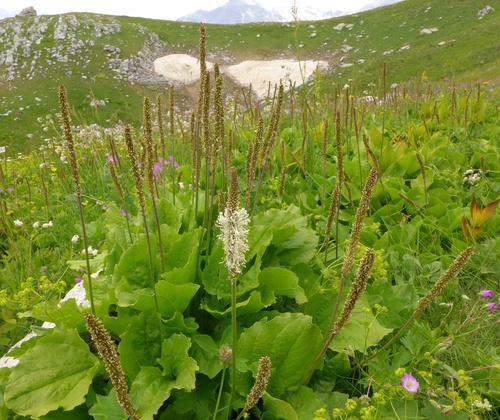
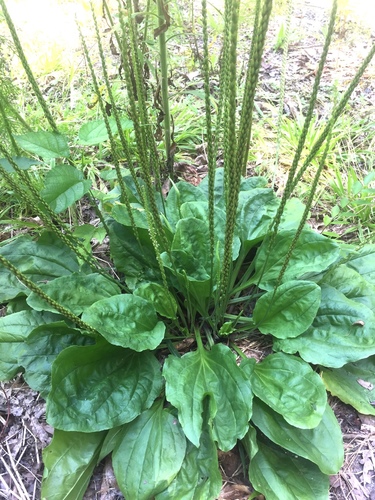
Plantago depressa
Willd.
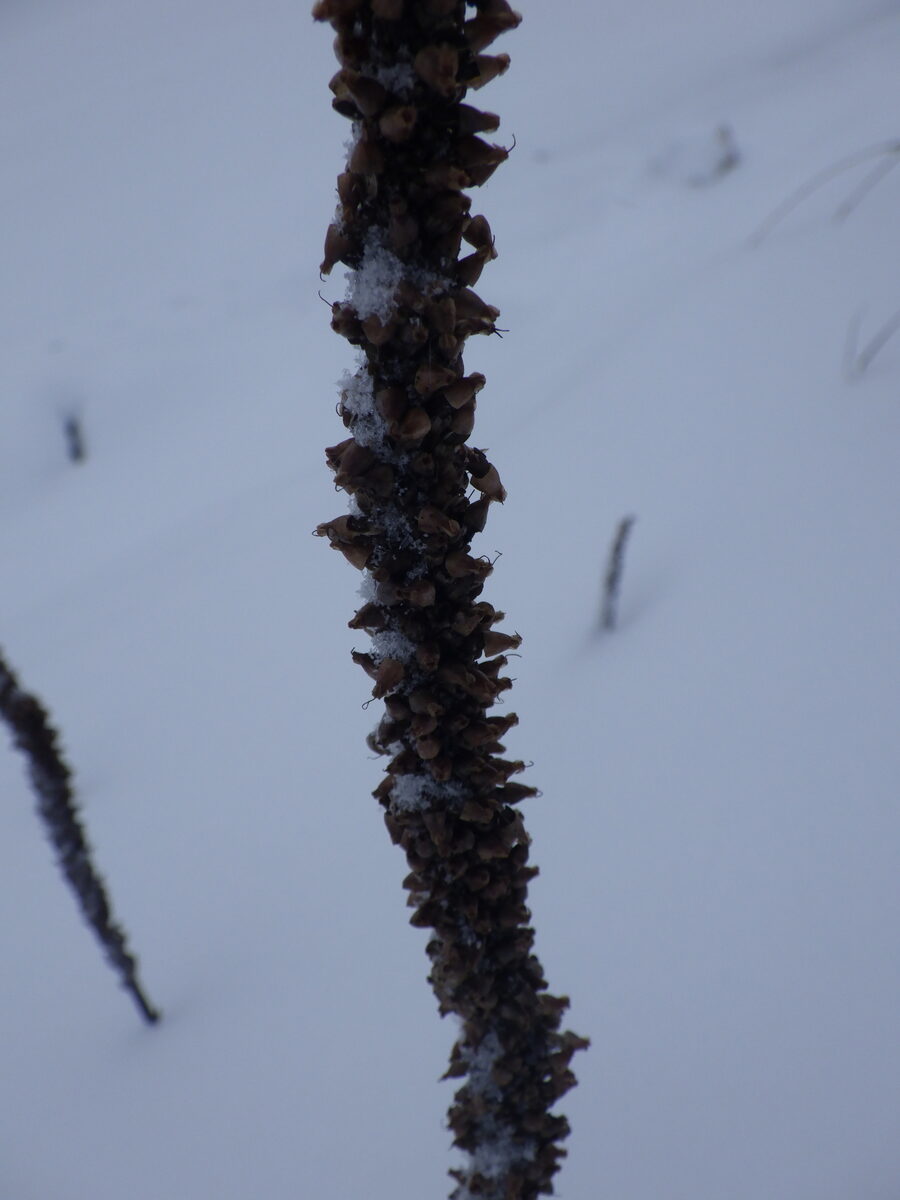
iNaturalist· cc-by-nc
(c) Мария Маренина, some rights reserved (CC BY-NC), uploaded by Мария Маренина
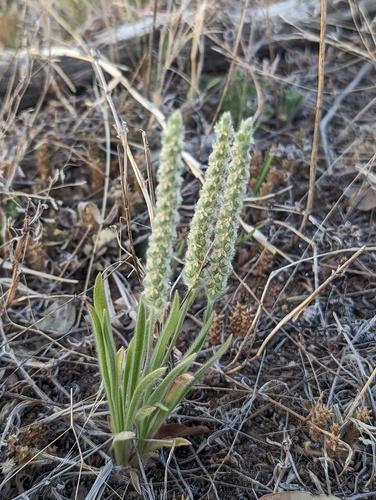
iNaturalist· cc-by-nc
(c) Alla Verkhozina, some rights reserved (CC BY-NC), uploaded by Alla Verkhozina
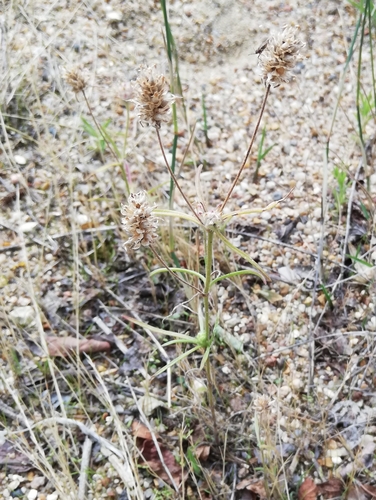
iNaturalist· cc-by-nc
(c) Alexey P. Seregin, some rights reserved (CC BY-NC), uploaded by Alexey P. Seregin
Summary
Source: WikipediaA perennial with hermaphroditic flowers pollinated by wind and self-fertile. Grows in light sandy, medium loamy, and heavy clay soils with good drainage. Tolerates mildly acidic to basic pH. Adapts to partial shade or full sun conditions and prefers moist soil.
Description
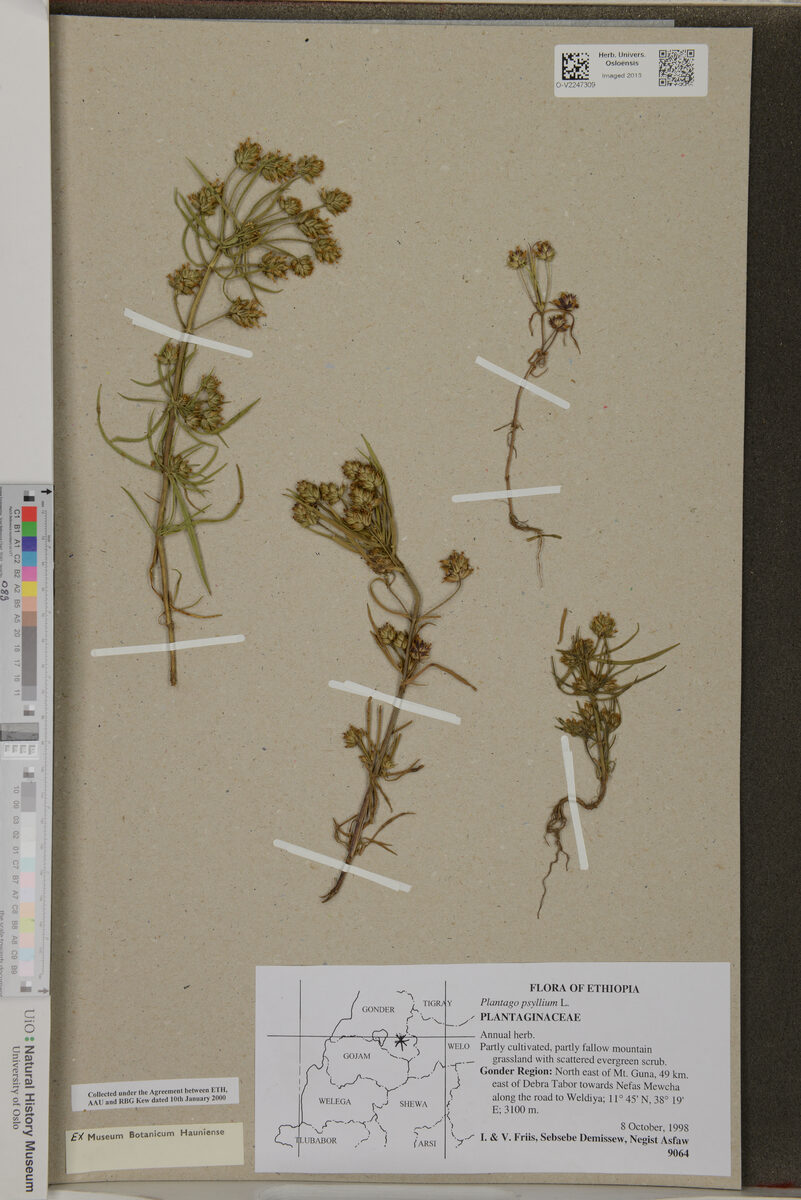
An annual herb. It grows 12 cm tall. It has a long fleshy taproot. The leaves are in rings. The leaf blade is 5-10 cm long and 2-5 cm wide. They are narrowly sword shaped. The flower spike is a narrow cylinder shape. It grows 6-12 cm tall.
Edible Uses
Young leaves can be eaten raw or cooked, though this plant is considered a famine food and would only be used when nothing else is available.
Traditional Uses
The leaves are eaten raw or cooked as a vegetable. They are usually soaked in water then stir fried. They are also used for soup.
This uses section is brief — help expand it
Medicinal Uses
The seeds contain up to 30% mucilage, which swells in the gut and acts as a bulk laxative while soothing irritated membranes. The seed husks alone are sometimes used in place of the whole seeds.
Distribution
It is a temperate plant. It grows in wet mountain meadows and along river banks from near sea level to 4,500 m above sea level. In Sichuan and Yunnan.
Where It Grows
Afghanistan, Asia, Bhutan, Central Asia, China, Himalayas, India, Japan, Kazakhstan, Korea, Kyrgyzstan, Manchuria, Mongolia, Northeastern India, Pakistan, Russia, Siberia, Tajikistan, Tibet,
Cultivation
We have very little information on this species and do not know if it will be hardy in Britain. The following notes are based on the general needs of the genus. Succeeds in any moderately fertile soil in a sunny position.
Propagation
Sow seed in spring in a cold frame. Once seedlings are large enough to handle, prick them out into individual pots and plant out in early summer. If seed is plentiful, a direct outdoor sowing can be made in situ from mid to late spring.
Other Uses
None known.
Notes
The plantains or Plantaginaceae are mostly in temperate regions. There are about 165 Plantago species.
Synonyms
Also Known As
Che gu lu cai, Che lun cai, Che qian, Elzigen cihi, Ha pa yu cai, Jia gu ma, Tha ram, Vohpibil the, Vokpibilteh, Wu mu dian wu
References (16)
- BARANOV,
- Boesi, A., 2014, Traditional knowledge of wild food plants in a few Tibetan communities. Journal of Ethnobiology and Ethnomedicine 10:75
- Chen, W., et al, 2021, Wild plants used by the Lhoba people in Douyu Village, characterized by high mountains and valleys, in southeastern Tibet, China. Journal of Ethnobiology and Ethnomedicine (2021) 17:46
- "Chinese Nutrition Journal", 2002, Vol 23(8) p 298 (As Plantago deoressa)
- Enum. pl. suppl. 8. 1814 ("1813")
Show all 16 references Hide references
- Flora of Pakistan. www.eFloras.org
- Gangte, H. E., et al, 2013, Wild Edible Plants used by the Zou Tribe in Manipur, India. International Journal of Scientific and Research Publications, Volume 3, Issue 5
- Guite, C., 2016, Study of wild edible plants associated with the Paite Tribe of Manipur, India. International Journal of Current Research. Vol. 8, Issue 11, pp. 40927-40932
- Kang, Y., et al, 2014, Wild food plants used by the Tibetans of Gongba Valley (Zouqu country, Gansu, China) Journal of Ethnobiology and Ethnomedicine 10:20
- Luo, B., et al, 2019, Wild edible plants collected by Hani from terraced rice paddy agroecosystem in Honghe Prefecture, Yunnan, China. Journal of Ethnobiology and Ethnomedicine 15:56
- Plants for a Future database, The Field, Penpol, Lostwithiel, Cornwall, PL22 0NG, UK. http://www.scs.leeds.ac.uk/pfaf/
- Sachula, et al, 2020, Wild edible plants collected and consumed by the locals in Daqinggou, Inner Mongolia, China. Journal of Ethnobiology and Ethnomedicine (2020) 16:60
- Sharma, L. et al, 2018, Diversity, distribution pattern, endemism and indigenous uses of wild edible plants in Cold Desert Biosphere Reserve of Indian Trans Himalaya. Indian Journal of Traditional Knowledge. Vol 17(1) January 2018 pp 122-131
- Urgamal, M., Oyuntsetseg, B., Nyambayar, D. & Dulamsuren, Ch. 2014. Conspectus of the vascular plants of Mongolia. (Editors: Sanchir, Ch. & Jamsran, Ts.). Ulaanbaatar, Mongolia. “Admon“ Press. 334pp. (p. 79-90).
- Wang, J. et al, 2013, A Study on the Utilization of Wild Plants for Food in Liangshan Yi Autonomous Prefecture. Plant Diversity and Resources. 35(4): 416-471
- Zhang, L., et al, 2016, Ethnobotanical study of traditional edible plants used by the Naxi people during droughts. Journal of Ethnobiology and Ethnomedicine. 12:39