Artocarpus integer
(Thunb.) Merr.
Chempedak
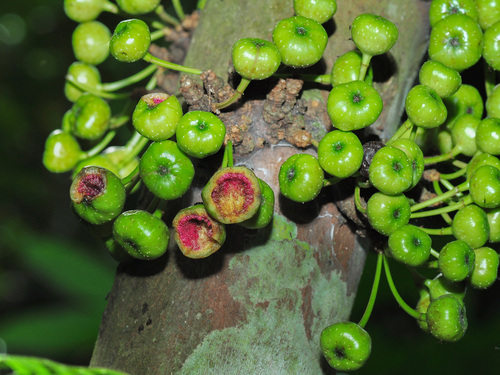
iNaturalist· cc-by-nc-sa
(c) Ahmad Fuad Morad, some rights reserved (CC BY-NC-SA)
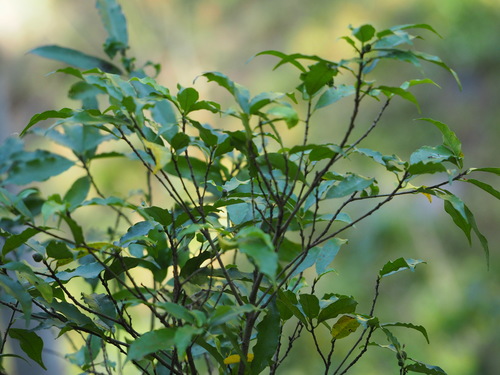
iNaturalist· cc-by-nc
(c) Steven Kurniawidjaja, some rights reserved (CC BY-NC), uploaded by Steven Kurniawidjaja
iNaturalist· cc-by-nc
(c) Rafidah Abdul Rahman, some rights reserved (CC BY-NC)
Summary
Source: WikipediaArtocarpus integer, commonly known as chempedak or cempedak, is a species of tree in the family Moraceae, in the same genus as breadfruit and jackfruit. It is native to Southeast Asia. Cempedak is an important crop in Malaysia and is also popularly cultivated in southern Thailand and parts of Indonesia, and has the potential to be utilized in other areas. It is currently limited in range to Southeast Asia, with some trees in Australia and Hawaii.
Description
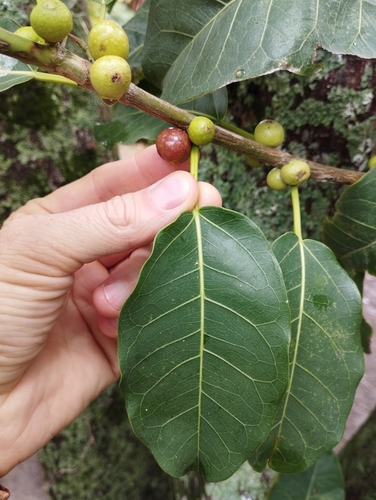
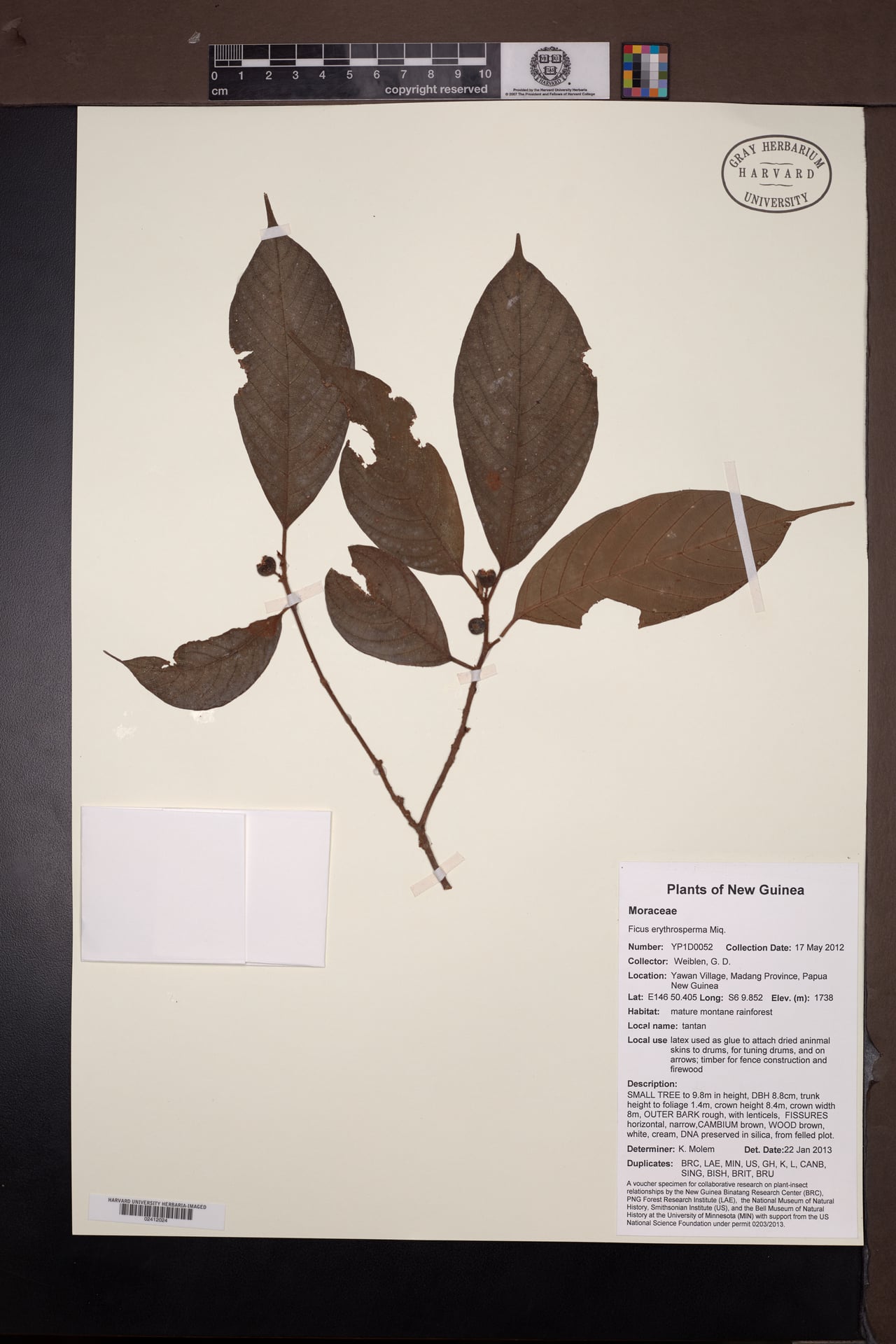
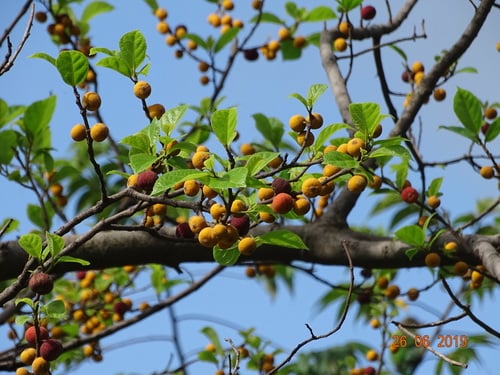
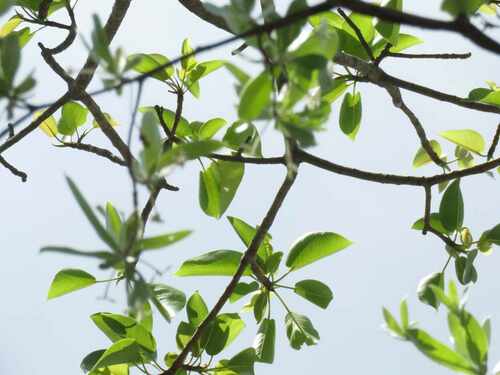
A tree up to 20-35 m tall. The trunk can be 55 cm across. The bark is dark grey or red-brown. The twigs are 2-4 mm thick. The leaves are leathery. They are oval and 5-25 cm long by 2.5-12 cm wide. The base of the leaf tapers. The flowers occur singly in the axils of leaves. The male heads are pale green or yellow. They are finger like and 30-55 mm long by 9-12 mm wide. They are smooth. The flower stalk is 25-60 mm long. The fruit is a compound fruit. It is produced on the trunk and main branches. It can be 20-50 cm long by 10-15 cm wide. The skin is yellow to brown. There are many fleshy spines over the fruit. The flesh of the fruit is yellow to light brown, It has a slimy texture. The fruit are edible. The seeds are oblong. They are 30 mm long by 20 mm wide. They are covered in a cream slimy coat.
Edible Uses
Edible Parts: Fruit Leaves Seed Edible Uses: Edible portion: Fruit, Seeds, Leaves. Fruit - raw or cooked. The pulp of the ripe fruit is golden-yellow, it is rather slimy and strongly odoriferous, almost like that of the durian. The flavour is sweet, resembling durian and mango. It is eaten fresh, fried with flour, or made into a type of pudding. The unripe fruit is used as a cooked vegetable or is added to soups. The fruit is up to 9cm long. The almost globose fruit is 20 - 35cm long x 10 - 15cm wide. Each fruit can weigh from 600 - 3,500g. Ripe seeds - roasted or boiled and eaten as a delicacy. Rich in starch, they have a nutty flavour. Young leaves - cooked and used as a vegetable.
Traditional Uses
The flesh is eaten raw or fried together with the seed. It is also used for pickles. Young fruit are eaten as a vegetable. They can be added to soups. The ripe seeds are boiled or roasted and eaten. The young leaves are eaten.
Medicinal Uses
None known
Distribution
It is a tropical plant. It suits hot, wet tropical lowlands. It needs year round moisture. It grows in the high forest in Malaysia from sea level to 1300 m altitude. In XTBG Yunnan. It suits hardiness zones 11-12.
Where It Grows
A common, sub-canopy tree in secondary forests and locally abundant in primary lowland rainforest, often on wet hillsides in Thailand. Usually found at elevations up to 450 metres, occasionally to 1,200 metres.
Cultivation
Seed remain viable for several weeks. Plants are often grown from seed. The can be grown by budding or grafting. Light shade is essential. A spacing of 12-14 m is suitable.
Propagation
Seed - best sown as soon as it is ripe. The seed germinates best at a temperature of 24 - 27c. It can be raised by direct sowing or planting nursery-raised container seedlings. Fresh seeds record germination rates of about 75%. Root cuttings. Air layering.
Other Uses
Dye Fibre Fuel String Tannin Varnish Wood Other uses rating: Medium (3/5). Agroforestry Uses: The tree is well suited for reforestation projects in association with other species. Other Uses A fibre obtained from the bark can be used to make rope. A resin obtained from the tree is used as a varnishing material. The latex obtained from the plant has no value. It can be used for making lime. The bark contains tannin. With alum, the extract of heartwood provides a yellow dye that is moderately fast on silk. This dye is used in colouring the saffron-coloured robes of Buddhists. The dark yellow to brown wood is strong and durable and is used for building construction, furniture and boats. Sold under the trade name jack, is as strong as teak (Tectona grandis), takes a good polish, saws and works easily, and is durable under water. It is generally not attacked by fungi and termites. The tree is a good fuel wood; the calorific value of moisture-free heartwood is 5369 kcal/kg of wood. Special Uses Carbon Farming Food Forest
Production
Growth is slow. Trees produce fruit after 5 years from germination. A tree can produce 100 fruit each year. Fruit may weigh 25 kg.
Nutrition
| Part | Moisture | kJ | kcal | Protein | Vit A | Vit C | Iron | Zinc |
|---|---|---|---|---|---|---|---|---|
| Fruit | 66.7 | — | 117 | 2.5 | — | 17.7 | 1.1 | — |
| Leaves | — | — | — | — | — | — | — | — |
| Seeds | — | — | — | — | — | — | — | — |
Synonyms
Also Known As
Bangkong, Banturung manuk, Baroh, Beluno, Bukoh, Campedek, Cempedak, Champada, Chubadak, Kakan, Mangkahai, Nakan, Nangka berit, Nangka tjomedak, Pohon cempedak, Pulutan, Sempedak, Sachram, Sonekadot, Temedak, Tibadak, Tibudak
References (54)
- AAK, 1980, Bertanam Pohon Buah-buahan. Penerbitan Yayasan Kanisius, Jogyakarta. p 75
- Argent, G et al, nd, Manual of the Larger and More important non Dipterocarp Trees of Central Kalimantan Indonesia. Volume 2 Forest Research Institute, Samarinda, Indonesia. p 434
- Arora, R. K., 2014, Diversity in Underutilized Plant Species - An Asia-Pacific Perspective. Bioversity International. p 58
- Barrau, J., 1979, Breadfruit and relatives, in Simmonds N.W.,(ed), Crop Plant Evolution. Longmans. London. p 201
- Bircher, A. G. & Bircher, W. H., 2000, Encyclopedia of Fruit Trees and Edible Flowering Plants in Egypt and the Subtropics. AUC Press. p 43 (As Artocarpus champeden)
Show all 54 references Hide references
- Blench, R., 2004, Fruits and Arboriculture in the Indo-Pacific Region. Indo-Pacific Prehistory Association Bulletin 24. (Taipei Papers Volume 2) p 35
- Burkill, I.H., 1966, A Dictionary of the Economic Products of the Malay Peninsula. Ministry of Agriculture and Cooperatives, Kuala Lumpur, Malaysia. Vol 1 (A-H) p 251 (As Artocarpus champeden)
- Chai, P. P. K. (Ed), et al, 2000, A checklist of Flora, Fauna, Food and Medicinal Plants. Lanjak Entimau Wildlife Sanctuary, Sarawak. Forestry Malaysia & ITTO. p 168
- Chin, H.F., & Yong, H.S., 1996, Malaysian Fruits in Colour. Tropical press, Kuala Lumpur p 27
- Coronel, R.E., 1982, Fruit Collections in the Philippines. IBPGR Newsletter p 6 (As Artocarpus champeden)
- Dangol, D. R. et al, 2017, Wild Edible Plants in Nepal. Proceedings of 2nd National Workshop on CUAOGR, 2017.
- Darley, J.J., 1993, Know and Enjoy Tropical Fruit. P & S Publishers. p 52 (As Artocarpus polyphema)
- Duarte, M. C., et al, 2022, Diversity of Useful Plants in Cabo Verde Islands: A Biogeographic and Conservation Perspective. Plants 2022, 11, 1313 p 14
- Etherington, K., & Imwold, D., (Eds), 2001, Botanica's Trees & Shrubs. The illustrated A-Z of over 8500 trees and shrubs. Random House, Australia. p 106
- Facciola, S., 1998, Cornucopia 2: a Source Book of Edible Plants. Kampong Publications, p 154
- Hanum, F. I., 1999, Plant Diversity and Conservation Value of Ayer Hitam Forest, Selangor, Peninsula Malaysia. Pertanika J. Trop. Agric. Sci. 22(2):73-83
- Hearne, D.A., & Rance, S.J., 1975, Trees for Darwin and Northern Australia. AGPS, Canberra p 26, Pl 6
- INFOODS:FAO/INFOODS Databases (As Artocarpus polyphernia - ? polyphemus)
- Interp. Herb. amboin. 190. 1917
- Jeeva, S., 2009, Horticultural potential of wild edible fruits used by the Khasi tribes of Meghalaya. Journal or Horticulture and Forestry Vol. 1(9) pp. 182-192 (As Artocarpus integra)
- Kiple, K.F. & Ornelas, K.C., (eds), 2000, The Cambridge World History of Food. CUP p 1750
- Leal, M. L. et al, 2018, Knowledge, use, and disuse of unconventional food plants. Journal of Ethnobiology and Ethnomedicine (2018) 14:6
- Lembaga Biologi Nasional, 1977, Buah-Buahan, Balai Pustaka, Jakarta. p 28
- Lorenzi, H., Bacher, L., Lacerda, M. & Sartori, S., 2006, Brazilian Fruits & Cultivated Exotics. Sao Paulo, Instituto Plantarum de Estuados da Flora Ltda. p 436
- Macmillan, H.F. (Revised Barlow, H.S., et al) 1991, Tropical Planting and Gardening. Sixth edition. Malayan Nature Society. Kuala Lumpur. p 293
- Martin, F.W. & Ruberte, R.M., 1979, Edible Leaves of the Tropics. Antillian College Press, Mayaguez, Puerto Rico. p 205 (As Artocarpus champeden)
- Menninger, E.A., 1977, Edible Nuts of the World. Horticultural Books. Florida p 73 (As Artocarpus champeden)
- Miguel, E., et al, 1989, A checklist of the cultivated plants of Cuba. Kulturpflanze 37. 1989, 211-357
- Morton, J. F., 1987, Fruits of Warm Climates. Wipf & Stock Publishers p 63
- Ochse, J.J. et al, 1931, Vegetables of the Dutch East Indies. Asher reprint. p 486 (As Artocarpus champeden)
- Ong, H.C. et al, 2012, Traditional knowledge and usage of edible plants among the Temuan villagers, Malaysia. Indian Journal of Traditional Knowledge. 11(1) pp 161-165
- Owen, S., 1993, Indonesian Food and Cookery, INDIRA reprints. p 74
- Phawa, G. M., Dkhar, E. K. & Marbaniang, D., 2019, Indigenous Wild Edible Plants of Bataw Village, East Jaintia Hills District, Meghalaya. International Journal of Arts, Science and Humanities. 7(2)
- Priyadi, H., et al, Five hundred plant species in Gunung Halimun Salak National Park West Java. A checklist including Sundanese names, distribution and use. CIFOR, FFPRI, SLU p 24
- PROSEA (Plant Resources of South East Asia) handbook, Volume 2, 1991, Edible fruits and nut. p 91
- Purseglove, J.W., 1968, Tropical Crops Dicotyledons, Longmans. p 378 (As Artocarpus champeden)
- Saw, L.G., LaFrankie, J. V. Kochummen, K. M., Yap S. K., 1991, Fruit Trees in a Malaysian Rain Forest. Economic Botany, Vol. 45, No. 1, pp. 120-136
- Segura, S., et al, 2018, The edible fruit species in Mexico. Genet Resour Crop Evol (2018) 65:1767–1793
- Sharma, B.B., 2005, Growing fruits and vegetables. Publications Division. Ministry of Information and broadcasting. India. p 70, 71 (As Artocarpus champeden)
- Siong, K. H., 2003, Indigenous Fruits of Sarawak. Forest Department Sarawak. p 92 (As Artocarpus champeden)
- Slik, F., www.asianplant.net
- Soepadmo, E. and Saw, L. G., 2000, Tree Flora of Sabah and Sarawak. Forestry Malaysia. Volume Three. p 199
- Sukarya, D. G., (Ed.) 2013, 3,500 Plant Species of the Botanic Gardens of Indonesia. LIPI p 137
- Suwardi, A. B., et al, 2020, Ethnobotany and conservation of indigenous edible fruit plants in South Aceh, Indonesia. Biodiversitas Vol. 21, No. 5, pp 1850-1860
- Tankard, G., 1990, Tropical fruit. An Australian Guide to Growing and using exotic fruit. Viking p 121
- Terra, G.J.A., 1973, Tropical Vegetables. Communication 54e Royal Tropical Institute, Amsterdam, p 26 (As Artocarpus champeden)
- Tate, D., 1999, Tropical Fruit. Archipelago Press. Singapore. p 30
- USDA, ARS, National Genetic Resources Program. Germplasm Resources Information Network - (GRIN). [Online Database] National Germplasm Resources Laboratory, Beltsville, Maryland. Available: www.ars-grin.gov/cgi-bin/npgs/html/econ.pl (10 April 2000)
- Zawiah, N. & Othaman, H., 2012, 99 Spesies Buah di FRIM. Institut Penyelidikan Perhutanan Malaysia. p 36
- Wickens, G.E., 1995, Edible Nuts. FAO Non-wood forest products. FAO, Rome. p144
- Wiersema, J. H. & Leon, B., 2013, World Economic Plants. A Standard Reference CRC Press. 2nd Ed. p 73
- Williams, C.N., Chew, W.Y., and Rajaratnam, J.A., 1989, Tree and Field Crops of the Wetter Regions of the Tropics. Longman, p 123
- World Checklist of Useful Plant Species 2020. Royal Botanic Gardens, Kew
- www.worldagroforestrycentre.org/treedb/