Umbellularia californica
(Hook. & Arn.) Nutt.
California laurel, Californian Bay Tree, Pepper-nut, Headache Tree, Balm of heaven, Cajeput tree, Californian olive, Mountain laurel, Sassafras laurel, Spice bush, California nutmeg
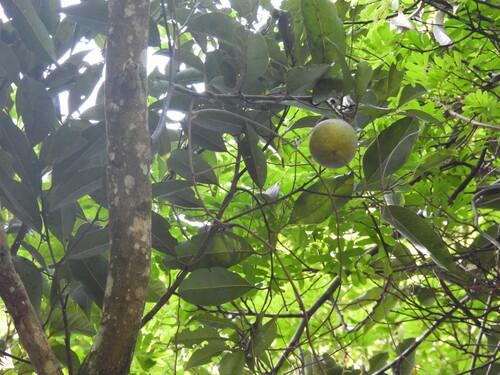
iNaturalist· cc-by-nc
(c) Nido Paras, some rights reserved (CC BY-NC), uploaded by Nido Paras
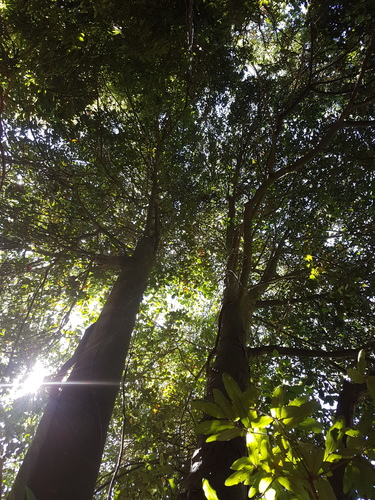
iNaturalist· cc-by-nc-sa
(c) Gravitywave, some rights reserved (CC BY-NC-SA)
iNaturalist· cc-by-nc
(c) Lauren Glevanik, some rights reserved (CC BY-NC), uploaded by Lauren Glevanik
Summary
Source: WikipediaUmbellularia californica is an evergreen tree growing to 25 m tall and 10 m wide at a medium rate. Hardy to UK zone 7. Flowers in April with hermaphroditic wind-pollinated blooms; seeds ripen October to November. Grows in light sandy, medium loamy, and heavy clay soils with good drainage. Prefers mildly acid and neutral pH. Requires full sun and moist soil.
Description
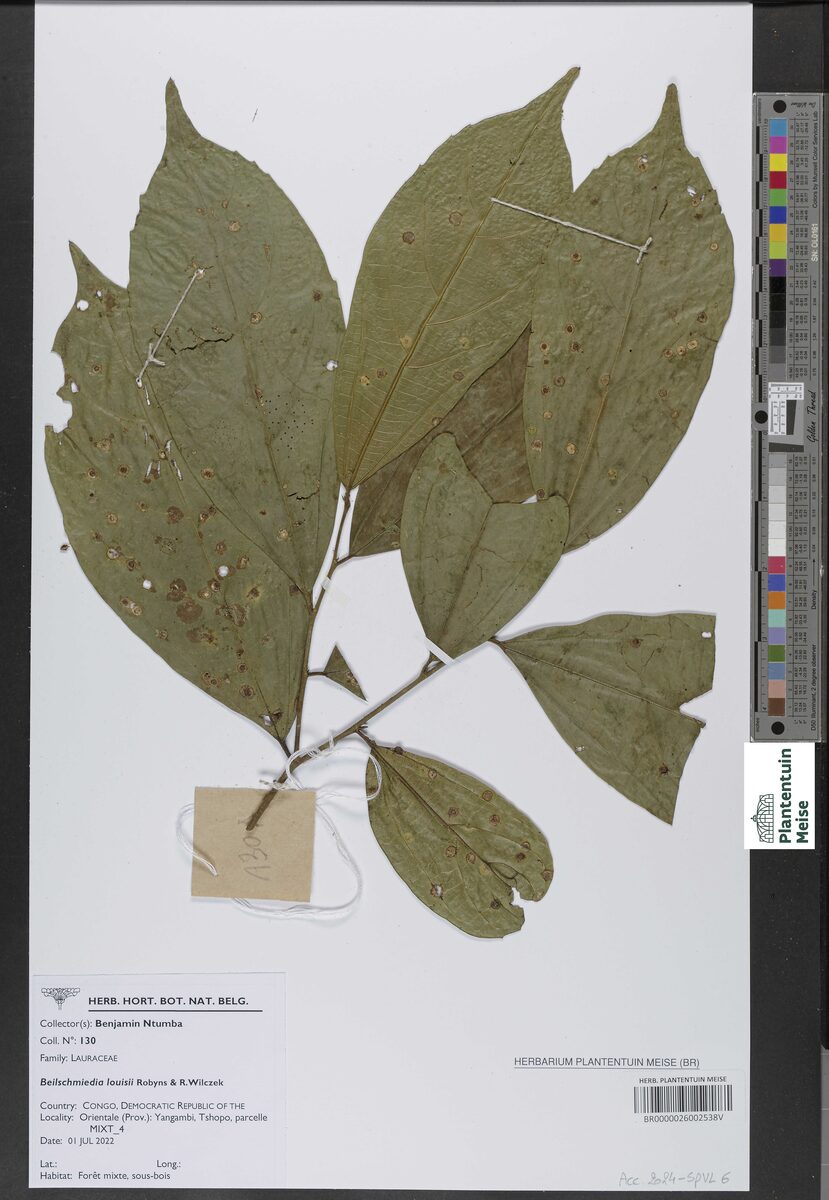
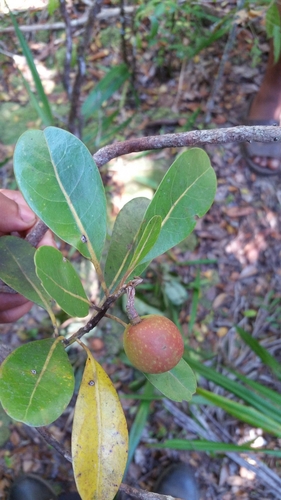
An evergreen tree. It grows 30 m tall. It is a broadly spreading tree. The bark is dark grey and cracks into rectangle shaped plates. The leaves are oblong and 10 cm long by 2.5 cm wide. They do not have teeth. The leaves are bright green or deep yellow-green. The flowers are 1 cm across. They do not have petals but have 6 green sepals. The flowers occur in clusters of up to 10. They are in the axils of leaves. The fruit is a rounded or egg shaped berry. It is 2.5 cm long and green but ripens to deep purple.
Edible Uses
The seeds are edible when cooked — they can be roasted and eaten whole, or ground into a powder and combined with cereal flours to make bread. Roasting or parching removes the seed's bitter quality. The fruit can be eaten raw or cooked. Leaves are used as a condiment in cooked foods, serving as a bay leaf substitute with a considerably stronger flavour, and are suitable for flavouring soups and stews. A tea can be brewed from the leaves, and the root bark provides a coffee substitute.
Traditional Uses
CAUTION: The crushed leaves give off a poisonous vapour. This can produce headaches. The leaves are used to flavour soups, stews and meat dishes. They are sold as a substitute for sweet bay leaf. The fruit are eaten raw or boiled. The nuts are parched and eaten or ground into flour for bread. The bark of the roots is sometimes used as a coffee substitute.
Medicinal Uses
California laurel was used medicinally by native North American peoples primarily as an analgesic, and it continues to see occasional use in modern herbalism, particularly for its beneficial effects on the digestive system. The leaves are analgesic, antirheumatic, nervine, and stomachic. Although the leaf aroma is known to cause headaches, leaves have also been used as an infusion and a poultice to treat this very complaint. Internally, the leaves are used to treat neuralgia, intestinal cramps, and gastro-enteritis. Women have used an infusion to ease afterbirth pains, and an infusion used as a bath has been applied in the treatment of rheumatism. A decoction of the leaves serves as a wash for sores and to remove vermin from the head. Leaves can be harvested as needed and used fresh or dried. A poultice of the ground seeds has been applied to sores, and the seeds have been eaten as a stimulant.
Known Hazards
Leaf aroma causes headaches in some people.
Distribution
It is a warm temperate plant. It is native to S.W. United States. It grows in evergreen forests and in valleys. It suits hardiness zones 8-10.
Where It Grows
Australia, Britain, Europe, North America, USA,
Cultivation
It can be grown by seeds or cuttings.
Propagation
Seed has limited viability and is best sown as soon as it is ripe in autumn in a greenhouse. Stored seed should be sown as early in the year as possible under glass. In the wild, seed germinates naturally as soon as it falls in autumn. Prick seedlings into individual pots once large enough to handle and grow on in the greenhouse for at least the first winter before planting out in late spring or early summer after the last expected frosts. Cuttings of half-ripe wood, 7–10cm with a heel, taken in July or August and placed in a shaded frame, give a good percentage and can be potted up in spring. Layering is also possible.
Other Uses
The leaves act as an insect repellent, particularly effective against fleas, and have disinfectant properties along with small quantities of camphor. They can be burnt as a fumigant to eliminate fleas, or hung in bunches to freshen the air — though the aroma causes headaches in some people. An essential oil is obtained from the leaves by steam distillation. The fruits, used without the seeds, yield beige and green dyes that are very aromatic and retain their fragrance for many years. The wood is hard, close grained, heavy, strong, and takes a high polish, making it a prized material for high-quality cabinet making and panelling.
Notes
There is only one Umbellularia species.
Also Known As
California rose.
References (19)
- Beckstrom-Sternberg, Stephen M., and James A. Duke. "The Foodplant Database." http://probe.nalusda.gov:8300/cgi-bin/browse/foodplantdb.(ACEDB version 4.0 - data version July 1994)
- Bocek, B. R., 1984, Ethnobotany of Costanoan Indians, California, Based on Collections by John P. Harrington. Economic Botany 38(2): 240-255
- Bodkin, F., 1991, Encyclopedia Botanica. Cornstalk publishing, p 1000
- Bremness, L., 1994, Herbs. Collins Eyewitness Handbooks. Harper Collins. p 89
- Brickell, C. (Ed.), 1999, The Royal Horticultural Society A-Z Encyclopedia of Garden Plants. Convent Garden Books. p 1037
Show all 19 references Hide references
- Coombes, A.J., 2000, Trees. Dorling Kindersley Handbooks. p 189
- Cundall, P., (ed.), 2004, Gardening Australia: flora: the gardener's bible. ABC Books. p 1451
- Elias, T.S. & Dykeman P.A., 1990, Edible Wild Plants. A North American Field guide. Sterling, New York p 198
- Esperanca, M. J., 1988. Surviving in the wild. A glance at the wild plants and their uses. Vol. 1. p 169
- Facciola, S., 1998, Cornucopia 2: a Source Book of Edible Plants. Kampong Publications, p 139
- Hedrick, U.P., 1919, (Ed.), Sturtevant's edible plants of the world. p 664
- Kermath, B. M., et al, 2014, Food Plants in the Americas: A survey of the domesticated, cultivated and wild plants used for Human food in North, Central and South America and the Caribbean. On line draft. p 888
- Krochmal, A. & Krochmal, C., 1982, Uncultivated Nuts of The United States. United States Department of Agriculture Forest Service. p 59
- Menninger, E.A., 1977, Edible Nuts of the World. Horticultural Books. Florida p 39
- Moerman, D. F., 2010, Native American Ethnobotany. Timber Press. p 578
- N. Amer. Sylva 1:87. 1842
- Plants for a Future database, The Field, Penpol, Lostwithiel, Cornwall, PL22 0NG, UK. http://www.scs.leeds.ac.uk/pfaf/
- Saunders, C.F., 1948, Edible and Useful Wild Plants. Dover. New York. p 139
- Wickens, G.E., 1995, Edible Nuts. FAO Non-wood forest products. FAO, Rome. p 138