Ulmus pumila
L.
Siberian elm
iNaturalist· cc-by
(c) Steve Matson, some rights reserved (CC BY), uploaded by Steve Matson
iNaturalist· cc-by-nc
(c) Dan Beckman, some rights reserved (CC BY-NC), uploaded by Dan Beckman
iNaturalist· cc0
no rights reserved, uploaded by Robbie Hannawacker
Summary
Source: WikipediaUlmus pumila, the Siberian elm, is a tree native to Asia. It is also known as the Asiatic elm and dwarf elm, but sometimes mistakenly called the "Chinese" elm (Ulmus parvifolia). U. pumila has been widely cultivated throughout Asia, North America, Argentina, and southern Europe, becoming naturalized in many places, notably across much of the United States.
Description
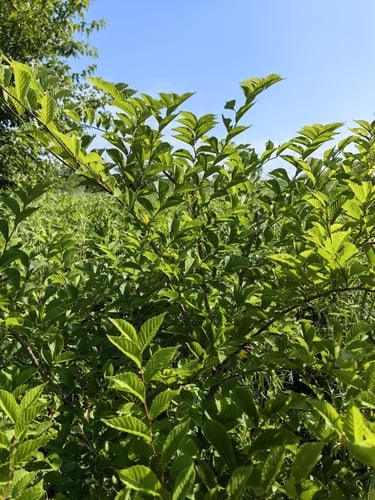
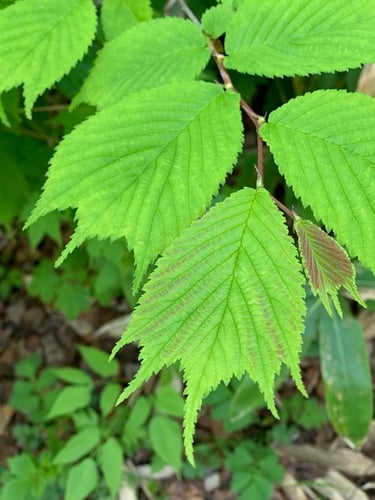
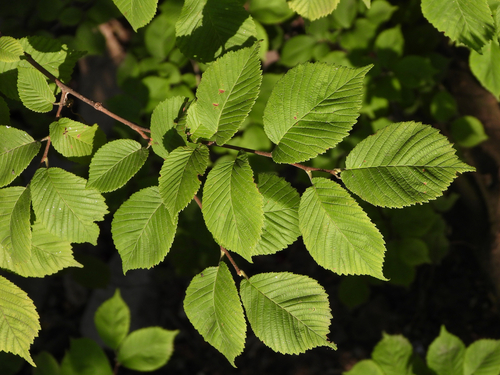
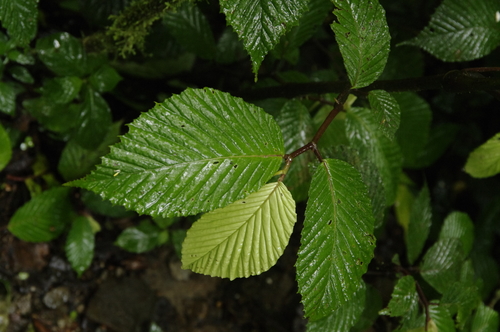
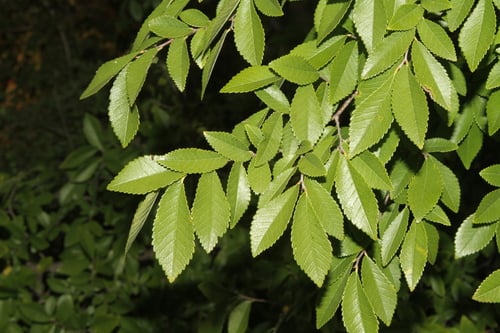
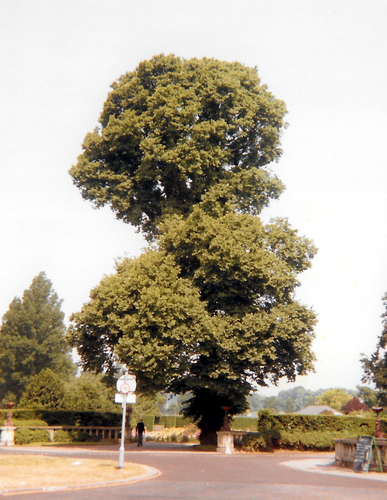
A medium sized tree. The branches are more upright than Chinese elm. It loses its leaves during the year. It grows 20 m tall. The bark is dark grey and rough and corrugated. The leaves are narrowly oval and 6 cm long by 2.5 cm wide. They are nearly equal sided at the base. They taper to a point. They have sharp teeth. They are dark green above. The flowers are very small and red. They are in clusters on shoots. The fruit is a small seed with a green wing around it. It is 1.2 cm long.
Edible Uses
Leaves can be eaten raw or cooked and used as a potherb. The inner bark can be cooked, dried and made into noodles, or dried, ground into a powder and used as a thickener in soups or added to cereal flours when making bread. The fruit is about 10mm in diameter and can be eaten raw or cooked when immature; it can also be made into a sauce or a wine.
Traditional Uses
The seeds are collected and boiled with sugar and flour to make elm-seed cake. The leaves, bark and fruit are eaten in times of food shortage. The fruit are made into sauce and wine. The young fruit that attain mature size are cleaned, mixed with flour, steamed and then seasoned with salt, sesame oil, onion and garlic. The young leaves and buds are eaten. The bark is processed into noodles.
Medicinal Uses
The leaves are diuretic and febrifuge. When used as a potherb, they are also considered antibilious, antidote and lithontripic. The stem bark is demulcent, diuretic, febrifuge and lenitive. Mixed with oil and vinegar, it is applied as a poultice on abscesses, mastitis and swellings.
Distribution
It is a temperate climate plant. It is native to C. and E. Asia. It grows on sandy or stony soil. It will grow on most soils and under poor conditions. It is hardy and drought resistant. It does not get Dutch Elm disease. In China it grows between 1,000-2,500 m above sea level. It suits hardiness zones 3-9. In Yunnan.
Where It Grows
Asia, Australia, Canada, Central Asia, China, Europe, Korea, Mongolia, North America, Russia, Siberia, South Africa, Southern Africa, Tajikistan, Turkestan, USA,
Cultivation
Prefers a fertile soil in full sun, but is easily grown in any soil of at least moderate quality so long as it is well drained. Succeeds in a hot dry position. Established plants are drought resistant. Fairly wind-tolerant. This species, or at least some of its cultivars, is resistant to 'Dutch elm disease', a disease that has destroyed the greater part of all the elm trees growing in Britain. The disease is spread by means of beetles. There is no effective cure (1992) for the problem, but most E. Asian, though not Himalayan, species are resistant (though not immune) to the disease so the potential exists to use these resistant species to develop new resistant hybrids with the native species. The various species of this genus hybridize freely with each other and pollen is easily saved, so even those species with different flowering times can be hybridized.
Propagation
Sow seed in a cold frame as soon as it is ripe — it usually germinates within a few days. Stored seed germinates less reliably and is best sown in early spring. Seed can also be harvested green (fully developed but not yet dried on the tree) and sown immediately in a cold frame, where it will germinate quickly and produce a larger plant by the end of the season. Once large enough to handle, prick seedlings into individual pots and grow on in a greenhouse through their first winter. Plant out in late spring or early summer after the last expected frosts. Do not leave plants in a nursery bed for more than two years, as they develop a tap root and transplant poorly after that point. Propagation is also possible by layering suckers or coppiced shoots.
Other Uses
A coarse cloth is made from the inner bark. The tree is fairly wind resistant and can be included in shelterbelt plantings. The wood is hard, heavy, tough and difficult to split, and is used for agricultural implements and boat making.
Production
It is fast growing in dry regions.
Notes
It can be invasive.
Also Known As
Asiatic elm, Hailasu, Yuqian, Yushu, Yu tree, Zhuga
References (22)
- "Chinese Nutrition Journal", 2002, Vol 23(8) p 298
- Coombes, A.J., 2000, Trees. Dorling Kindersley Handbooks. p 309
- Cundall, P., (ed.), 2004, Gardening Australia: flora: the gardener's bible. ABC Books. p 1450
- Facciola, S., 1998, Cornucopia 2: a Source Book of Edible Plants. Kampong Publications, p 243
- Farrar, J.L., 1995, Trees of the Northern United States and Canada. Iowa State University press/Ames p 360
Show all 22 references Hide references
- Flora of China @ efloras.org Volume 5
- Hu, Shiu-ying, 2005, Food Plants of China. The Chinese University Press. p 354
- Jia, X., et al, 2022, Ethnobotany of wild edible plants in multiethnic areas of the Gansu–Ningxia–Inner Mongolia junction zone. Journal of Ethnobiology and Ethnomedicine 18:53
- Kermath, B. M., et al, 2014, Food Plants in the Americas: A survey of the domesticated, cultivated and wild plants used for Human food in North, Central and South America and the Caribbean. On line draft. p 887
- Khasbagan, Hu-Yin Huai, and Sheng-Ji pei, 2000, Wild Plants in the Diet of Athorchin Mongol Herdsmen in Inner Mongolia. Economic Botany 54(4): 528-536
- Liu, Yi-tao, & Long, Chun-Lin, 2002, Studies on Edible Flowers Consumed by Ethnic Groups in Yunnan. Acta Botanica Yunnanica. 24(1):41-56
- Little, E.L., 1980, National Audubon Society Field Guide to North American Trees. Alfred A. Knopf. p 422
- Lord, E.E., & Willis, J.H., 1999, Shrubs and Trees for Australian gardens. Lothian. p 75
- Marinelli, J. (Ed), 2004, Plant. DK. p 471
- Plants for a Future database, The Field, Penpol, Lostwithiel, Cornwall, PL22 0NG, UK. http://www.scs.leeds.ac.uk/pfaf/
- Sachula, et al, 2020, Wild edible plants collected and consumed by the locals in Daqinggou, Inner Mongolia, China. Journal of Ethnobiology and Ethnomedicine (2020) 16:60
- Sp. pl. 1:226. 1753
- Tanaka,
- Valder, P., 1999, The Garden Plants of China. Florilegium. p 337
- Wujisguleng, W., & Khasbagen. K., 2010, An integrated assessment of wild vegetable resources in Inner Mongolian Autonomous Region, China. Journal of Ethnobiology and Ethnomedicine 6:34
- Zhang, Y., et al, Yunatov’s Records of Wild Edible Plant Used by the Mongols in Mongolia During 1940- 1951: Ethnobotanical Arrangements and Discussions. Inner Mongolia Normal University. p 10
- Zhang, Y. et al, 2020, Characteristics and utilization of plant diversity and resources in Central Asia. Regional Sustainability. Elsevier