Ulmus procera
Salisb.
English elm
iNaturalist· pd
Alex Z, no known copyright restrictions (public domain)
iNaturalist· cc-by
(c) Frank Ashwood, some rights reserved (CC BY)
iNaturalist· cc-by
(c) Frank Ashwood, some rights reserved (CC BY)
Summary
A deciduous tree reaching 35 m tall with a 15 m spread, growing at a fast rate. Hardy to UK zone 6. Flowers bloom February to March with seeds ripening May to June. Hermaphroditic flowers are wind-pollinated. Notable for attracting wildlife. Tolerates light sandy, medium loamy, and heavy clay soils with good drainage; adapts to mildly acid, neutral, and basic pH levels. Grows in semi-shade or full sun and prefers moist conditions. Tolerates both maritime exposure and atmospheric pollution.
Description
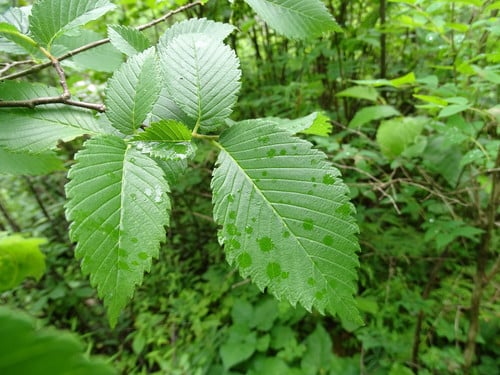
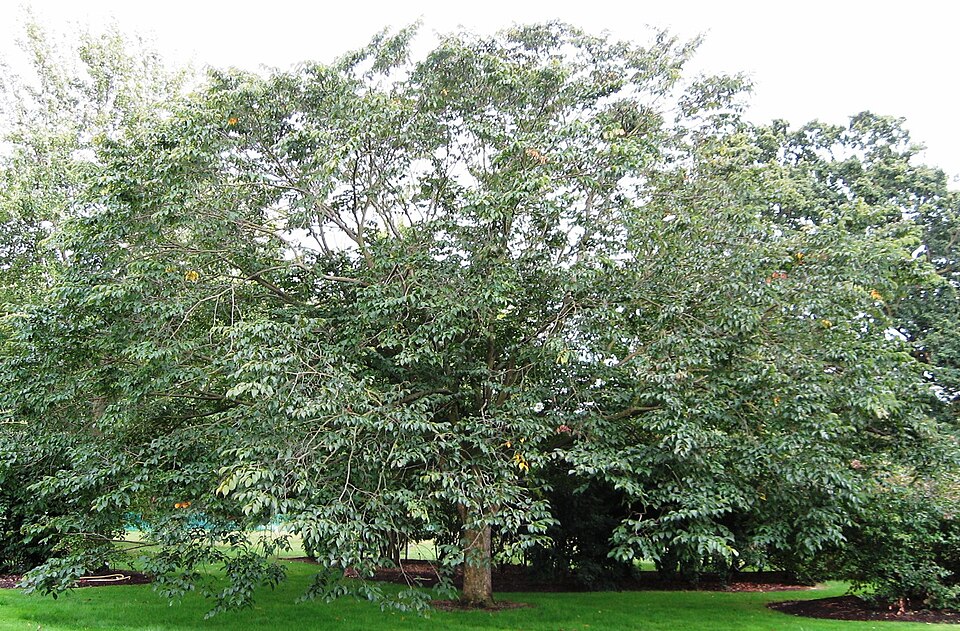
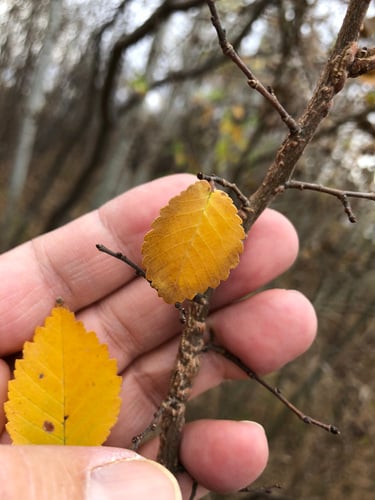
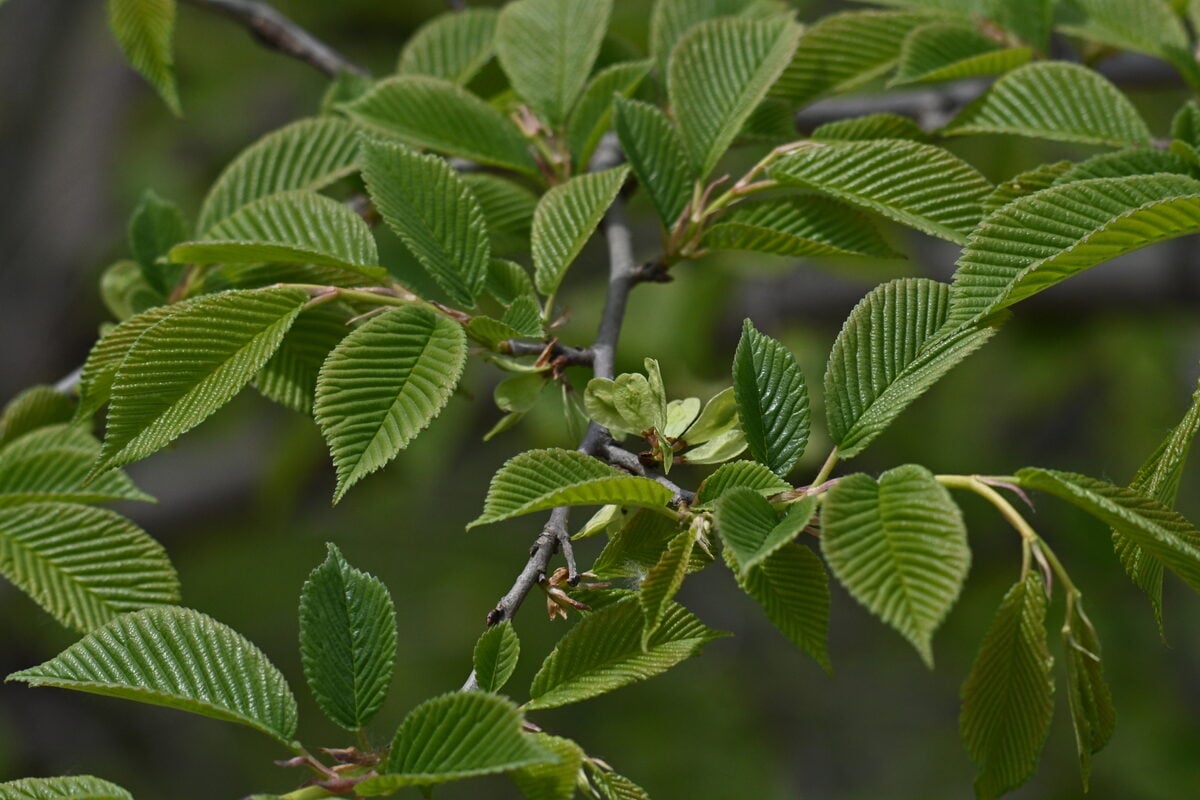
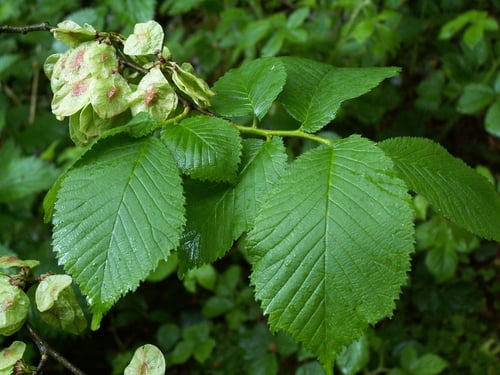
A large deciduous tree. It grows to 36 m high. It has a narrow crown. The trunk is straight. The leaves are alternate and 7.5 cm long. There are double teeth around the edge. The tip is rounded and the base is unequal. The leaves are rough on the upper surface. The leaf stalk and midrib are hairy. The flowers are crimson. The fruits are winged and turn brown when ripe.
Edible Uses
Leaves can be eaten raw or cooked. They can be slightly bitter, particularly if not very young, and have a mucilaginous texture that works well in mixed salads. Immature fruits, gathered just after forming, can be eaten raw. They have an aromatic, unusual flavour that leaves the mouth feeling fresh and the breath smelling pleasant, and contain approximately 34.4% protein, 28.2% fat, 17% carbohydrate and 5% ash. The inner bark is mucilaginous when cooked and can be dried, ground into a powder and used as a thickening agent in soups or mixed with cereal flour when making bread. A tea can also be brewed from the leaves.
Medicinal Uses
The dried inner bark is anti-inflammatory, astringent, demulcent, mildly diuretic, resolvent, tonic and vulnerary. It is used internally and externally to treat diarrhoea, rheumatism, wounds and piles, and as a mouthwash for ulcers. Inner bark is harvested from branches 3–4 years old and dried for later use. The sap has been applied in the treatment of baldness. The leaves are astringent and have been powdered for use in treating haemorrhoids. A decoction of the leaves treats reddened, inflamed skin and various skin disorders. The plant is used in Bach flower remedies, prescribed for occasional feelings of inadequacy, despondency and exhaustion from over-striving for perfection. A homeopathic remedy made from the inner bark is used as an astringent and as a treatment for eczema.
Distribution
It is a temperate plant. It will grow in most well-drained soils. It needs an open, sunny position. It is resistant to frost. It suits hardiness zones 4-9. Arboretum Tasmania.
Where It Grows
Asia, Australia, Belgium, Britain, Canada, China, Europe, Iraq, Middle East, North America, Tasmania, Turkey, Türkiye,
Cultivation
Prefers a fertile soil in full sun, but is easily grown in any soil of at least moderate quality so long as it is well drained. Tolerant of atmospheric pollution. The English elm is susceptible to 'Dutch elm disease', a disease that has destroyed the greater part of all the elm trees growing in Britain. Mature trees killed back by the disease will often regrow from suckers, but these too will succumb when they get larger. There is no effective cure (1992) for the problem, but most E. Asian, though not Himalayan, species are resistant to the disease so the potential exists to develop new resistant hybrids with the native species. The various species hybridize freely, the pollen stores well and can be kept for use with species that flower at different times. A food plant for the caterpillars of many lepidoptera species, there are 80 species of insects associated with this tree. A good tree for growing grapes into.
Propagation
Sow seed in a cold frame or outdoor seedbed as soon as it is ripe — it usually germinates within a few days. A high proportion of the seed may not be viable, so sow thickly to account for poor viability. Stored seed germinates less reliably and is best sown in early spring. Once large enough to handle, prick seedlings into individual pots and grow on in a greenhouse through their first winter. Plant out in late spring or early summer after the last expected frosts. Do not leave plants in a nursery bed for more than two years, as they develop a tap root and transplant poorly after that point. Propagation is also possible by layering suckers or coppiced shoots.
Other Uses
The inner bark yields a very tough fibre used for making mats and ropes. Tannin and a dyestuff (colour unspecified) are also obtained from the inner bark. The wood is close-grained, free from knots, very durable under water, fairly hard, elastic, resistant to abrasion and salt water, though it does not take a high polish. It is used for water pipes, wheels, mallet heads and ship keels and makes a good firewood.
Notes
It has been killed in many places due to Dutch Elm Disease. It is used in medicine.
Synonyms
References (10)
- Bremness, L., 1994, Herbs. Collins Eyewitness Handbooks. Harper Collins. p 89
- Cundall, P., (ed.), 2004, Gardening Australia: flora: the gardener's bible. ABC Books. p 1450
- Farrar, J.L., 1995, Trees of the Northern United States and Canada. Iowa State University press/Ames p 360
- Harris, E & J., 1983, Field Guide to the Trees and Shrubs of Britain. Reader's Digest. p 76
- Hibbert, M., 2002, The Aussie Plant Finder 2002, Florilegium. p 304
Show all 10 references Hide references
- Little, E.L., 1980, National Audubon Society Field Guide to North American Trees. Alfred A. Knopf. p 421
- Lord, E.E., & Willis, J.H., 1999, Shrubs and Trees for Australian gardens. Lothian. p 75
- Morley, B.D., & Toelken, H.R., (Eds), 1983, Flowering Plants in Australia. Rigby. p 61
- Plants for a Future database, The Field, Penpol, Lostwithiel, Cornwall, PL22 0NG, UK. http://www.scs.leeds.ac.uk/pfaf/
- Prodr. stirp. Chap. Allerton 391. 1796