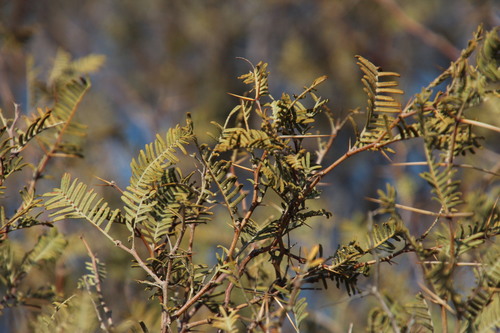
Trigonella caerulea
(L.) Ser.
Sweet trefoil, Blue Fenugreek
iNaturalist· cc-by-sa
(c) Flyout, some rights reserved (CC BY-SA)
iNaturalist· cc-by-nc
(c) Natalia Pashkevych, some rights reserved (CC BY-NC)
iNaturalist· cc-by
(c) KAnatoliy, some rights reserved (CC BY)
Summary
Source: WikipediaTrigonella caerulea (blue fenugreek, blue melilot) is an annual herb in the family Fabaceae. It is 30–60 cm tall. Its leaves are obovate or lance-shaped, 2–5 cm long, 1–2 cm wide and saw-toothed in upper part. Its flower stalks are compact, globular racemes, longer than the leaves. The sepals are twice as short as the corolla, its teeth are equal to the tube. The corolla is 5.5-6.5 mm long and blue. The pods are erect or slightly curved, compressed, 4–5 mm long with beak 2 mm. The seeds are small and elongated. It blossoms in April–May, the seeds ripen in May–June. It is self-pollinated.
Description
A herb. It is a short clover like plant. It is slightly hairy. It grows 30-60 cm tall. The leaves have 3 leaflets. These are oval or oblong and have a notch at the tip. The flowers are blue or occasionally white. They are 5-6 mm long. They are in round heads on long stalks. The pods are rounded and 4-5 mm long. They are inflated and have a short beak.
Edible Uses
Young seedlings can be eaten with oil and salt. Leaves and young plants are eaten cooked. The dried and powdered leaves and flowers are used to flavour and colour breads and similar foods, and also serve as a condiment in soups and potato dishes. A decoction of the leaves makes an aromatic tea and is also used as a flavouring for China tea.
Traditional Uses
The shoots and leaves are eaten. They are eaten with oil and salt. The dried flowers are used to give flavour to sapsago cheese. They are also used to flavour bread. It is used as a flavour in soups and potato dishes. It is also used to make a tea. It is used to flavour cheese.
Medicinal Uses
None known
Distribution
It grows in temperate and Mediterranean places. It grows in waste places. It is cultivated in north China.
Where It Grows
Asia, Austria, Balkans, Bulgaria, Canada, Caucasus, China, Czech, Europe, France, Georgia, Greece, Italy, Mediterranean*, Mongolia, North America, Portugal, Romania, Russia, Slovenia, Spain, Switzerland, Turkey, Türkiye, Yugoslavia,
Propagation
Pre-soak seed for 12 hours in warm water, then sow in spring in situ.
Other Uses
None known
Other Information
It is widely used in Georgian recipes.
Notes
Also as Papilionaceae.
Synonyms
Also Known As
Curd herb, Enosemenski triplat, Kraut curd-herb, Shambrika, Ulumbo, Utskho suneli
References (15)
- Arora, R. K., 2014, Diversity in Underutilized Plant Species - An Asia-Pacific Perspective. Bioversity International. p 109
- Blamey, M and Grey-Wilson, C., 2005, Wild flowers of the Mediterranean. A & C Black London. p 96
- A. P. de Candolle, Prodr. 2:181. 1825 "coerulea"
- Bussman, R. W., et al, 2016, A comparative ethnobotany of Khevsureti, Samtskhe-Javakheti, Tusheti, Svaneti, and Racha-Lechkhumi, Republic of Georgia (Sakartvelo), Caucasus. Journal of Ethnobiology and Ethnomedicine (2016) 12:4
- Bussman, R. W. et al, 2017, Ethnobotany of Samtskhe-Javakheti, Sakartvelo (Republic of Georgia), Caucasus. Indian Journal of Traditional Knowledge Vol. 16(1) pp 7-24
Show all 15 references Hide references
- Bussman, R. W., et al, 2021, Unity in diversity—food plants and fungi of Sakartvelo (Republic of Georgia), Caucasus. Journal of Ethnobiology and Ethnomedicine (2021) 17:72 p 9
- Facciola, S., 1998, Cornucopia 2: a Source Book of Edible Plants. Kampong Publications, p 111
- Hedrick, U.P., 1919, (Ed.), Sturtevant's edible plants of the world. p 655
- http://www.botanic-gardens-ljubljana.com/en/plants
- ILDIS Legumes of the World http:www:ildis.org/Legume/Web
- Plants for a Future database, The Field, Penpol, Lostwithiel, Cornwall, PL22 0NG, UK. http://www.scs.leeds.ac.uk/pfaf/
- READ
- Urgamal, M., Oyuntsetseg, B., Nyambayar, D. & Dulamsuren, Ch. 2014. Conspectus of the vascular plants of Mongolia. (Editors: Sanchir, Ch. & Jamsran, Ts.). Ulaanbaatar, Mongolia. “Admon“ Press. 334pp. (p. 121-143).
- Wiersema, J. H. & Leon, B., 2013, World Economic Plants. A Standard Reference CRC Press. 2nd Ed. p 697
- World Checklist of Useful Plant Species 2020. Royal Botanic Gardens, Kew