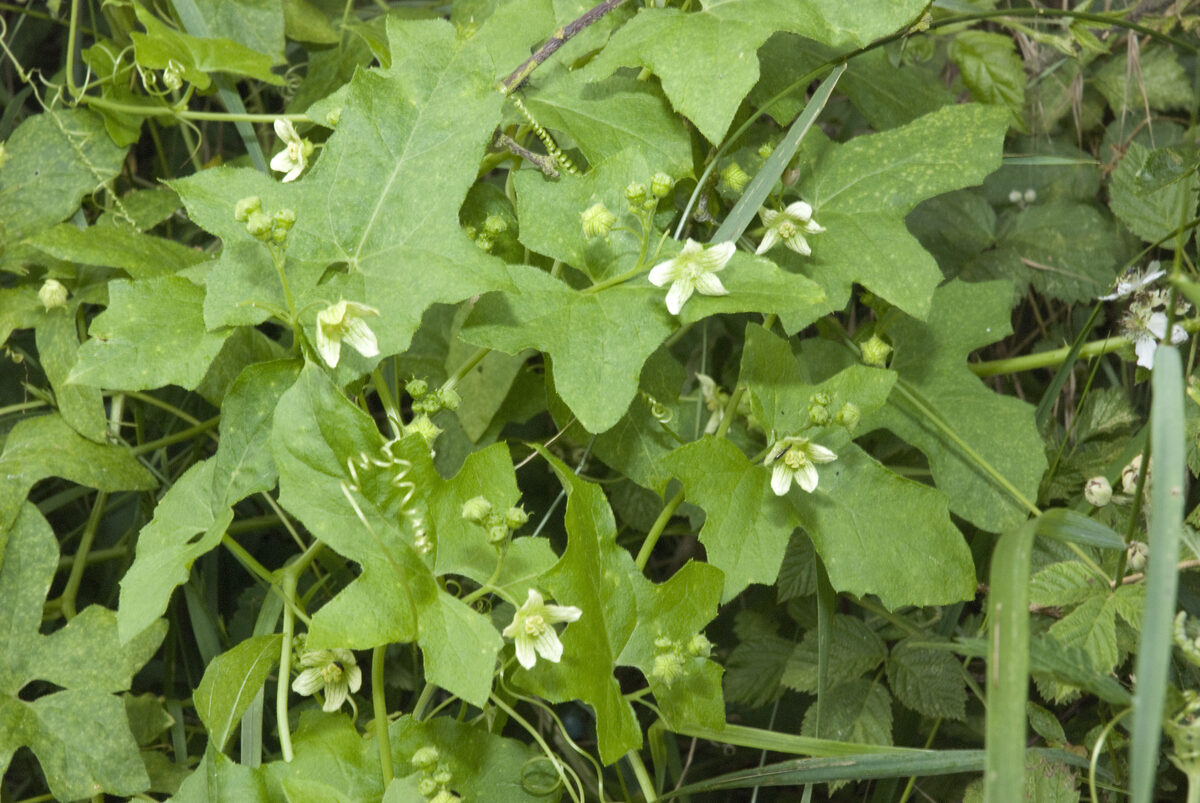
Trichosanthes tricuspidata
Lour.
iNaturalist· cc-by-nc-sa
(c) Satish Nikam, some rights reserved (CC BY-NC-SA)
iNaturalist· cc-by-nc
(c) Rujuta Vinod, some rights reserved (CC BY-NC)
iNaturalist· cc-by
(c) Forest Botial-Jarvis, some rights reserved (CC BY)
Summary
Source: WikipediaTrichosanthes tricuspidata is a species of flowering plant in the family Cucurbitaceae. It is a climbing plant native to the Andaman Islands, Borneo, Cambodia, Indonesia, Java, Laos, the Lesser Sunda Islands, Malaysia, Myanmar, the Nicobar Islands, Sulawesi, Thailand, and Vietnam.
Description
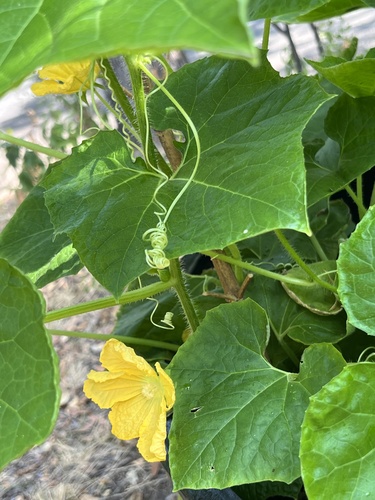
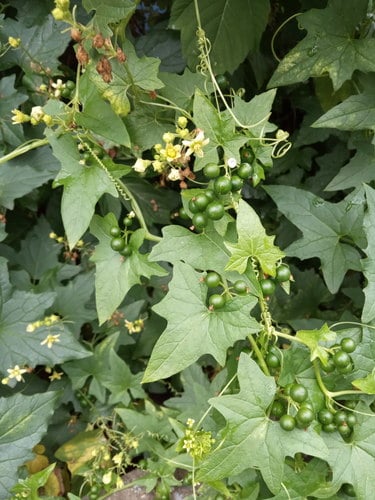
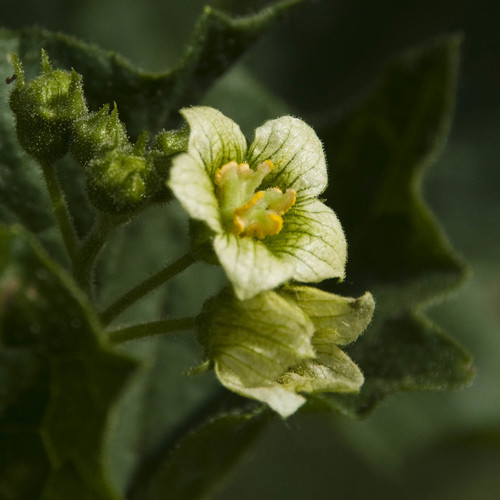
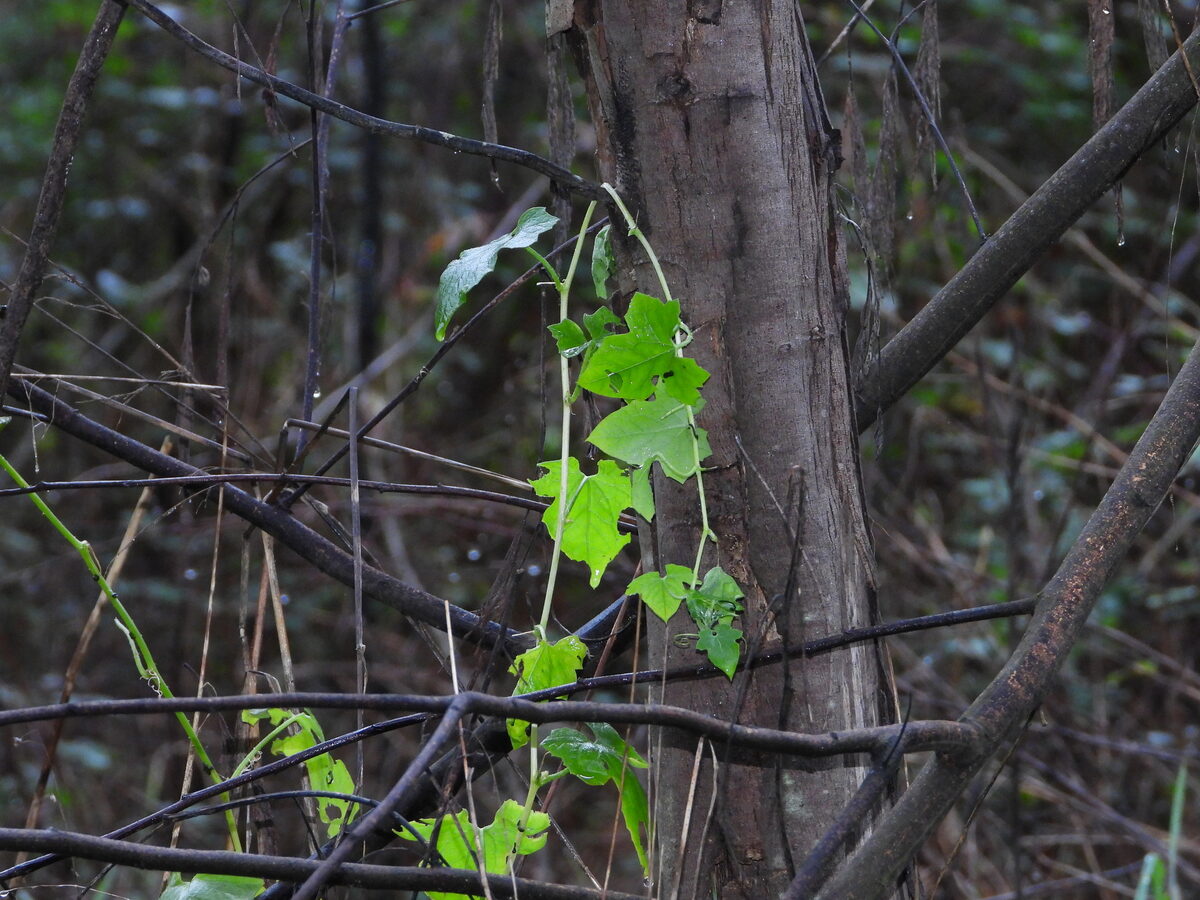
A pumpkin family plant. It is a vine or soft climber. It can grow 5-6 m long. The tendrils are divided into 3. The leave vary. They have 3-5 lobes and are heart shaped at the base. The lobes are oval and have teeth along the edge. Male and female flowers are separate. Male flowers are in groups of 5-10 and female flowers occur singly. The flowers are white and the corolla petals are wedge shaped and fringed. The fruit are round or oval. They turn red when ripe and have orange streaks.
Edible Uses
Young leaves are cooked as a vegetable. The root is roasted or boiled and eaten. The seeds are roasted before eating.
Traditional Uses
The young leaves are edible. They are cooked as a vegetable. The root is roasted or boiled and eaten. The seeds are roasted and then eaten. CAUTION: The fruit are poisonous.
Medicinal Uses
The plant is used in traditional medicine.
Known Hazards
The fruit are poisonous and must not be eaten.
Distribution
A tropical plant. In India it grows between 1,200-2,300 m above sea level.
Where It Grows
Asia, Australia, Cambodia, China, Himalayas, India, Indochina, Indonesia, Japan, Laos, Malaysia, Myanmar, Nepal, Pacific, Papua New Guinea, PNG, SE Asia, Thailand, Tibet, Vietnam,
Notes
It is used in medicine.
Synonyms
Also Known As
Akar kepayang, Akar lokan, A-pa-kas, Bolu teke, Indreni, Indreyni, Kalayar, Kayu keleka singga, Mo qua, Pul aek, Sentoh, Thowan
References (16)
- Burkill, I.H., 1966, A Dictionary of the Economic Products of the Malay Peninsula. Ministry of Agriculture and Cooperatives, Kuala Lumpur, Malaysia. Vol 2 (I-Z) p 2218
- Fl. cochinch. 2:589. 1790
- Gautam, R. S., et al, 2022, Ethnobotanical Review of Wild Edible Plants of Nepal. Journal of Natural History Museum Volume 32, 2021-22 p 111
- Ghimeray, A. K., Lamsal, K., et al, 2010, Wild edible angiospermic plants of the Illam Hills (Eastern Nepal) and their mode of use by local community. Korean J. Pl. Taxon. 40(1) (As Trichosanthes palmata)
- Heywood, V.H., Brummitt, R.K., Culham, A., and Seberg, O. 2007, Flowering Plant Families of the World. Royal Botanical Gardens, Kew. p 117
Show all 16 references Hide references
- Jha, P. K., et al, 1996, Plant genetic resources of Nepal: A guide for plant breeders of agricultural, horticultural and forestry crops. Euphytica 87:189-210
- Khakurel, D., et al, 2021, Foods from the wild: Local knowledge, use pattern and distribution in Western Nepal. PLOS ONE.
- Li, S., et al, 2020, Monpa, memory, and change: an ethnobotanical study of plant use in Mêdog County, South-east Tibet, China. Journal of Ethnobiology and Ethnomedicine. (2020) 16:5 p 17
- Lim, T. K., 2015, Edible Medicinal and Non Medicinal Plants. Volume 9, Modified Stems, Roots, Bulbs. Springer p 82
- Ogle, B. M., et al, 2003, Food, Feed or Medicine: The Multiple Functions of Edible Wild Plants in Vietnam. Economic Botany 57(1): 103-117
- Pham-Hoang Ho, 1999, An Illustrated Flora of Vietnam. Nha Xuat Ban Tre. p 574
- Phon, P., 2000, Plants used in Cambodia. © Pauline Dy Phon, Phnom Penh, Cambodia. p 608
- PROSEA handbook Volume 13 Spices. p 280
- Uprety, Y., et al, 2016, Traditional use and management of NTFPs in Kangchenjunga Landscape: implications for conservation and livelihoods. Journal of Ethnobiology and Ethnomedicine (2016) 12:19
- Wiersema, J. H. & Leon, B., 2013, World Economic Plants. A Standard Reference CRC Press. 2nd Ed. p 694
- World Checklist of Useful Plant Species 2020. Royal Botanic Gardens, Kew