Bryonia cretica subsp. dioica
(Jacq.) Tutin
Red bryony, Wild hop, English mandrake
gbif· cc-by
Duarte Frade
gbif· cc-by-nc
JH Nature
gbif· cc-by-nc
JH Nature
Summary
Source: WikipediaBryonia cretica, also known as Cretan bryony or English mandrake is a perennial species of Bryonia. Its flowers bloom in the summer and usually grow between 3 and 5mm. Its fruit are toxic. They have been used in traditional medicine. It is a common plant in most of Europe, North Africa, the Middle East and Turkmenistan.
Description
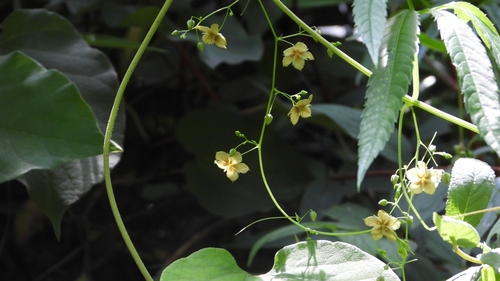
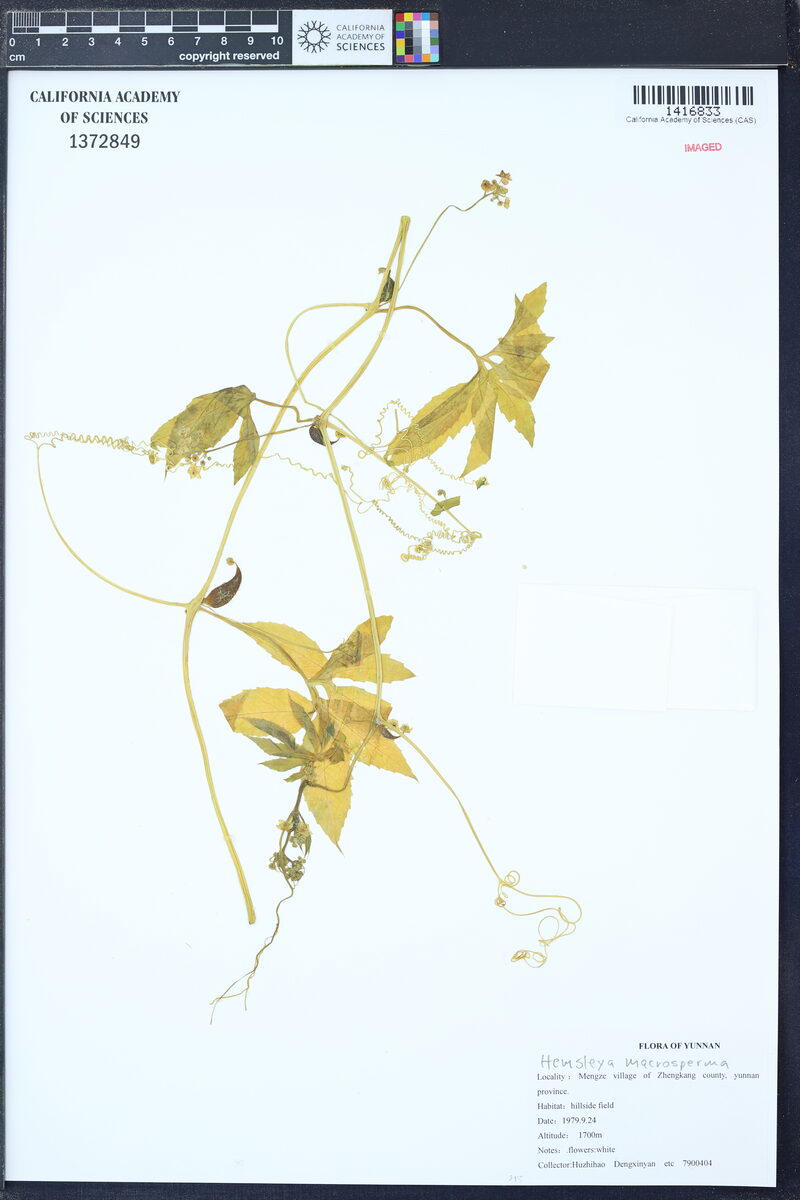
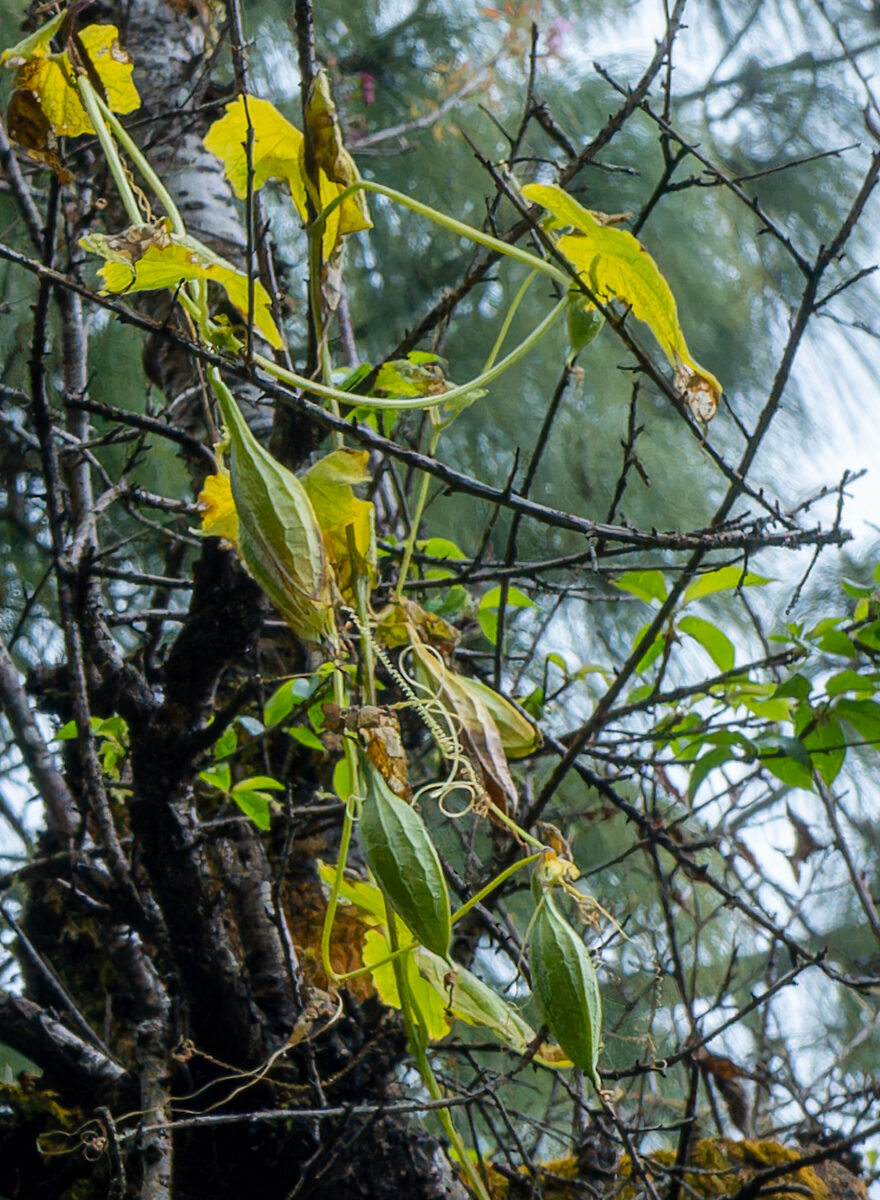
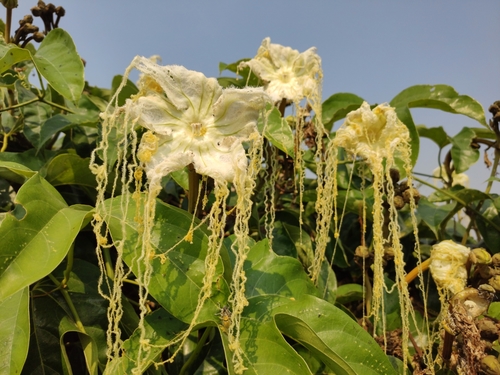
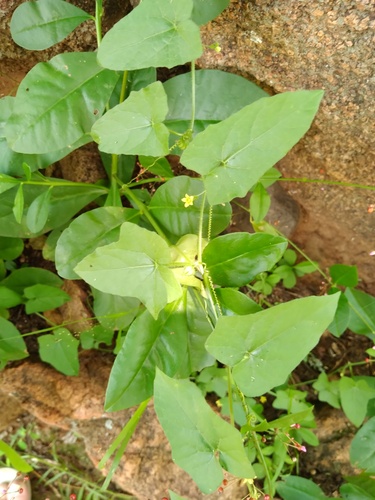
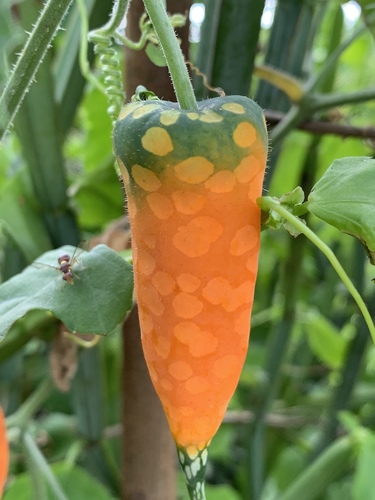
A pumpkin family plant. It is a tall climbing plant. It is hairy and keeps growing from year to year. It can be 4 m tall. The tendrils are coiled. The leaves are divided into 5 lobed leaflets like fingers on a hand. The leaves are plain green. The flowers are also plain green. The fruit is a green berry. It turns red when ripe. It is 6-10 mm across.
Edible Uses
Very young leaves can be eaten after thorough cooking, typically stewed or used in omelettes. Young shoots and tendrils may also be consumed. In some regions, consumption is restricted by law due to toxic concerns.
Traditional Uses
CAUTION: All parts of this plant are poisonous. The red berries are poisonous. The very young leaves are sometimes eaten after being well cooked. They are stewed or used in omelettes.
Known Hazards
All parts of this plant are poisonous, including the red berries. The plant is so toxic that its consumption is restricted by law in some places.
Distribution
It is a Mediterranean plant.
Where It Grows
Andorra, Asia, Central Asia, Czech Republic, Europe, France, Georgia, Greece, Iraq, Italy, Kurdistan, Mediterranean, Middle East, Portugal, Slovenia, Spain, Tajikistan,
Production
It is fast growing.
Notes
In some places its consumption is restricted by law due to toxic concerns.
Synonyms
Also Known As
Carbassera borda, Carbassina, Esparragos de nuez, Leshura, Nueza, Rdečejagodasti bluščec, Tuca
References (16)
- Aceituno-Mata, L., et al, 2021, The Persistence of Flavor: Past and Present Use of Wild Food Plants in Sierra Norte de Madrid, Spain. Front. Sustain. Food Syst., 11 January 2021 (As Bryonia dioica)
- Blamey, M and Grey-Wilson, C., 2005, Wild flowers of the Mediterranean. A & C Black London. p 148
- Blanco-Salas, J., et al, 2019, Wild Plants Potentially Used in Human Food in the Protected Area “Sierra Grande de Hornachos” of Extremadura (Spain). Sustainability 2019, 11, 456 (As Bryonia dioica)
- Bonet, M. A. & Valles, J., 2002, Use of non-crop food vascular plants in Montseny biosphere reserve (Catalonia, Iberian Peninsula). International Journal of Food Sciences and Nutrition (2002) 53, 225–248
- Brown, D., 2002, The Royal Horticultural Society encyclopedia of Herbs and their uses. DK Books. p 146 (As Bryonia dioica)
Show all 16 references Hide references
- Bussman, R. W., et al, 2021, Unity in diversity—food plants and fungi of Sakartvelo (Republic of Georgia), Caucasus. Journal of Ethnobiology and Ethnomedicine (2021) 17:72 p 8 (As Bryonia dioica)
- Gonzalez, J. A., et al, 2011, The consumption of wild and semi-domesticated edible plants in the Arribes del Duero (Salamanca-Zamora, Spain): an analysis of traditional knowledge. Genetic. Resour Crop Evolution 58:991-1006 (As Bryonia dioica)
- Hedrick, U.P., 1919, (Ed.), Sturtevant's edible plants of the world. p 138
- Huxley, A. (Ed.), 1977, The Encyclopedia of the Plant Kingdom. Chartweil Books. p 194
- Pardo-de-Santayana, M., et al, 2007, Traditional knowledge of wild edible plants used in the northwest of the Iberian Peninsula (Spain and Portugal): a comparative study. Journal of Ethnobiology and Ethnomedicine 2007, 3:27 (As Bryonia dioica)
- Pieroni, A., 1999, Gathered Wild Food Plants in the Upper Valley of the Serchio River (Garfagnana), Central Italy. Economic Botany 53(3): 327-341
- Plants for a Future database, The Field, Penpol, Lostwithiel, Cornwall, PL22 0NG, UK. http://www.scs.leeds.ac.uk/pfaf/
- Rivera, D. et al, 2006, Gathered Mediterranean Food Plants - Ethnobotanical Investigations and Historical Development, in Heinrich M, Müller WE, Galli C (eds): Local Mediterranean Food Plants and Nutraceuticals. Forum Nutr. Basel, Karger, 2006, vol 59, pp 18–74
- Sanchez-Mata, M. C., et al, 2010, Wild vegetables of the Mediterranean area as valuable sources of bioactive compounds. Genet. Resourc. Crop Evol. 59:431-443 (As Bryonia dioica)
- Simkova, K. et al, 2014, Ethnobotanical review of wild edible plants used in the Czech Republic. Journal of Applied Botany and Food Quality 88, 49-67 (As Bryonia dioica)
- Tardio, J., et al, 2006, Ethnobotanical review of wild edible plants in Spain. Botanical J. Linnean Soc. 152, 27-71 (As Bryonia dioica)