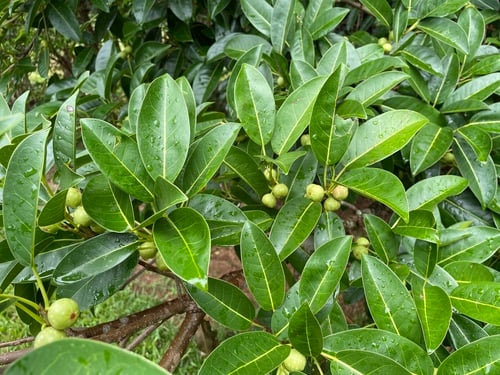
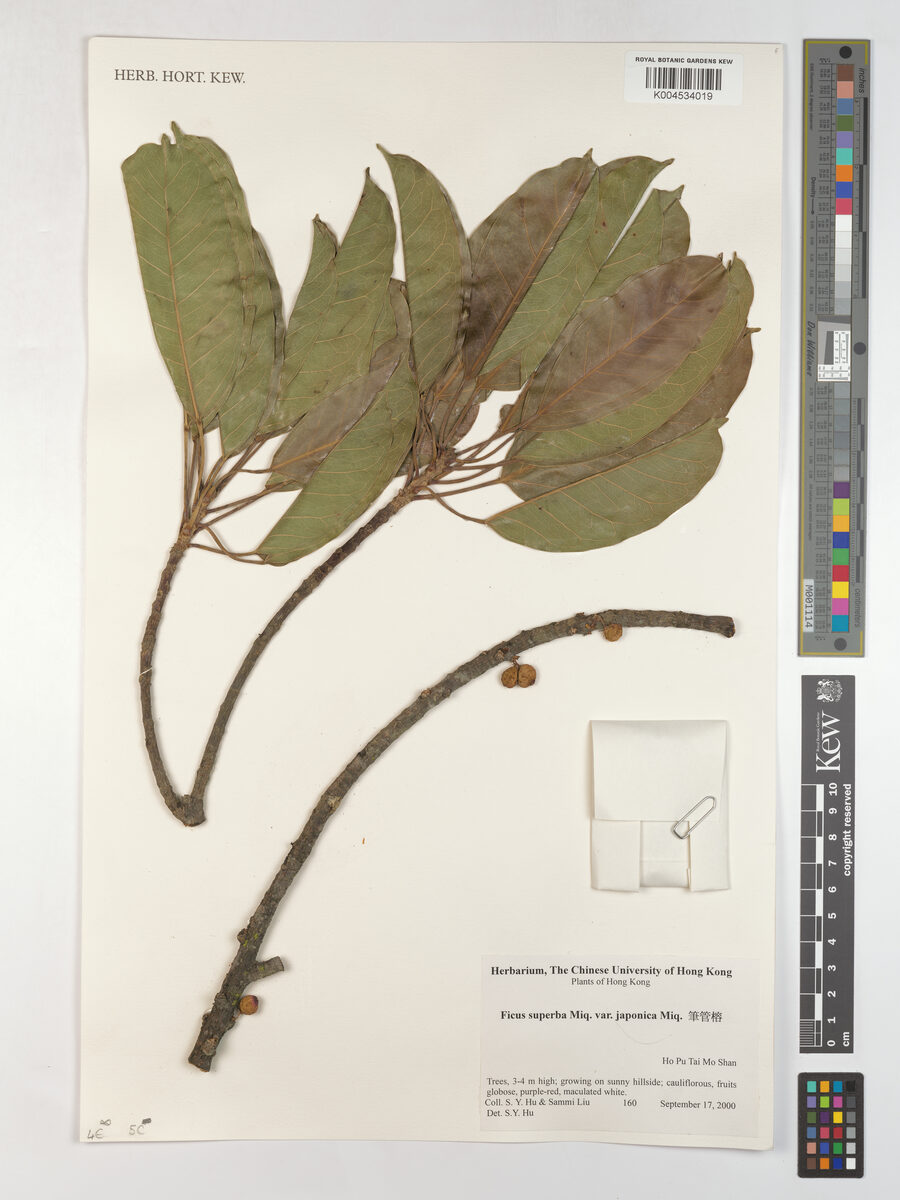
Treculia africana
Decne.
African breadfruit, African-boxwood
iNaturalist· cc-by-nc
(c) Scamperdale, some rights reserved (CC BY-NC)
iNaturalist· cc-by-nc
(c) International Institute of Tropical Agriculture, some rights reserved (CC BY-NC)
iNaturalist· cc-by-nc
(c) Scamperdale, some rights reserved (CC BY-NC)
Summary
Source: WikipediaTreculia africana is a tree species in the genus Treculia which can be used as a food plant and for various other traditional uses. The fruit are hard and fibrous, can be the size of a volleyball and weight up to 8.5 kg (19 lb). Chimpanzees have been observed to use tools to break the fruit into small pieces that they can eat. Chimpanzees have also been observed sharing slightly alcoholic overripe breadfruit as social bonding. The fruit contain polyphenols.
Description
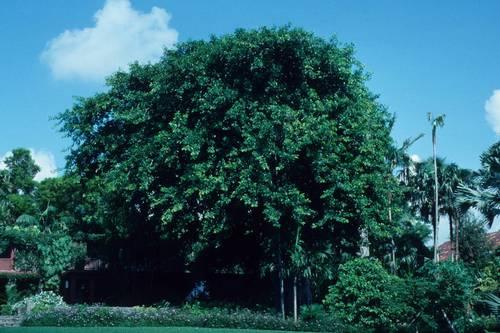
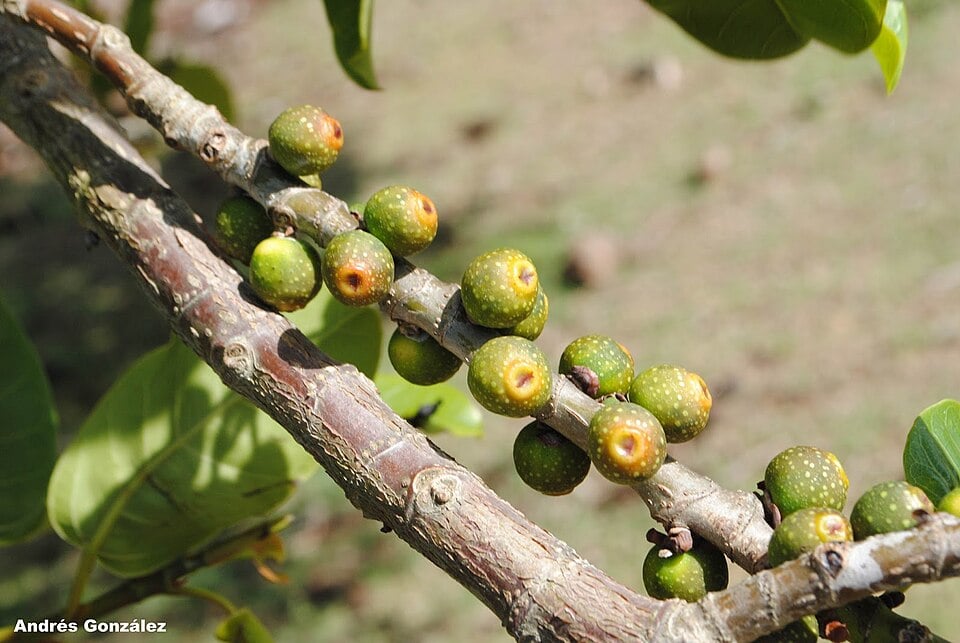
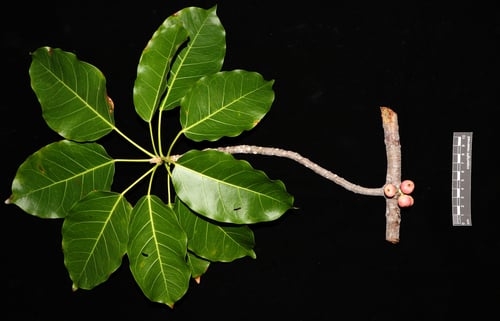
An evergreen tree. It grows to 15-30 m tall. It can grow up to 50 m tall. It has a dense spreading crown. The trunk is fluted. The bark is dark grey and smooth. It is thick and produces a white latex when cut. This later turns rusty red. The leaves are simple and alternate. They are very large. Leaves can be 30 cm by 14 cm or larger. They are dark green and smooth above but paler and slightly hairy underneath. The leaves are tough. They have 10-18 pairs of clear veins. The leaf stalk is 1.5 cm long and the leaf tip is pointed. Young leaves are red or yellow. The flower heads are rounded ad a yellow-brown. They are 2.5 to 10 cm across. Male and female flowers are usually separate. Flowers can grow in the axils of leaves or on older wood down to the trunk. The fruit is a compound fruit. It is rounded and very large. It can be 30-45 cm across. It grows on the trunk and main branches. Inside there are many orange seeds about 1 cm across. They are in a spongy pulp. The outer fruit surface is covered with pointy growths.
Edible Uses
The seed is cooked and has a flavour similar to peanuts. Seeds can be eaten as dessert nuts after roasting or boiling, or ground into a meal for use in soups and baked foods such as bread and paste. Seeds are extracted by macerating the fruit in water. The seeds have an excellent polyvalent dietetic value — their protein biological value exceeds even that of soybeans. Each massive fruit can weigh up to 14 kilograms and contains numerous seeds of about 8mm in length. A non-alcoholic beverage resembling almond milk can be prepared from the powdered seeds and is recommended as a breakfast drink in Nigeria. An edible oil can also be extracted from the seed.
Traditional Uses
The seeds can be dried, fried and eaten. They are also boiled, roasted or ground into flour. The flour is used in soups and nut milk. An edible oil can be extracted from the seeds.
Medicinal Uses
In Ghana, a root decoction is used as an anthelmintic and febrifuge. The caustic sap of the male tree is applied to decayed teeth for toothache relief. A bark decoction is used for coughs and whooping cough. Ground bark mixed with oil and other plant material is applied to treat swellings. The bark is also used in the treatment of leprosy and as a laxative.
Known Hazards
The sap of the male tree is caustic and toxic, though the sap from female trees is used medicinally.
Distribution
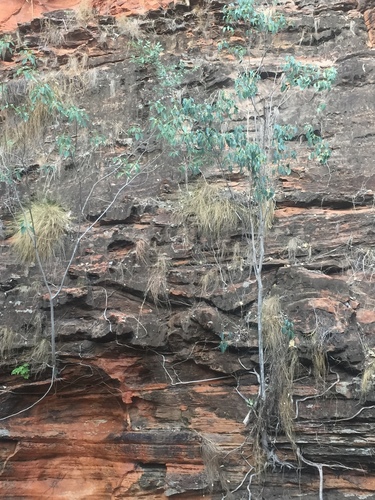
A tropical plant. It suits hot, tropical lowland climates. It grows in forests near rivers. It can grow in swampy areas. It grows from sea level up to 1500 m in Uganda or 1,200 m in Tanzania.
Where It Grows
Africa, Angola, Australia, Benin, Cameroon, Central Africa, Central African Republic, CAR, Congo DR, Congo R, East Africa, Equatorial Guinea, Gabon, Gambia, Ghana, Guinea, Guinée, Guinea-Bissau, Liberia, Madagascar, Malawi, Mozambique, Nigeria, Sao Tome and Principe, SE Asia, Senegal, Sierra Leone, Singapore, Southern Africa, Sudan, Tanzania, Togo, Uganda, West Africa, Zambia,
Cultivation
It is found in areas where the mean annual rainfall is within the range 1,250 - 3,000mm, and the mean annual temperature ranges from 22 - 35°c. Prefers a rich, deep, moisture-retentive soil and a position in partial shade or full sun. It is not a very light demanding plant, and will grow in a wide variety of soils. Plants start to fruit when about 4 years old. Under favourable climatic conditions and in a good soil, 120 - 200 kilos of dried grains can be harvested in a year from each tree; this would translate to between 5 - 10 tonnes per hectare. A fairly fast-growing tree. There is a striking variation in the number of fruit heads produced by trees belonging to T. Africana var. africana (with large fruit heads) and T. Africana var. inversa (with small fruit heads). The former is clearly superior in the weight of seeds produced while the latter produces more fruit and also produces twice as many branches. Bloom Color: Cream/Tan. Spacing: 8-10 ft. (2.4-3 m).
Propagation
Propagate by sowing seedlings in pots or by direct spot sowing at the planting site. Pre-treatment of seeds is not necessary. The plant can also be propagated by budding, cuttings, and shield grafting. Budded trees using adult scions have produced fruits with viable seeds within 2–4 years. Juvenile cuttings achieve a rooting rate of around 69%. Where climatic conditions are suitable, fruit collection is possible throughout the year.
Other Uses
The tree is used in soil conservation programmes, and its leaf fall provides useful mulch. It has been recommended for home gardens and intercropping systems in agroforestry. The heartwood is yellow with very narrow pale sapwood; the wood is very dense, fairly elastic and flexible, rather heavy, with a fine, even structure. It is suitable for furniture, carving, turnery, and inlay work, as well as for pulp and papermaking. The wood is also used as fuel and for making charcoal.
Production
The tree is fairly fast growing. A fruit can weigh 12 kg.
Other Information
A useful village tree in Africa. Fruit are sold in local markets. It is less popular than breadfruit but is high in protein and comparable to seeded breadfruit. It is available when food is short.
Notes
There are 3 Treculia species.
Nutrition
| Part | Moisture | kJ | kcal | Protein | Vit A | Vit C | Iron | Zinc |
|---|---|---|---|---|---|---|---|---|
| Seed dry | 9.2 | 1555 | 377 | 12.6 | — | — | 320 | — |
Synonyms
Also Known As
Afon, Bala, Barafuta, Becuae, Bombimbo, Bongo, Buloio, Busaka, Bushingu, Ediang, Edikang, Etoup, Eyo, Fusa, Guibinte, Guilinte, Ize, Lepuha, Limbimbo, Lyaja, Maja, Majaja, Mant-champudje, Mantchambe, Mantchambo, Maya, Mbusa, Mfeseni-pori, Mjaya, Mjaya, Mozinda, Muloli, Mululu, Mutchaia, Muzinda, Mwaya, N'sempe, Nduku, Njale, Njayi, Nsungi, Oimbo, Oimo, Okwa, Ombimbo, Opiso, Poussa, Pusa, Pushia, Pusia, Pusio, Sele, Selese, Senhe, Sobsob, Tchaia, Toum, Tsongo, Ukwa, Yaya, Zilo
References (55)
- Akinola, R., et al, 2020, A Review of Indigenous Food Crops in Africa and the Implications for more Sustainable and Healthy Food Systems. Sustainability 2020, 12, 3493;
- Ann. Sci. Nat. Bot. se. 3, 8:108, t. 3. 1847
- Atato, A., et al, 2010, Diversity of Edible Wild Fruit Tree Species of Togo. Global Science Books.
- Awodoyin, R.O., Olubode, O.S., Ogbu, J.U., Balogun, R.B., Nwawuisi, J.U. and Orji, K.O., 2015, Indigenous Fruit Trees of Tropical Africa: Status, Opportunity for Development and Biodiversity Management. Agricultural Sciences, 6, 31-41
- Barwick, M., 2004, Tropical and Subtropical Trees. A Worldwide Encyclopedic Guide. Thames and Hudson p 419
Show all 55 references Hide references
- Billong Fils, P. E., et al, 2020, Ethnobotanical survey of wild edible plants used by Baka people in southeastern Cameroon. Journal or Ethnobiology and Ethnomedicine. 16:64 p 9
- Bojang, L., 1999, Non-wood Forest Products in The Gambia. EC-FAO Partnership Programme.
- Burkill, I.H., 1966, A Dictionary of the Economic Products of the Malay Peninsula. Ministry of Agriculture and Cooperatives, Kuala Lumpur, Malaysia. Vol 2 (I-Z) p 2213
- Busson, 1965,
- Dalziel, J. M., 1937, The Useful plants of west tropical Africa. Crown Agents for the Colonies London.
- Danforth, R.M., & Boren, P.D., 1997, Congo Native fruits. Twenty-five of the best. Privately published. p 37
- Djihounouck, Y., et al, 2018, Diversité Et Importance Socio-Economique Des Espèces Fruitières Sauvages Comestibles En Zone Kasa (Sud-Ouest Du Sénégal). European Scientific Journal December 2018 edition Vol.14, No.36 ISSN: 1857 – 7881
- Facciola, S., 1998, Cornucopia 2: a Source Book of Edible Plants. Kampong Publications, p 156
- Fowler, D. G., 2007, Zambian Plants: Their Vernacular Names and Uses. Kew. p 49
- Goode, P., 1989, Edible Plants of Uganda. FAO p 27
- Grivetti, L. E., 1980, Agricultural development: present and potential role of edible wild plants. Part 2: Sub-Saharan Africa, Report to the Department of State Agency for International Development. p 32
- Grubben, G. J. H. and Denton, O. A. (eds), 2004, Plant Resources of Tropical Africa 2. Vegetables. PROTA, Wageningen, Netherlands. p 565
- Hart. T. B. and Hart, J. A., 1986, The Ecological Basis of Hunter-Gatherer Subsistence in African Rain Forests: The Mbuti of eastern Zaire. Human Ecology. Vol. 14, No. 1. pp 29-55
- Hedrick, U.P., 1919, (Ed.), Sturtevant's edible plants of the world. p 652
- Jardin, C., 1970, List of Foods Used In Africa, FAO Nutrition Information Document Series No 2.p 48
- Katende, A.B., Birnie, A & Tengnas B., 1995, Useful Trees and Shrubs for Uganda. Identification, Propagation and Management for Agricultural and Pastoral Communities. Technical handbook No 10. Regional Soil Conservation Unit, Nairobi, Kenya. p 638
- Kuhnlein, H. V., et al, 2009, Indigenous Peoples' food systems. FAO Rome p 261
- Latham, P., 2004, Useful Plants of Bas-Congo province. Salvation Army & DFID p 282 (As Treculia africana subsp. africana)
- liberianfaunaflora.org Plant Atlas
- Liengola, I. B., 2001, A contribution to the study of native edible plants by the Turumbu and Lokele of the Tshopo District, Province Orientale, D. R. Congo. Syst. Geogr. Pl. 71:687-698
- Lovett, J. C. et al, Field Guide to the Moist Forest Trees of Tanzania. p 112
- Malaisse, F., 1997, Se nourrir en floret claire africaine. Approche ecologique et nutritionnelle. CTA., p 69
- Martin, F. W., et al, 1987, Perennial Edible Fruits of the Tropics. USDA Handbook 642 p 39
- Mawunu, M., et al, 2020, First Survey of the Edible Non-Wood Forest Products Sold in Uige Province, Northern Angola. European Journal of Agriculture and Food Sciences. Vol. 2, No. 6
- Mbuya, L.P., Msanga, H.P., Ruffo, C.K., Birnie, A & Tengnas, B., 1994, Useful Trees and Shrubs for Tanzania. Regional Soil Conservation Unit. Technical Handbook No 6. p 488
- Menninger, E.A., 1977, Edible Nuts of the World. Horticultural Books. Florida p 122
- Meregini, O. A., 2005, Some endangered plants producing edible fruits and seeds in Southeastern Nigeria. Fruits, Vol. 60 pp 211-220
- Mosango, M., Szafranski, F., 1985, Plantes sauvages à fruits comestibles dans les environs de Kisangani (Zaïre). In: Journal d'agriculture traditionnelle et de botanique appliquée, 32e année, pp. 177-190
- Moutsambote, J., 1996, Vegetation forestiere et plantes alimentaires de la region de la Sangha. Chp. 11 of Bien Manger et Bien Vivre. ORSTOM p 119
- Nkeoua, G. & Boundzanga, G. C., 1999, Donnees sur les produits forestieres non ligneux en Republique du Congo. FAO. p 38
- Peters, C. R., O'Brien, E. M., and Drummond, R.B., 1992, Edible Wild plants of Sub-saharan Africa. Kew. p 153
- Purseglove, J.W., 1968, Tropical Crops Dicotyledons, Longmans. p 378
- Ruffo, C. K., Birnie, A. & Tengnas, B., 2002, Edible Wild Plants of Tanzania. RELMA p 668
- Schatz, G.E., 2001, Generic Tree Flora of Madagascar. Royal Botanical Gardens, Kew and Missouri Botanical Garden. p 278
- Tanno, T., 1981, Plant Utilization of the Mbuti Pygmies: With Special reference to their Material Culture and Use of Wild Vegetable Foods. Kyoto University Research. African Study Monographs 1:1-53
- Terashima, H., et al, 1992, Ethnobotany of the Lega in the Tropical Rainforest of Eastern Zaire (Congo): Part Two, Zone de Walikale, African Study Monographs, Suppl. 19:1-60
- Terashima, H., & Ichikawa, M., 2003, A comparative ethnobotany of the Mbuti and Efe hunter-gatherers in the Ituri Forest, Democratic Republic of Congo. African Study Monographs, 24 (1, 2): 1-168, March 2003
- Termote, C., et al, 2011, Eating from the wild: Turumbu, Mbole and Bali traditional knowledge of non-cultivated edible plants, District Tshopo, DRCongo, Gen Resourc Crop Evol. 58:585-618
- Terra, G.J.A., 1973, Tropical Vegetables. Communication 54e Royal Tropical Institute, Amsterdam, p 79
- Ubom, R. M., 2010, Ethnobotany and Diversity Conservatioon in the Niger Delta, Nigeria. International Journal of Botany. 6(3): 310-322
- Ulian, T., et al, 2020, Unlocking plant resources to support food security and promote sustainable agriculture. Plants, People, Planet. 2020;2:421–445.
- Vivien, J. & Faure, J.J., 1985, Abres des forets dense d'Afrique Centrale. Agence de Cooperation Culturelle et Technique. Paris. p 314
- Vivien, J., & Faure, J.J., 1996, Fruitiers Sauvages d'Afrique. Especes du Cameroun. CTA p 224
- von Katja Rembold, 2011, Conservation status of the vascular plants in East African rain forests. Dissertation Universitat Koblenz-Landau p 183
- White, F., Dowsett-Lemaire, F. and Chapman, J. D., 2001, Evergreen Forest Flora of Malawi. Kew. p 398
- Wickens, G.E., 1995, Edible Nuts. FAO Non-wood forest products. FAO, Rome. p 145
- Wiersema, J. H. & Leon, B., 2013, World Economic Plants. A Standard Reference CRC Press. 2nd Ed. p 692
- Williamson, J., 2005, Useful Plants of Malawi. 3rd. Edition. Mdadzi Book Trust. p 247
- World Checklist of Useful Plant Species 2020. Royal Botanic Gardens, Kew
- www.worldagroforestrycentre.org/treedb/