Torreya grandis var. yunnanensis
(W. C. Cheng & L. K. Fu) Silba
Yunnan nutmeg yew
iNaturalist· cc-by-nc
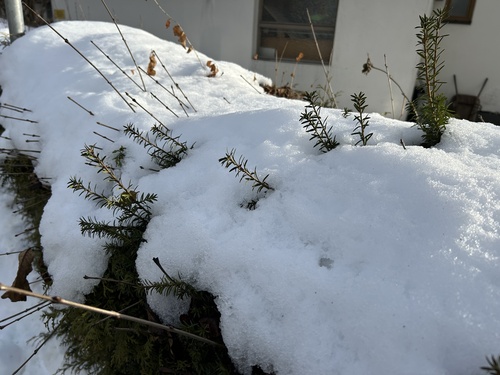
(c) 江国彬, some rights reserved (CC BY-NC), uploaded by 江国彬
iNaturalist· cc-by-nc
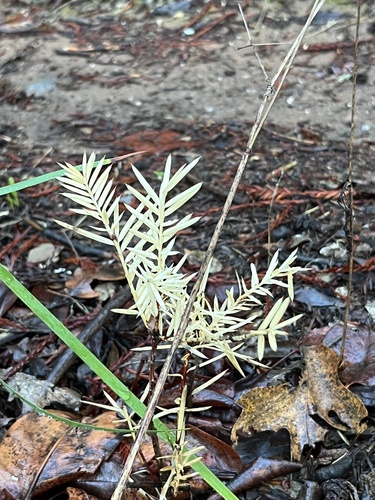
(c) 江国彬, some rights reserved (CC BY-NC), uploaded by 江国彬
iNaturalist· cc-by-nc-sa
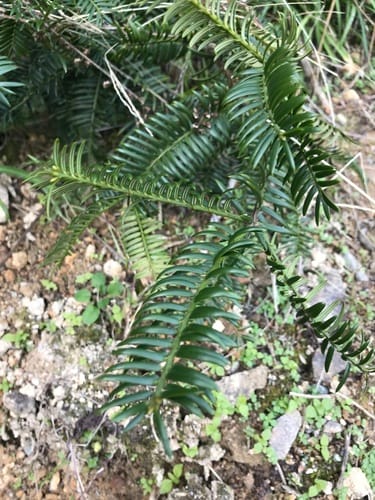
(c) Experiencing Life Trips, some rights reserved (CC BY-NC-SA)
Summary
Source: WikipediaTorreya grandis (Chinese: 香榧; pinyin: xiāngfěi; lit. 'fragrant nutmeg yew') is a species of conifer in either the family Taxaceae, or Cephalotaxaceae. Common names include Chinese Torreya and Chinese nutmeg yew, which refers to its edible seeds that resemble nutmeg and to its yew-like foliage, although it is not related to either nutmeg nor to the true yews belonging to the genus Taxus. Originating in the Jurassic period, about 170 million years ago, it is known as a "living fossil". T. grandis is a large tree that can attain height of 25 metres (82 ft), and possibly as high as 39 metres (128 ft). T. grandis is endemic to eastern and south-eastern China; it is found in the coastal provinces Fujian, Zhejiang, and Jiangsu, as well as in Anhui, Guizhou, Hunan, and Jiangxi inland. Its natural habitat are mountains and open valleys, often by streams, between 200 and 1,400 metres (660 and 4,590 ft) ASL. T. grandis is a precious tree species with multiple values. According to survey data, its economic life is more than a thousand years. Torreya grandis cv. Merrillii is a cultivar with a history going back to the Tang dynasty. It is believed to originate from the mountains of northeast Zhejiang.
Description
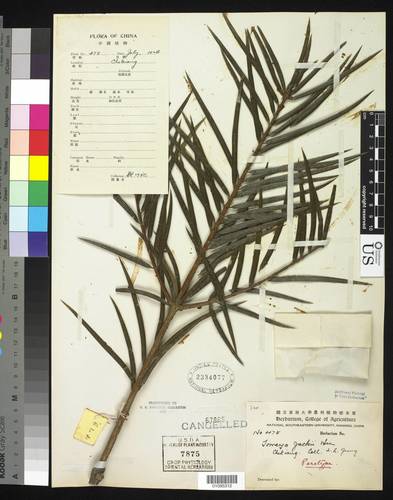
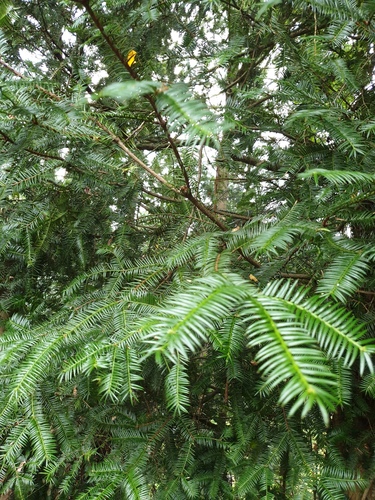
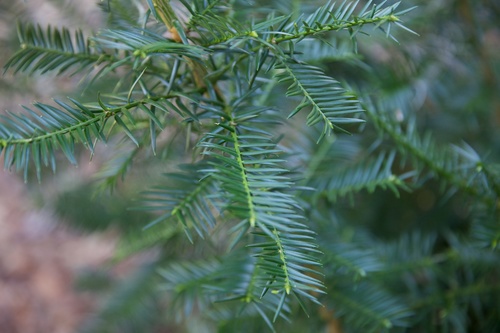
A shrub or small tree native to western China, growing at 1,500-3,400 m elevation in Yunnan. It has distinctive hooked leaves that taper toward the tip and belongs to the Taxaceae family, a warm temperate species.
Edible Uses
The seeds and seed oil are edible.
Medicinal Uses
The nuts are edible or can be pressed for oil, and have high nutritional value. In traditional Chinese medicine, T. grandis has the effects of "eliminating malnutrition" (消除疳積), "moisturizing the lungs and smoothing the intestines" (潤肺滑腸), "resolving phlegm and relieving cough" (化痰止咳), "treating five hemorrhoids and removing three intestinal parasites" (治五痔,去三蟲), "beneficial to muscles and bones" (助筋骨), and so on. According to modern chemical and medical analysis, T. grandis does have a number of benefits and curative effects on the human body; for example, it has an inhibitory effect on lymphoblastic leukemia, and also has the effects of regulating blood lipids, softening cardiovascular and cerebrovascular, and anti-oxidation. In addition, the paclitaxel in leaves, bark, and arils can be used to treat a number of types of cancer. The linalyl acetate extracted from arils is the raw material for refining essential oil. The wood is used in construction and high-quality furniture or sculpture, as well as in the production of high-quality go boards. In Europe and North America, T. grandis is used as an ornamental tree.
Distribution
It is a warm temperate plant. It is native to western China. It grows between 1,500-3,400 m above sea level in Yunnan.
Where It Grows
Asia, China, Tibet,
Cultivation
Plants can be grown from seed.
Notes
Also put in the family Cephalotaxaceae.
Synonyms
Also Known As
Gae-long-shing, Yun nan fei
References (4)
- W. C. Cheng et al., Acta Phytotax. Sin. 13:87. 1975
- Li, S., et al, 2020, Monpa, memory, and change: an ethnobotanical study of plant use in Mêdog County, South-east Tibet, China. Journal of Ethnobiology and Ethnomedicine. (2020) 16:5 p 23
- Marinelli, J. (Ed), 2004, Plant. DK. p 157
- Plants for a Future database, The Field, Penpol, Lostwithiel, Cornwall, PL22 0NG, UK. http://www.scs.leeds.ac.uk/pfaf/