Thespesia populneoides
(Roxb.) Kostel.
Beach yellow Hibiscus, Pacific rosewood, Northern Cottonwood
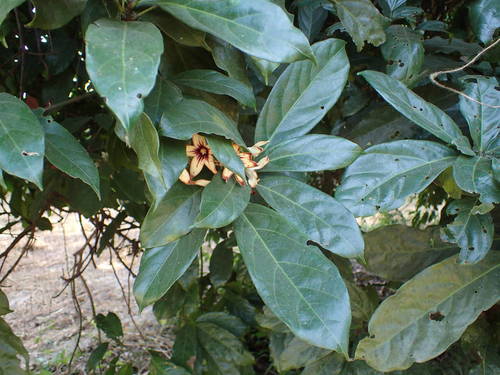
iNaturalist· cc-by-nc
(c) greg n, some rights reserved (CC BY-NC), uploaded by greg n
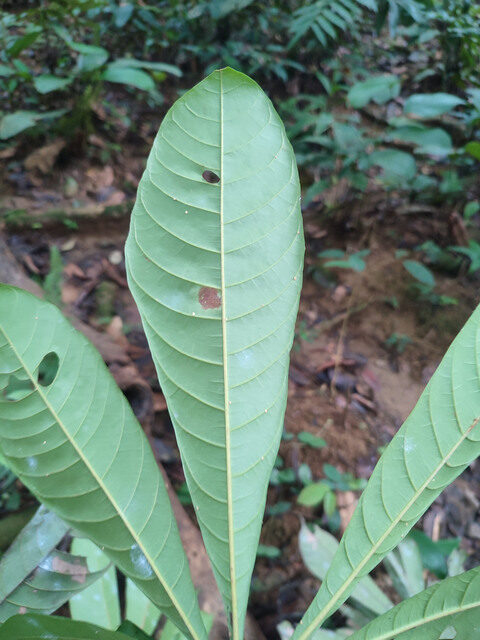
iNaturalist· cc-by-nc
(c) elliefriends, some rights reserved (CC BY-NC)
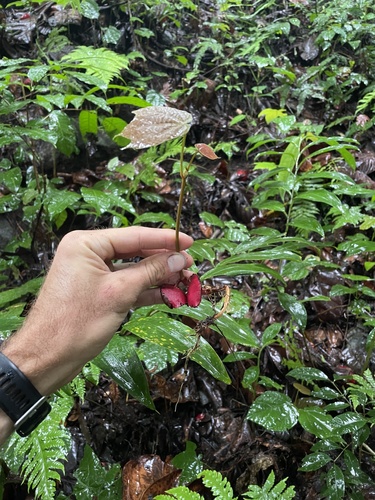
iNaturalist· cc-by-nc
(c) Radha Veach, some rights reserved (CC BY-NC), uploaded by Radha Veach
Summary
Source: WikipediaEvergreen tree growing rapidly to 10m tall and wide. Hardy to UK zone 10. Bird-pollinated flowers. Attracts wildlife. Tolerates light sandy, medium loamy, and heavy clay soils with good drainage and poor soil conditions. Grows in neutral to basic mildly alkaline soils, very alkaline and saline conditions. Requires full sun, tolerates drought and maritime exposure.
Description
A shrub or small tree. It has several stems. It is 5-6 m high. The leaves are alternate and smooth. They are heart-shaped. The blade is 6-13.5 cm long by 7.5-13 cm wide. The leaf is dark green on the upper surface and has rust coloured scales on a paler green underneath. The leaf stalk is 10 cm long. The flowers are large and yellow. They have a purple centre. The flower is 7 cm across by 10 cm long. They occur singly on long stalks in the axils of leaves. The fruit are smooth round leathery or woody capsules. They are 3-4.5 cm across. They are brown when ripe. They contain several small round seeds.
Edible Uses
Young leaves can be eaten raw or cooked as a vegetable — boiled or added to soups. Flowers and flower buds are edible raw or cooked. Ripe fruits are preserved and eaten, while unripe fruits can be eaten raw, boiled, or fried as a vegetable. A gum is also obtained from the plant. Note that this species is considered doubtfully distinct from Thespesia populnea, and the uses listed here reflect that relationship.
Traditional Uses
The leaves, flowers and buds are eaten raw or cooked.
This uses section is brief — help expand it
Medicinal Uses
Portia tree has a long history in traditional medicine, with the bark, root, leaves, flowers, and fruits all used to treat a wide range of conditions — a body of use that is increasingly supported by research. The heartwood contains sesquiterpenoid quinones including mansonone D and H, thespone, and thespesone, which are known to induce contact dermatitis, inhibit tumour formation, and have antifungal properties. The heartwood and other plant parts also contain gossypol. Fruits and leaves contain antibacterial compounds; methanolic extracts of the flower buds have shown antifungal activity; ethanol extracts of the flower have shown antihepatotoxic activity; and aqueous extracts of the fruit have demonstrated wound-healing activity in rats after both topical and oral administration. The seed oil has anti-amoebic activity. The heartwood is carminative and useful in treating pleurisy, cholera, colic, and high fevers. Fruit juice is applied in the treatment of herpes, while crushed fruit is used for urinary tract problems and abdominal swellings. The cooked fruit, crushed in coconut oil, makes a salve that kills lice when applied to the hair. An extract of the fruit is applied externally to swollen testicles. A leaf tea is taken for rheumatism and urinary retention, and a leaf decoction is used for coughs, influenza, headache, and illness relapses. Leaf sap and decoctions of most plant parts are applied externally for various skin diseases. Pounded fruits mixed with pounded leaves form a poultice for headaches and itching. A decoction of bark and fruit mixed with oil treats scabies. A decoction of the astringent bark treats dysentery and haemorrhoids, and a maceration of it is drunk for colds. A cold bark infusion is used for dysentery, diabetes, gonorrhoea, yellow urine, and thrush. The bark also treats indigestion, pelvic infection, dysmenorrhoea, infertility, secondary amenorrhoea, appetite loss, ulcers, and worms. The inner bark is used for constipation and typhoid. The stem is employed in treating breast cancer. Other plant extracts have shown significant antimalarial activity. Leaf and bark decoctions are taken for high blood pressure. Seeds are purgative.
Distribution
A tropical plant. It grows naturally on stabilised sand dunes near the beach. It can grow in sand or in heavy wet swampy clays.
Where It Grows
Africa, Asia, Australia, Burkina Faso, India, Indonesia, Malaysia, Pacific, Pakistan, Papua New Guinea, PNG, Philippines, SE Asia, West Africa,
Cultivation
Plants can be grown from seed or cuttings.
Propagation
Seed germination can be unreliable with direct sowings and is hindered by the hard seed coat; scarification with a knife or sandpaper improves results. Germination takes 8–70 days. Pot seedlings on as soon as they are large enough to handle, using pots deep enough to accommodate the taproot; plants should be ready to set out in 12–16 weeks. Seed-raised trees are preferred for timber as they produce knot-free, straight, even-grained, and tough wood. Cuttings of all sizes strike well, but small cuttings are preferable — trees raised from large cuttings are said to be short-lived and prone to decay.
Other Uses
The tough fibrous bark yields a strong fibre used for cordage, fishing lines, coffee bags, and caulking boats. An oil extracted from the seed can be burned in lamps. Wood soaked in water yields a solution used in Asia to dye wool deep brown; the fruit and flowers yield a water-soluble yellowish dye; and a black dye can be obtained from the leaves. The bark is a source of tannins. A water-soluble gum is obtained from the fruit and flowers, while a thicker gum, insoluble in water, comes from the bark. Leaves are used for wrapping food. The heartwood ranges from reddish brown to dark brown or black, often with purple veining, sharply demarcated from a 1–2cm wide band of white to pale yellow or pale pink sapwood that darkens on exposure. The wood is fine- to medium-textured with a slight ribbon figure on quartersawn faces, and freshly cut wood has a rose-like smell. It is strong, hard, light to medium in weight, and very durable even in contact with water or the ground, with good resistance to insect attack. It seasons well without warping or checking, with very low to low shrinkage. Despite its wavy grain, the wood saws and works easily, turns well both green and dry, finishes to an attractive polish, and paints well, though gluing properties are poor to medium. The wood contains an oil that slows the drying of varnishes. It is used for traditional bowls, artefacts, gunstocks, jewellery, furniture, plates, utensils, horse-drawn carts, wheelbarrows, canoe paddles, light construction, flooring moulds, musical instruments, and vehicle bodies. Its durability underwater makes it popular for boat building. The wood also serves as fuel. The tree can be grown as a hedge.
Notes
This plant has been confused with Thespesia populnea. This one has different shaped leaf bases and fruit stalks which are short and bend. See Wheeler p 232