Sterculia schumanniana
(Laut.) Mildb.
gbif· cc-by-nc
Joechang
gbif· cc-by-nc
Joechang
gbif· cc-by-nc
Tomás Molina Ehrman
Description
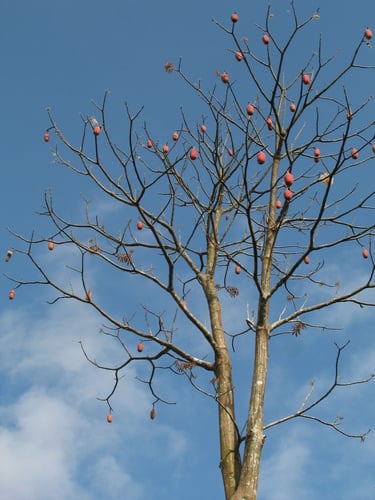
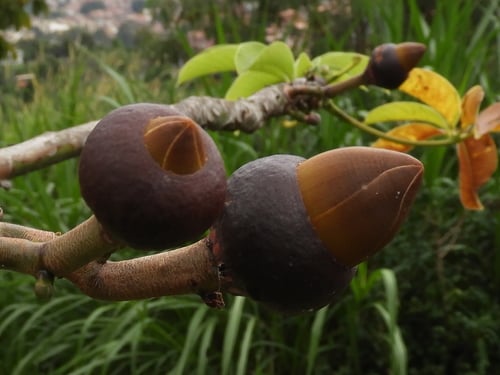
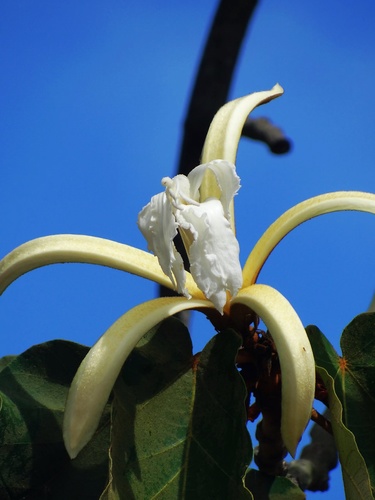
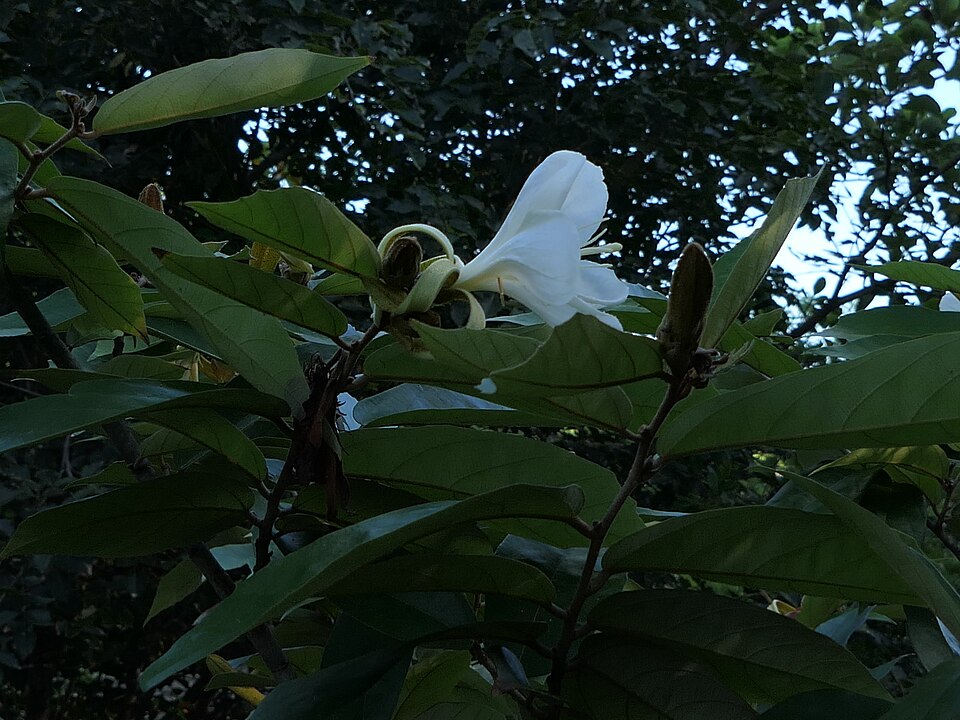
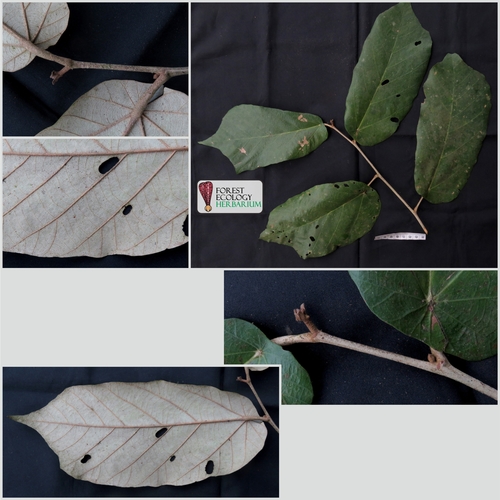
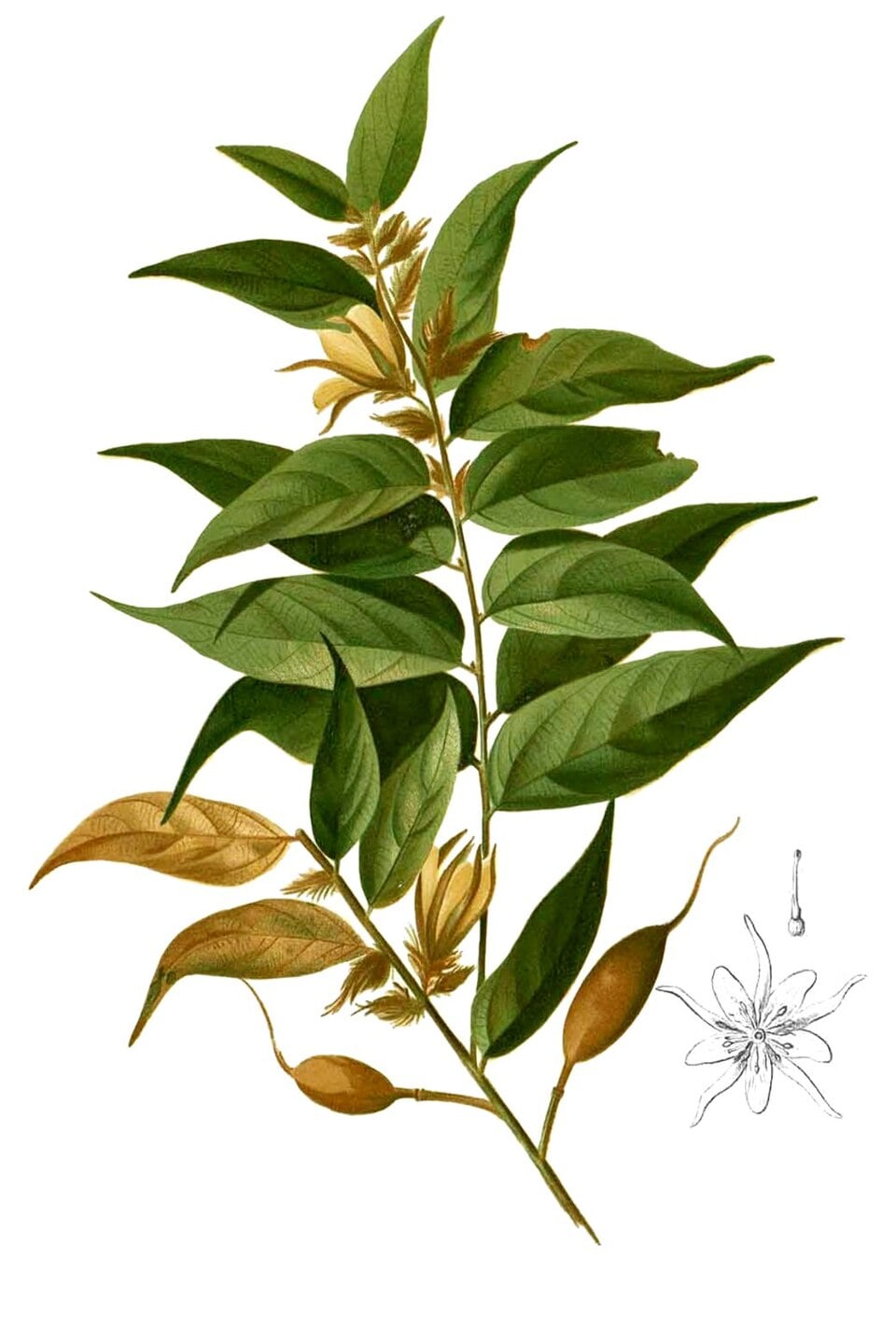
A medium sized tree up to 20 m high. The trunk is often crooked and the tree slender. The trunk can be 45 cm across. It has buttresses. The crown of the tree is often broad. The branches are slender, light brown and often with grooves. The leaves are alternate, simple and at the ends of branches. They are oblong and have a tail. The blade can be 20 cm long by 8 cm wide. There are 6-7 pairs of side veins. The leaf stalk is 2.5 cm long and and thicker at both ends. The flowers are bell shaped. Plants can have male, female or both sex flowers. These hang in loose stalked branches. These can be in the axils of leaves but are mostly on buds from stems and main branches. The flowers are dull red. The fruit are often in clusters. They have 3-5 velvety sacs. The fruit is bright orange-red at maturity. The seeds inside are black. They are 1.8 cm long by 1 cm wide.
Edible Uses
The nut-like seeds are eaten cooked.
Traditional Uses
The nut-like seeds are eaten cooked.
This uses section is brief — help expand it
Distribution
A tropical plant. It occurs in the lowlands.
Where It Grows
Pacific, Papua New Guinea, PNG, Solomon Islands,
Cultivation
Plants can be grown from seeds.
Notes
The bark is used for string for string bags. Also put in the family Sterculiaceae.
Also Known As
Alame
References (10)
- Batet, K., Koil, U., and Hertel, H., 1998, Traditional Plant Use by the Didipa Clan, Baitabag, Papua New Guinea. GDS. p 57
- Borrell, O.W., 1989, An Annotated Checklist of the Flora of Kairiru Island, New Guinea. Marcellin College, Victoria Australia. p 139, 223
- Bourke, M., 1995, Edible Indigenous Nuts in Papua New Guinea. In South Pacific Indigenous Nuts. ACIAR Proceedings No 69, Canberra. p 46
- Conn, B. & Damas, K.. Guide to trees of Papua New Guinea. http:/www.pngplants.org/PNGtrees
- French, B.R., 1986, Food Plants of Papua New Guinea, A Compendium. Asia Pacific Science Foundation p 199
Show all 10 references Hide references
- Havel, J.J., 1975, Forest Botany, Volume 3 Part 2 Botanical taxonomy. Papua New Guinea Department of Forests, p 186
- Henning, B. M., 2014, The Diversity of Conservation: Exploring Narratives, Relationships and Ecosystem Services in Melanesian Market-based Biodiversity Conservation. Ph D dissertation, Uni of Minnesota. p 213
- Menninger, E.A., 1977, Edible Nuts of the World. Horticultural Books. Florida p 43
- Plants of Papua New Guinea LAE herbarium record
- Walter, A. & Sam C., 2002, Fruits of Oceania. ACIAR Monograph No. 85. Canberra. p 248, 281