Sterculia rhynchocarpa
K. Schum.
gbif· cc-by
Royal Botanic Gardens, Kew
gbif· cc-by
Royal Botanic Gardens, Kew
gbif· cc-by
Royal Botanic Gardens, Kew
Description
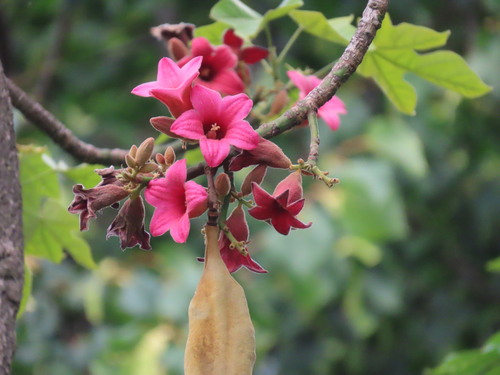
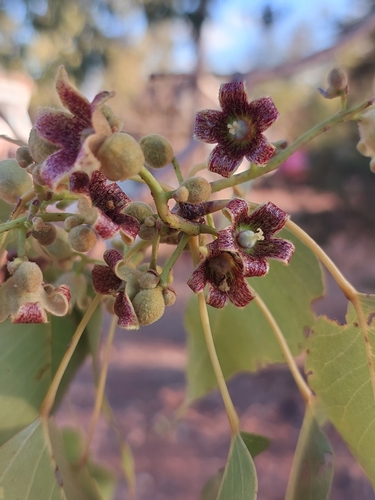
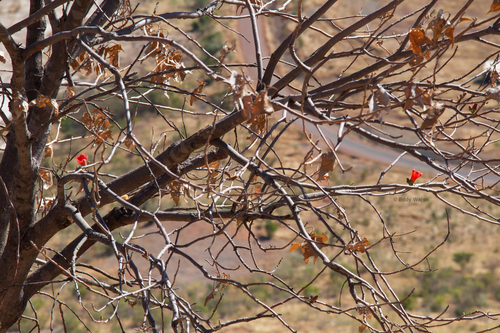
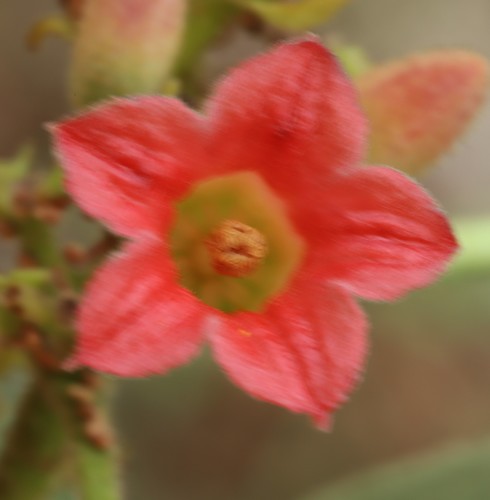
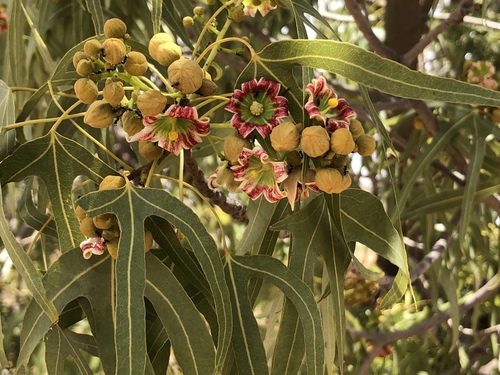
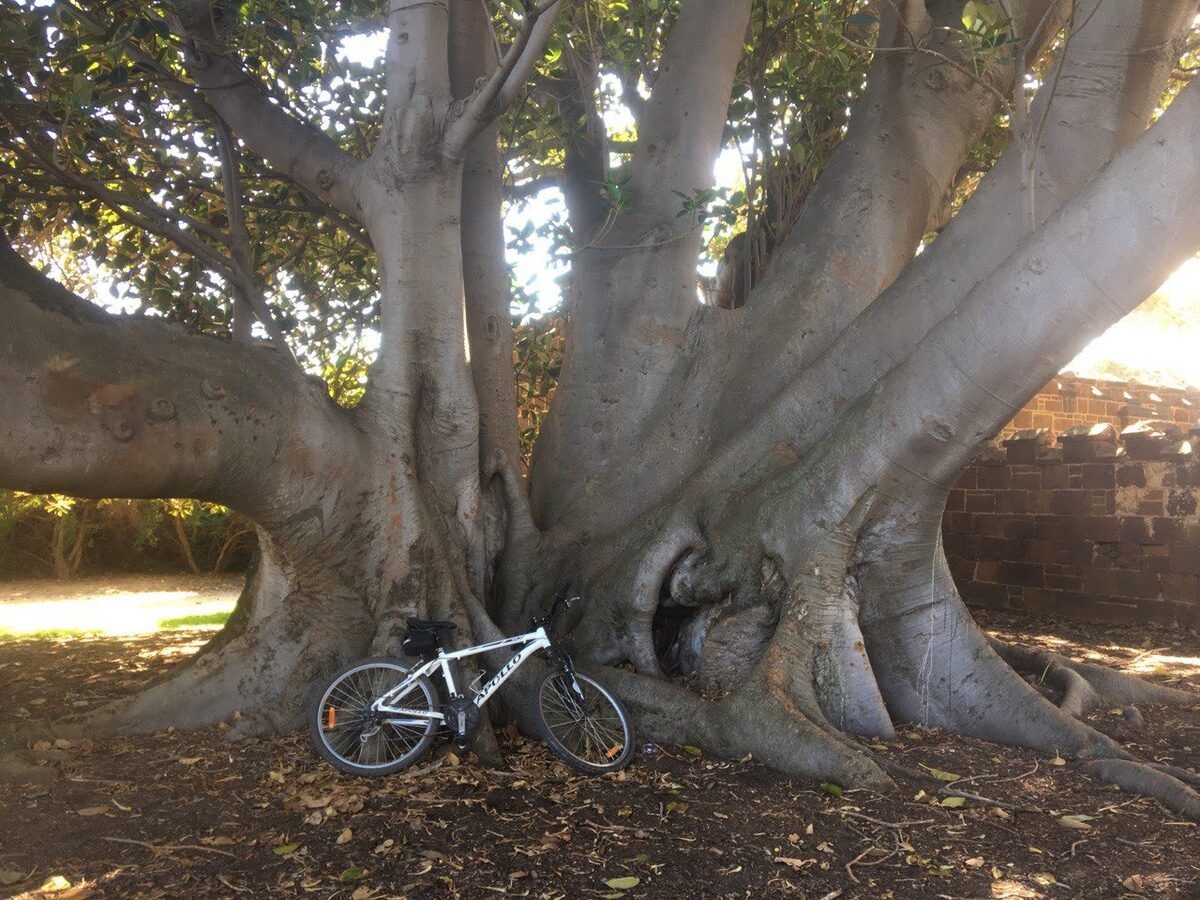
A shrub or small tree. It has many branches that are often spreading from near the base. It grows 8 m tall. The trunk can be swollen. The bark is smooth and purple or grey. It peels in papery flakes. The leaf blade is round or oval. The leaves can have 3 leaflets lobes arranged like fingers on a hand. The leaves are 1-5 cm long by 1-5 cm wide. The flowers are green with a red flush. The fruit are hairy pods. These have follicles 4-11 cm long and 2-4 cm wide. These split open. The fruit are spiny. The seeds are 2-4 mm long.
Edible Uses
Seed - cooked. They can be roasted and eaten whole like peanuts, or roasted, pounded and then cooked with vegetables such as peas or pumpkins. The seeds are 12 - 14mm long, 5 - 7mm wide.
Traditional Uses
The seeds are roasted and eaten.
This uses section is brief — help expand it
Known Hazards
Not specified in data
Distribution
It is a tropical plant. It grows between 5-1,300 m above sea level. It grows in Acacia-Commiphora woodland. It is often over limestone.
Where It Grows
Africa, East Africa, Ethiopia, Kenya, Somalia, Tanzania,
Cultivation
Plants can be grown from seeds.
Propagation
A physical dormancy caused by the hard seed coat of the mature seeds of many species in this genus can be overcome by scarifying the seed. This is carried out by cutting away or abrading some of the seed coat to allow the ingress of water, though great care must be taken not to damage the embryo. The aril surrounding the seed should also be removed - this is easiest when it has been softened through soaking in water. The seeds germinate optimally at temperatures between 20 - 30°c. They can be sown in a nursery seedbed or in containers. A germination rate of about 95%, occurring within about 2 weeks can be expected if the seed has been properly treated. Cuttings.
Other Uses
A fibre obtained from the bark is used to make string.
Notes
Also put in the family Sterculiaceae.
Synonyms
Also Known As
Qaranro, Qeytso
References (8)
- African Plant Database
- Ferns, K., http://theferns.info/tropical
- JSTOR Global Plants. Entry for Sterculia rhynchocarpa.
- Lulekal, E., et al, 2011, Wild edible plants in Ethiopia: a review on their potential to combat food insecurity. Afrika Focus - Vol. 24, No 2. pp 71-121
- Morgan, W. T. W., 1981, Ethnobotany of the Turkana: Use of plants by a Pastoral People and Their Livestock in Kenya. Economic Botany 35(1):96-130
Show all 8 references Hide references
- Mutie, F. M., et al, 2023, Important Medicinal and Food Taxa (Orders and Families) in Kenya, Based on Three Quantitative Approaches. Plants 2023, 12, 1145
- Peters, C. R., O'Brien, E. M., and Drummond, R.B., 1992, Edible Wild plants of Sub-saharan Africa. Kew. p 189
- Ruffo, C. K., Birnie, A. & Tengnas, B., 2002, Edible Wild Plants of Tanzania. RELMA p 630