Thespesia danis
Oliv.
Danisa
gbif· cc-by
Royal Botanic Gardens, Kew
gbif· cc-by-nc-sa
MBG
gbif· cc0
Botanical Research Institute of Texas
Description
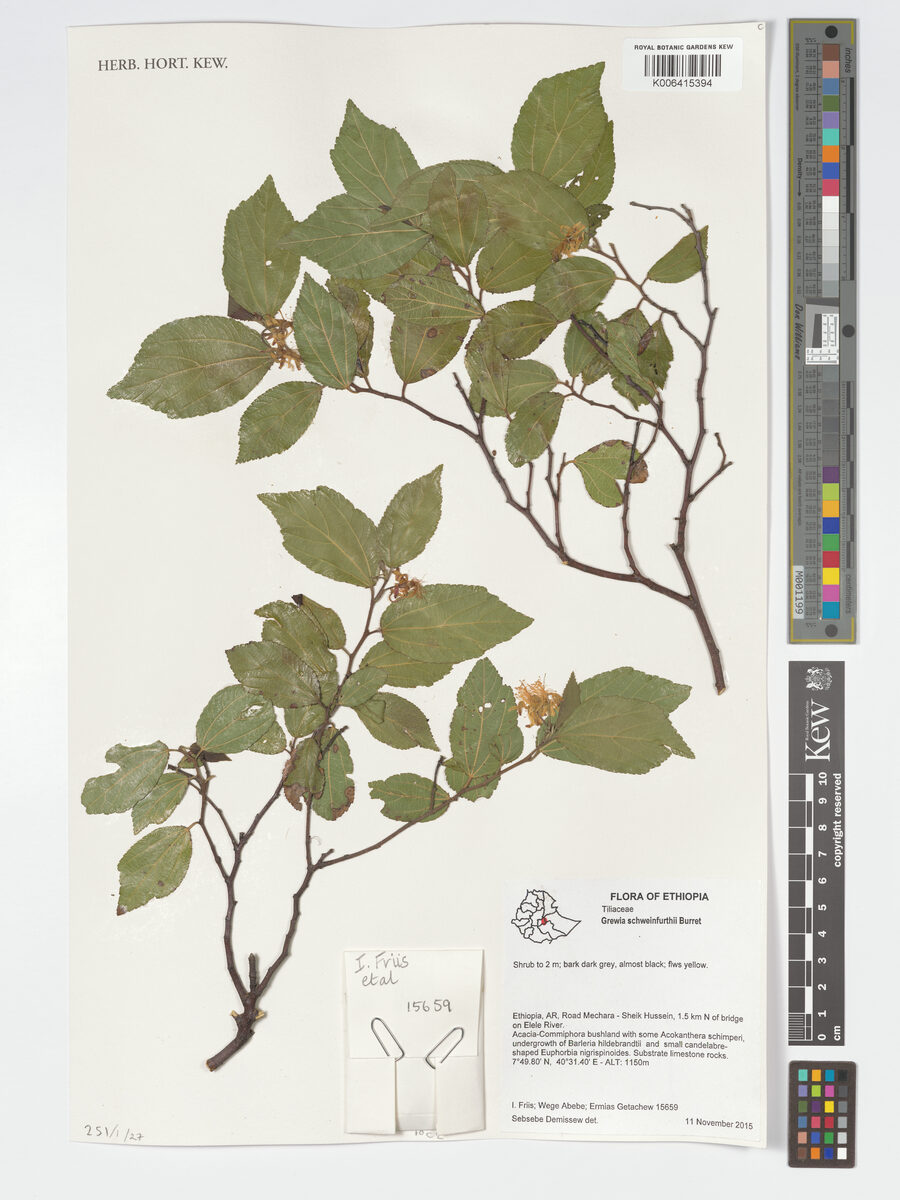
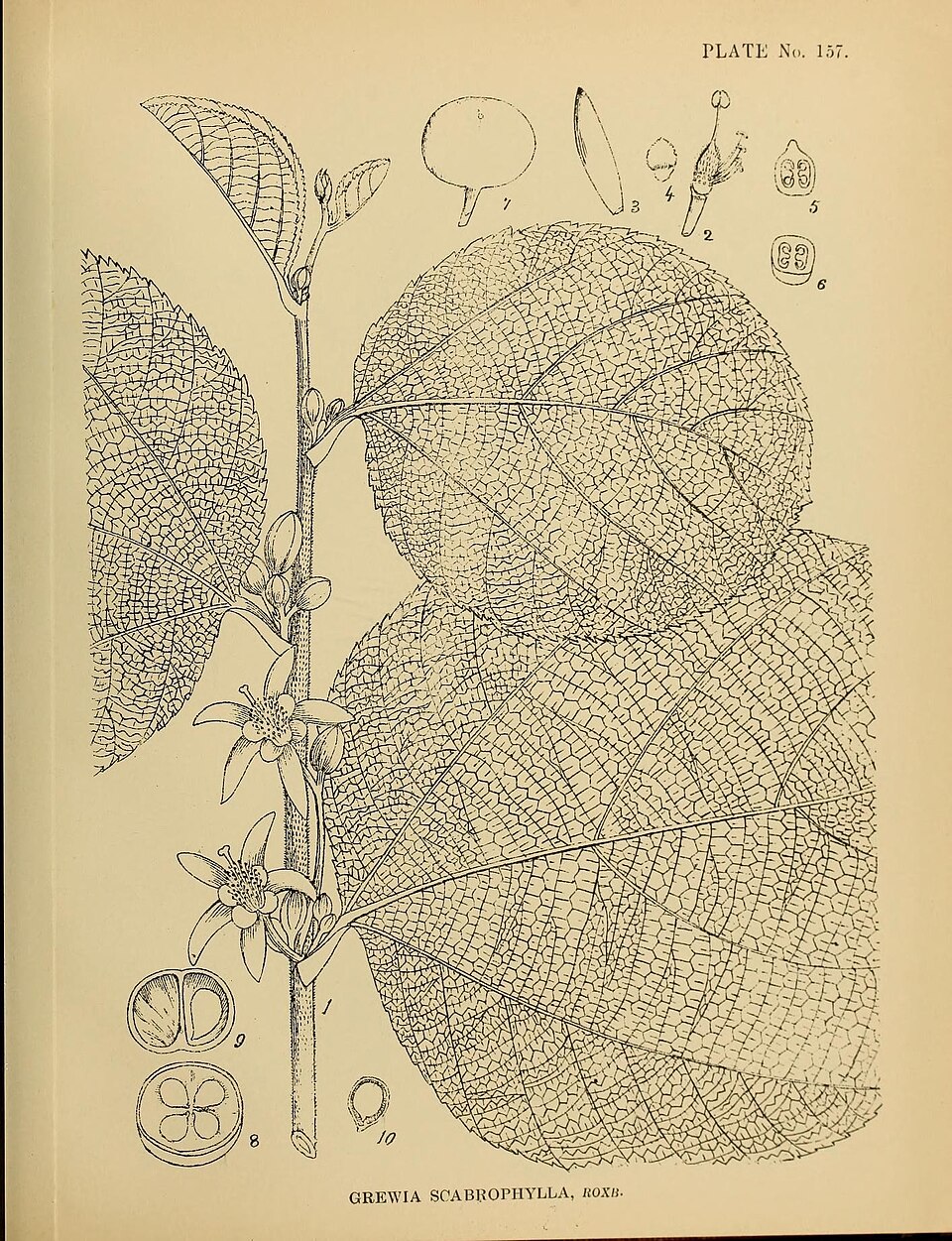
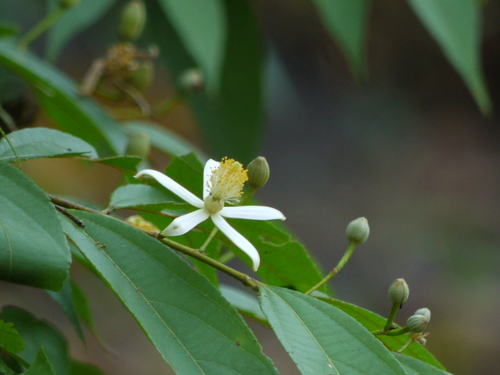
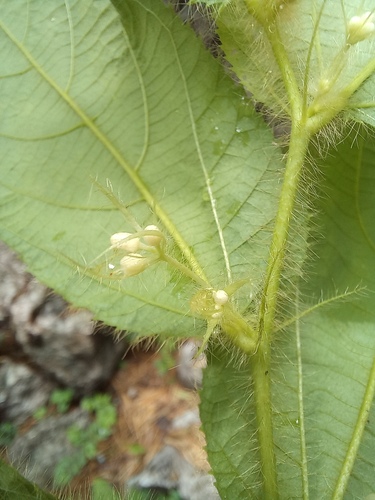
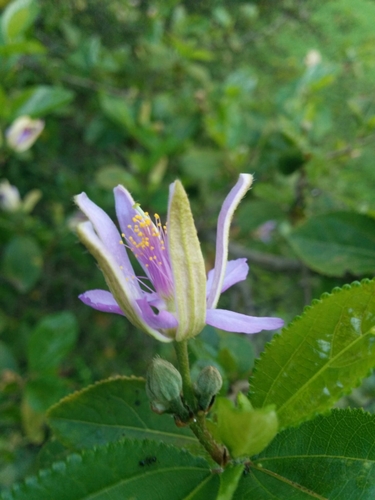
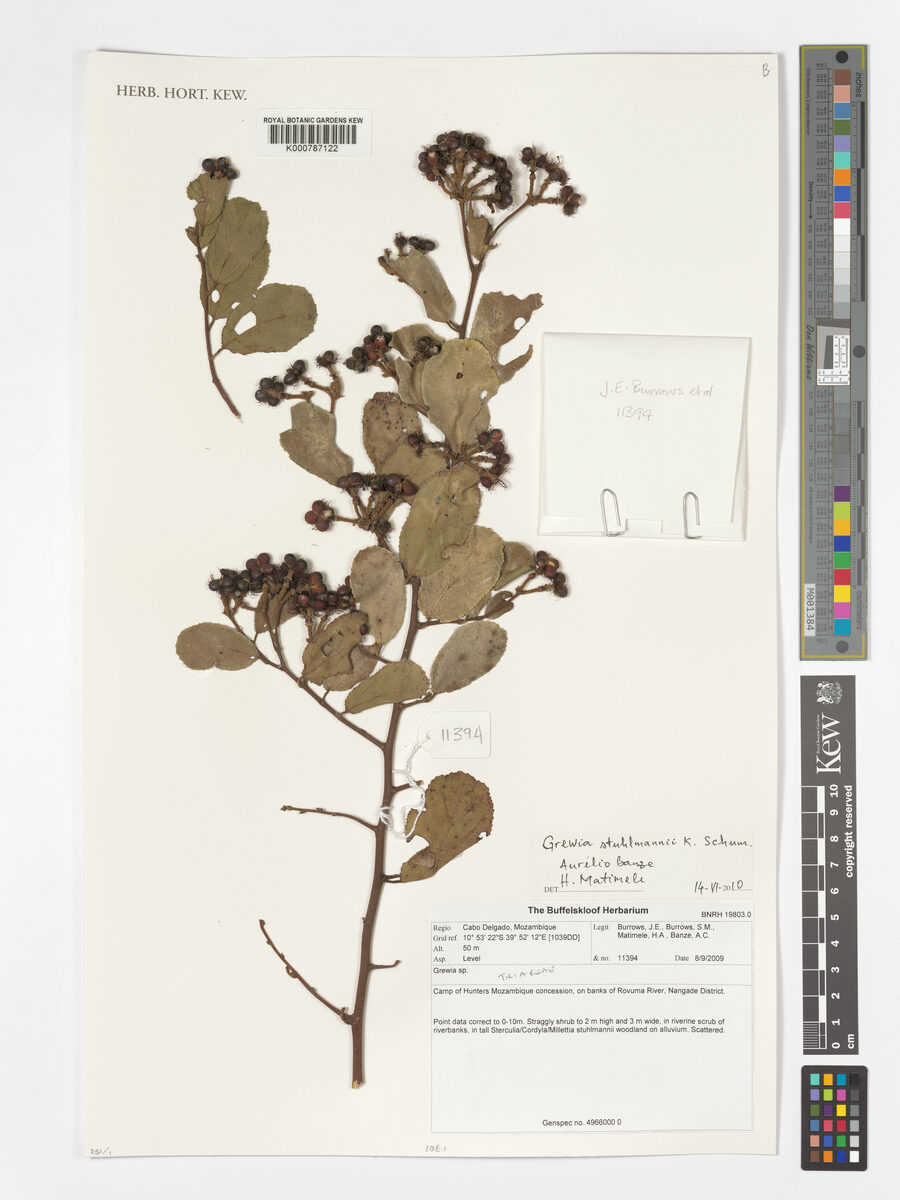
A shrub or small tree. It grows 5 m tall. The leaves are broadly oval. They are 2-9 cm long by 2-8 cm wide. They are densely scaly. The flowers are yellow with a red, pink or purple centre. They are 2.5 cm across. The fruit is a flattened round shape. It is 1 cm across.
Edible Uses
The fruit and root are eaten, with coastal fishermen traditionally consuming the fruit.
Traditional Uses
The fruit are eaten by coastal fishermen.
This uses section is brief — help expand it
Medicinal Uses
Root decoctions are taken against gonorrhoea, stomach pain, pain in the spinal region, haematuria and swelling of the abdomen.
Distribution
A tropical plant. It grows along the coast. It can grow in salty soils. It grows between 150-500 m above sea level. It can grow in arid places. It grows in the lowlands and on alluvial flats in Kenya up to 1,200 m above sea level.
Where It Grows
Africa, East Africa, Ethiopia, Kenya, Somalia, Tanzania,
Other Uses
The fibrous bark is used for tying. A dye is obtained from the flowers and fruits. The stems are made into throwing-clubs, bows and arrows, and are used as fire-sticks.
Notes
There are 10-17 Thespesia species. They are in the tropics of Africa and Asia.
Also Known As
Dane, Danis, Kabxan, Kobahan, Kobxan, Kokonke, Mlambale, Muhohe, Muhowe, Muoro
References (14)
- Burkill, I.H., 1966, A Dictionary of the Economic Products of the Malay Peninsula. Ministry of Agriculture and Cooperatives, Kuala Lumpur, Malaysia. Vol 2 (I-Z) p 2191
- Dale, I. R. and Greenway, P. J., 1961, Kenya Trees and Shrubs. Nairobi. p 263
- Flora Somalia. http://plants.jstor.org
- Glover, et al, 1969,
- Grivetti, L. E., 1980, Agricultural development: present and potential role of edible wild plants. Part 2: Sub-Saharan Africa, Report to the Department of State Agency for International Development. p 47
Show all 14 references Hide references
- Jardin, C., 1970, List of Foods Used In Africa, FAO Nutrition Information Document Series No 2.p 165
- JSTOR Global Plants edible
- Hooker's Icon. pl. ser. 3. 4:26, t. 1336. 1881
- Mutie, F. M., et al, 2023, Important Medicinal and Food Taxa (Orders and Families) in Kenya, Based on Three Quantitative Approaches. Plants 2023, 12, 1145
- Pakia, M., 2000, Plant Ecology and Ethnobotany of two sacred forests (Kayas) at the Kenya Coast. M. Sc. Thesis.
- Peters, C. R., O'Brien, E. M., and Drummond, R.B., 1992, Edible Wild plants of Sub-saharan Africa. Kew. p 146
- Reis, S. V. and Lipp, F. L., 1982, New Plant Sources for Drugs and Foods from the New York Botanical Garden herbarium. Harvard. p 179
- Royal Botanic Gardens, Kew (1999). Survey of Economic Plants for Arid and Semi-Arid Lands (SEPASAL) database. Published on the Internet; http://www.rbgkew.org.uk/ceb/sepasal/internet [Accessed 3rd May 2011]
- World Checklist of Useful Plant Species 2020. Royal Botanic Gardens, Kew