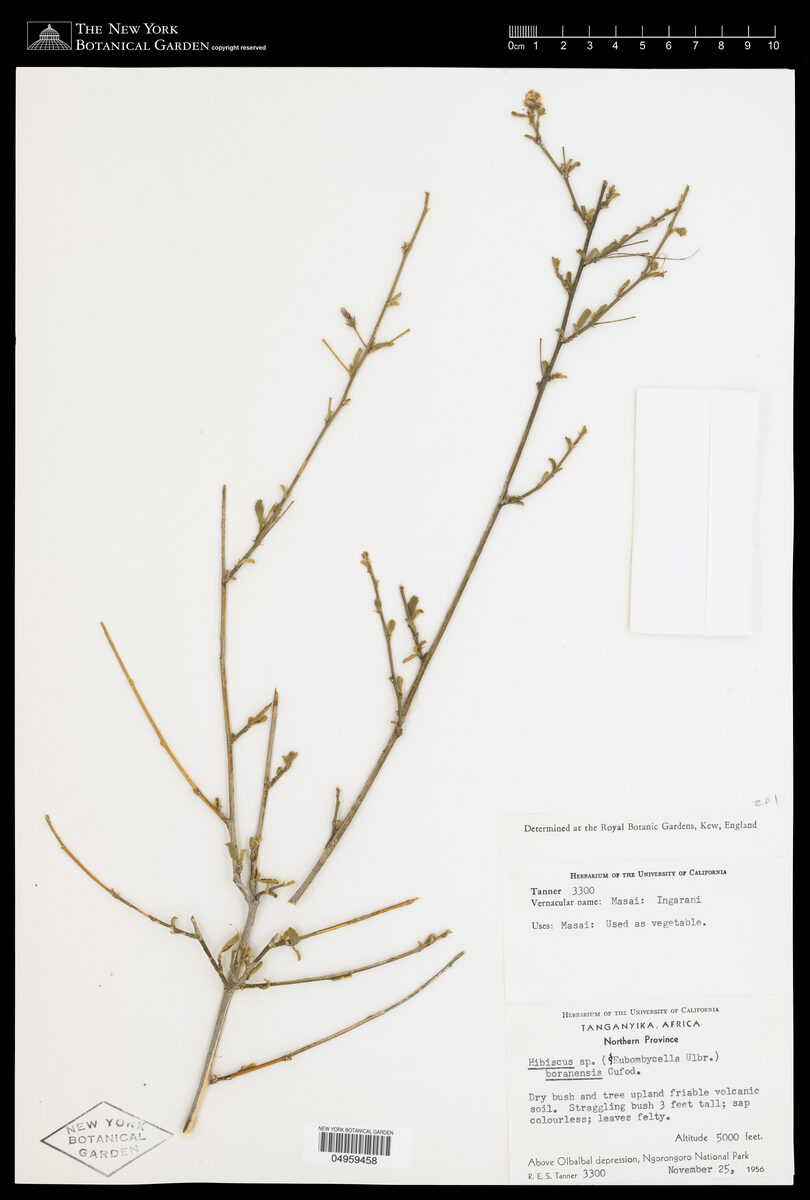
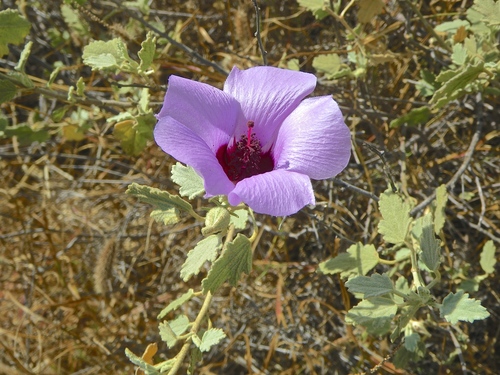
Hibiscus physaloides
Guill. & Perr.
iNaturalist· cc-by-nc
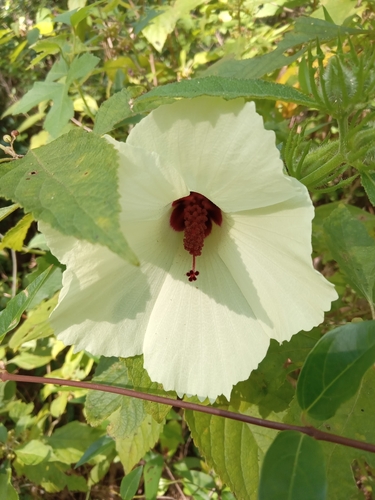
(c) Tony Benn, some rights reserved (CC BY-NC)
iNaturalist· cc-by-nc
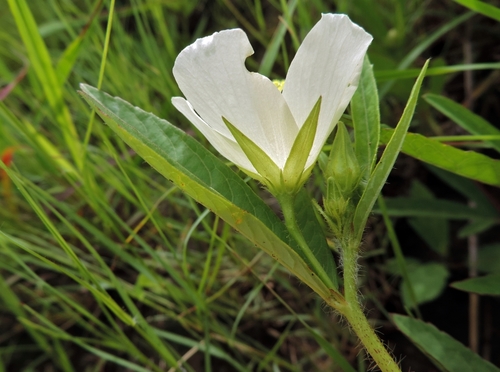
(c) Tony Benn, some rights reserved (CC BY-NC)
iNaturalist· cc-by-nc
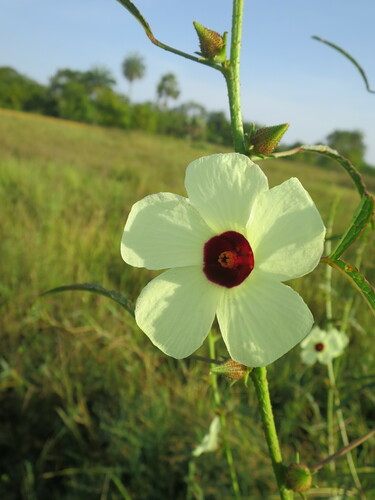
(c) Tony Benn, some rights reserved (CC BY-NC)
Description
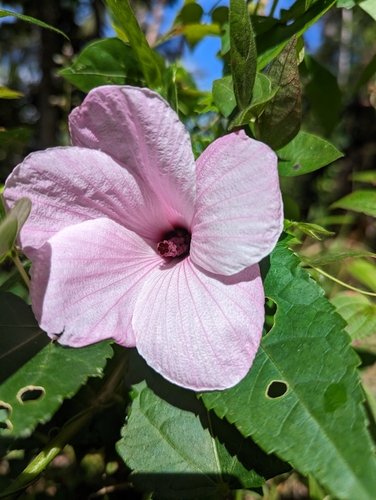
A small annual shrub. It has bristles. It grows 2 m tall. It has chalky secretions near on the lower side of the leaf at the base. The leaves are 20 cm long by 15 cm wide. It is almost round but with lobes at the end. There are teeth around the edge. The flowers are yellow with a red base. They are 9 cm across. The fruit is a capsule 15 mm long by 10 mm wide. The seeds are 2.5 mm long by 2 mm wide.
Edible Uses
The flowers are cooked and eaten as a vegetable. The leaves and fruit are also edible.
Traditional Uses
The flowers are cooked and eaten as a vegetable.
This uses section is brief — help expand it
Medicinal Uses
None mentioned.
Known Hazards
None mentioned.
Distribution
A tropical plant. It is widespread in tropical Africa. It grows in savannah woodland, palm groves and on coastal sands. It grows in dry stony places.
Where It Grows
Africa, Burkina Faso, Cape Verde, Central Africa, Comoro, Congo, East Africa, Eswatini, Gambia, Guinea, Guinée, Guinea-Bissau, Madagascar, Malawi, Mozambique, Sao Tome and Principe, Senegal, Seychelles, Sierra Leone, South Africa, Southern Africa, Swaziland, West Africa, Zambia, Zimbabwe,
Propagation
Seed - sow in situ or in containers. Germination is usually fairly rapid and no special pretreatment is needed, although germination will be faster if the seed is abraded or soaked prior to sowing. Prick out container-grown seedlings into individual pots when they are large enough to handle and plant them out into their permanent positions when they are 10cm or more tall.
Other Uses
A fibre is obtained from the bark.
Notes
There are about 220 Hibiscus species.
Synonyms
Also Known As
Berekete, Dana-cutcha, Dzondzo, Farakutia, Farcacutcha, Nhacafi-manthoge, Nkwekwe, Nkwisa, Sasamwa, Thelele thengo, Torremimi, Wemphe
References (15)
- Burkill, H. M., 1985, The useful plants of west tropical Africa, Vol. 4. Kew.
- Flora Zambesiaca. http://apps.kew.org/efloras
- Fowler, D. G., 2007, Zambian Plants: Their Vernacular Names and Uses. Kew. p 46
- Fox, F. W. & Young, M. E. N., 1982, Food from the Veld. Delta Books. p 262
- Grubben, G. J. H. and Denton, O. A. (eds), 2004, Plant Resources of Tropical Africa 2. Vegetables. PROTA, Wageningen, Netherlands. p 562
Show all 15 references Hide references
- A. Guillemin et al., Fl. Seneg. tent. 1:52. 1831
- Jardin, C., 1970, List of Foods Used In Africa, FAO Nutrition Information Document Series No 2. p 81
- Kwapata, M. B. & Maliro, M. F., Indigenous vegetables in Malawi: Germplasm collecting and improvement of production practices. FAO
- Long, C., 2005, Swaziland's Flora - siSwati names and Uses http://www.sntc.org.sz/flora/
- Martin, F.W. & Ruberte, R.M., 1979, Edible Leaves of the Tropics. Antillian College Press, Mayaguez, Puerto Rico. p 203
- Peters, C. R., O'Brien, E. M., and Drummond, R.B., 1992, Edible Wild plants of Sub-saharan Africa. Kew. p 144
- Swaziland's Flora Database http://www.sntc.org.sz/flora
- Terra, G.J.A., 1973, Tropical Vegetables. Communication 54e Royal Tropical Institute, Amsterdam, p 50
- Williamson, J., 2005, Useful Plants of Malawi. 3rd. Edition. Mdadzi Book Trust. p 132
- World Checklist of Useful Plant Species 2020. Royal Botanic Gardens, Kew