Terminalia copelandii
Elmer
Talis
gbif· cc-by-nc
Field Museum of Natural History - Botany Department | NSF/Mellon - GPI
Description
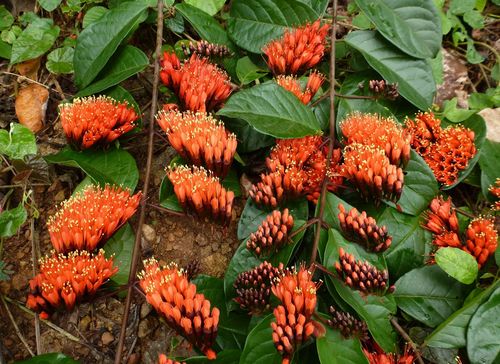
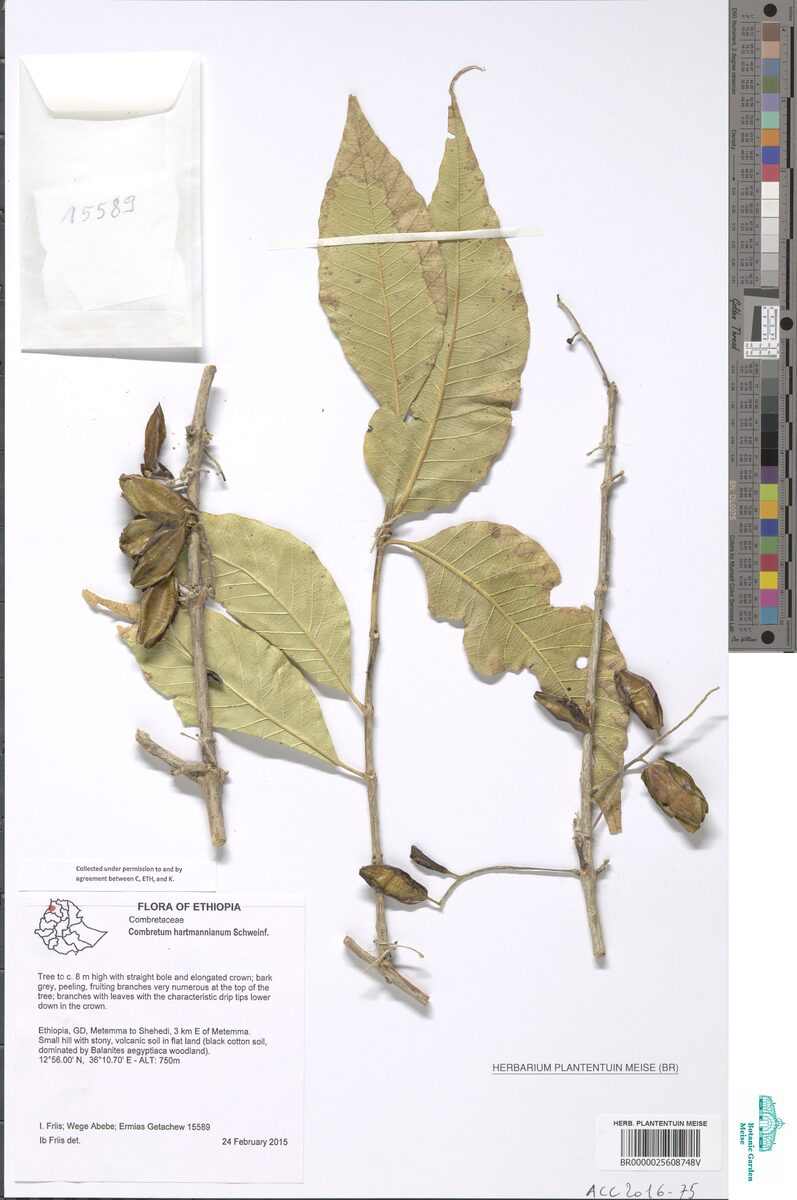
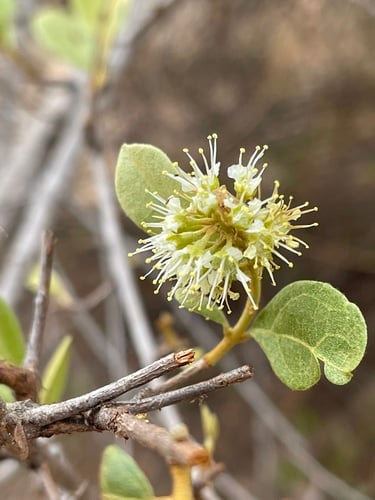
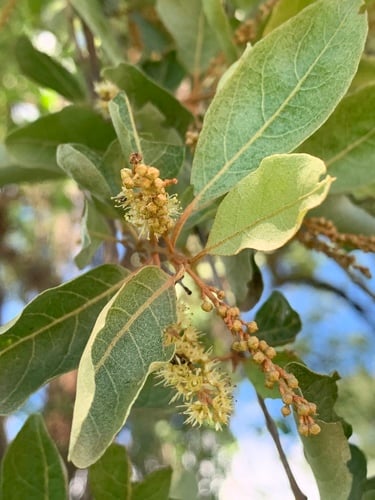
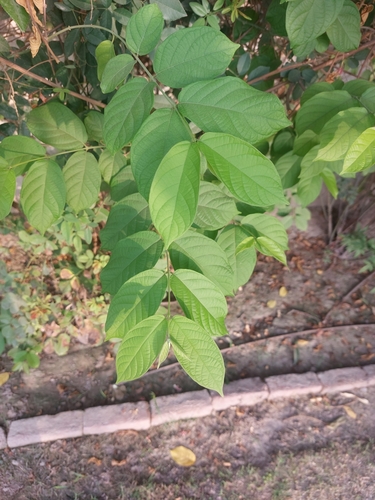
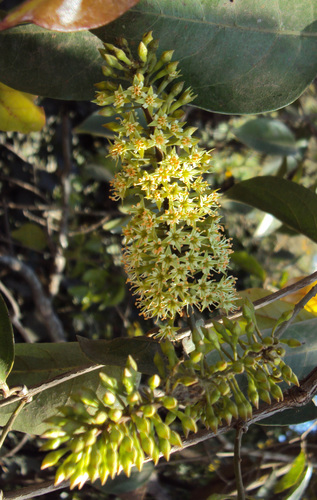
A large tree up to 40 m tall. Trees often have many buttresses. The twigs are thick and have leaf scars which are prominent. The leaves are crowded at the thickened end of the small branches. Leaves are 22-36 cm long and 9-13 cm wide. They have no real leaf stalk. Flowers are small and white on many flowered stalks 22-30 cm long and near the end of branches. Flowers towards the base of the flower spike are female and the ones towards the end are male. The fruit is 3.5-6 cm long and 2.2-3 cm wide. They are oval and slightly flattened.
Edible Uses
The seeds or nuts from the fruit are recorded as edible, though this is a minor food source.
Traditional Uses
The fruit are recorded as edible.
This uses section is brief — help expand it
Distribution
A tropical plant. They occur in primary rainforest up to 500 m altitude. This species occurs in Malaysia, Indonesia and the Philippines as well as Papua New Guinea. It is mostly known from the Western Province within Papua New Guinea.
Where It Grows
Asia, Indonesia, Malaysia, Pacific, Papua New Guinea, PNG, Philippines, SE Asia, Solomon Islands,
Cultivation
Plants can be grown from seeds.
Other Information
The tree is not common in Papua New Guinea and mostly occurs in the Western Province. It is only a minor food.
Notes
There are about 200-250 Terminalia species. They are tropical.
Synonyms
Also Known As
Ketapang darat, Lanipae, Matapang, Pohon ketapang hutan, Yanipo
References (10)
- Bourke, M., 1995, Edible Indigenous Nuts in Papua New Guinea. In South Pacific Indigenous Nuts. ACIAR Proceedings No 69, Canberra. p 46
- Coode, M.J.E., in Womersley, J.S., (Ed), 1978, Handbooks of the Flora of Papua New Guinea. Melbourne University Press. Vol 1. p 77
- French, B.R., 1986, Food Plants of Papua New Guinea, A Compendium. Asia Pacific Science Foundation p 169
- French, B.R., 2010, Food Plants of Solomon Islands. A Compendium. Food Plants International Inc. p 185
- Leafl. Philipp. Bot. 5:1759. 1913
Show all 10 references Hide references
- Powell, J.M., Ethnobotany. In Paijmans, K., 1976, New Guinea Vegetation. Australian National University Press. p 112
- Sukarya, D. G., (Ed.) 2013, 3,500 Plant Species of the Botanic Gardens of Indonesia. LIPI p 547
- Walter, A. & Sam C., 2002, Fruits of Oceania. ACIAR Monograph No. 85. Canberra. p 282
- Wickens, G.E., 1995, Edible Nuts. FAO Non-wood forest products. FAO, Rome. p 116
- World Checklist of Useful Plant Species 2020. Royal Botanic Gardens, Kew