Terminalia pterocarya
F. Muell.
Lumpung
iNaturalist· cc-by
(c) Roland Muench, some rights reserved (CC BY), uploaded by Roland Muench
iNaturalist· cc-by-nc
(c) Emerald Gem, some rights reserved (CC BY-NC)
Description
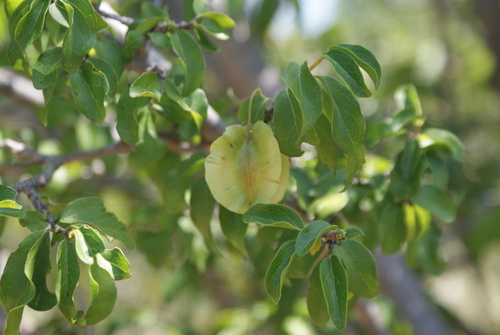
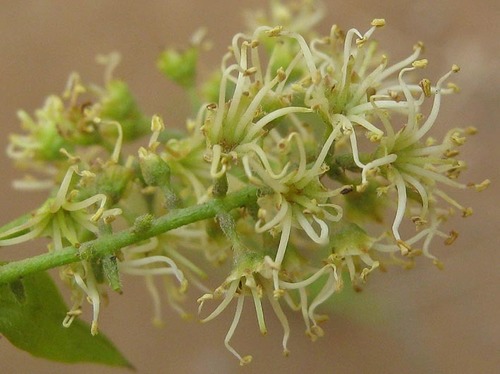
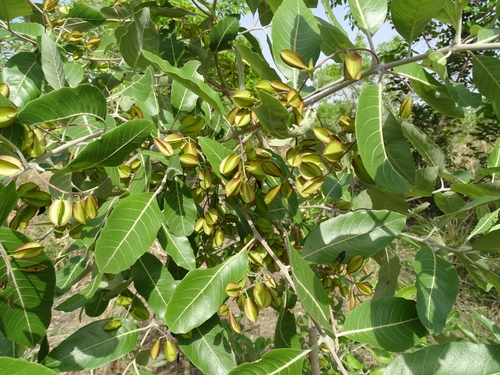
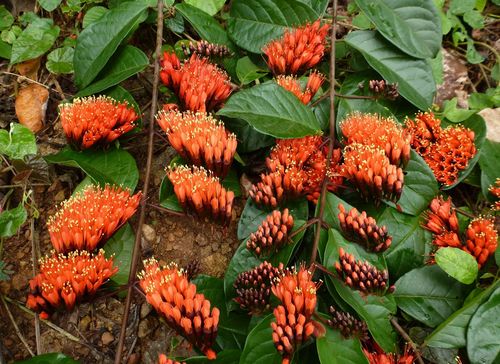
A shrub or small tree. It grows 3-7 m tall. It loses its leaves during the year. The bark is dark and with slits along its length. The leaves are arranged in spirals. They are oval but taper towards the base. The leaf is 1.5-5.5 cm long by 0.6-3 cm wide. They are light green and have a rounded or indented tip. The leaf stalk is usually hairy and is 0.3-1.4 cm long. The flowers are cream and have a scent. They are in fairly dense spikes 3-5 cm long in the axils of leaves near the ends of small branches. The fruit are oval, smooth and dry. They have a wing around them. They fruit are 2-3.5 cm long by 1-2 cm wide and light green. They have a single seeded woody shell.
Edible Uses
The gum is eaten.
Traditional Uses
The gum is eaten.
This uses section is brief — help expand it
Distribution
A tropical plant. Plants grow in open woodland on poor red soils in northern Australia. They also occur on sandy soils near streams.
Where It Grows
Australia*,
Cultivation
Plants are grown from seed.
Production
It Australia flowering occurs November to May and fruiting February to June.
Notes
There are about 200-250 Terminalia species. They are tropical.
References (3)
- Lazarides, M. & Hince, B., 1993, Handbook of Economic Plants of Australia, CSIRO. p 235
- Smith, N. M., 1991, Ethnobotanical Field Notes from the Northern Territory, Australia, J. Adelaide Bot. Gard. 14(1): 1-65
- Wightman, Glenn et al. 1994, Gurindji Ethnobotany: Aboriginal Plant Use from Daguragu Northern Australia. Northern Territory Botanical Bulletin No 18. Parks and Wildlife Commission of the Northern Territory. p 52.