Terminalia samoensis
Rechinger
Talie
iNaturalist· cc-by-nc
(c) Raphael Forns, some rights reserved (CC BY-NC)
iNaturalist· cc-by
(c) Dominik Maximilián Ramík, some rights reserved (CC BY)
iNaturalist· cc-by
(c) Dominik Maximilián Ramík, some rights reserved (CC BY)
Description
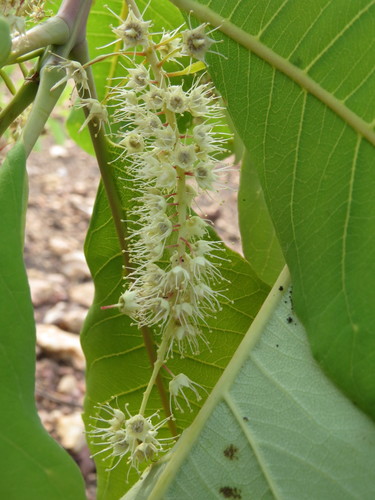
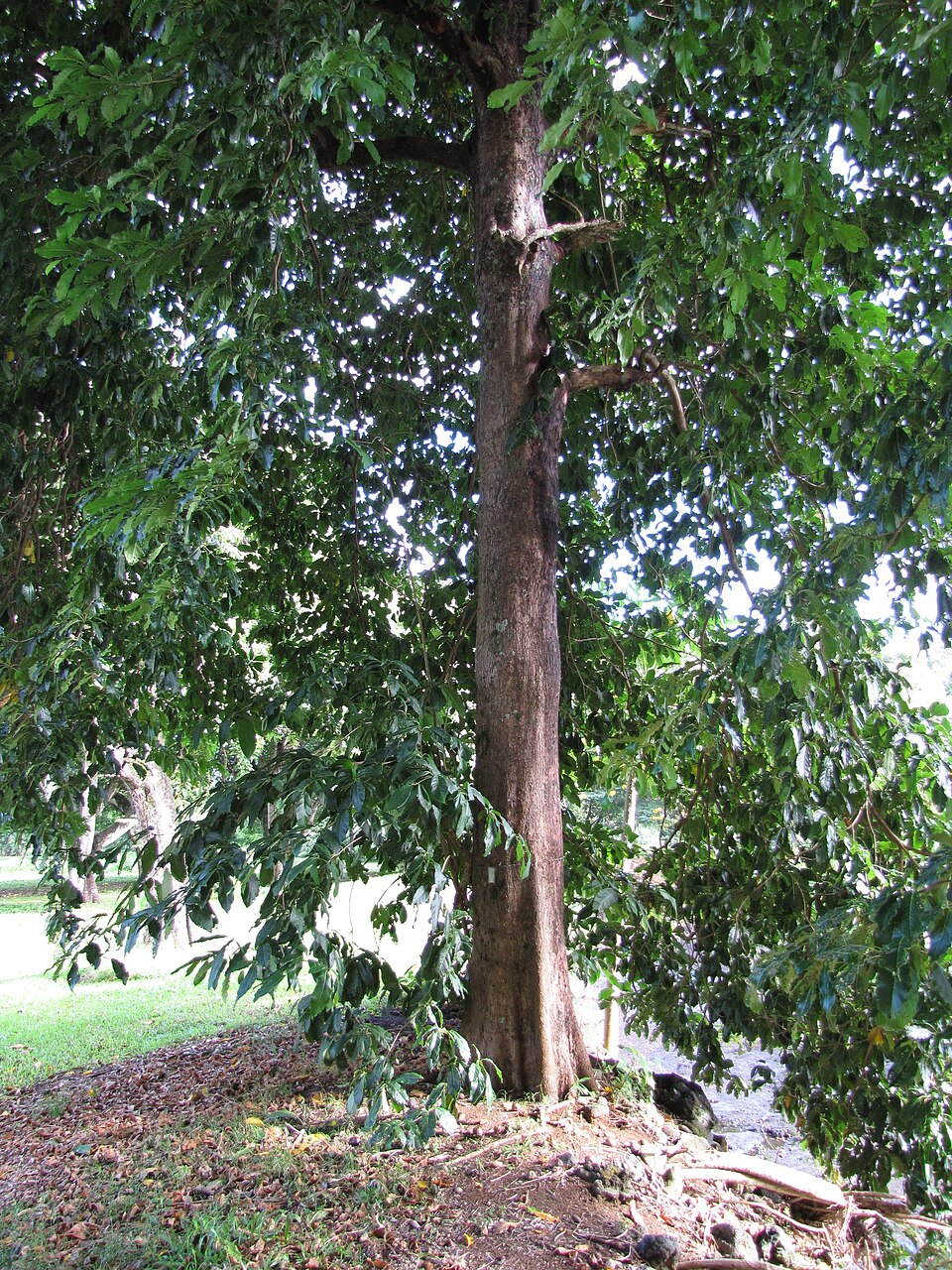
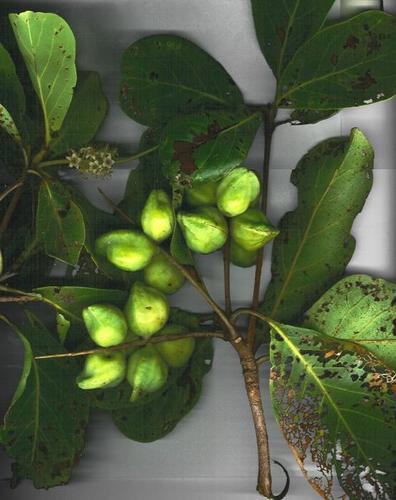
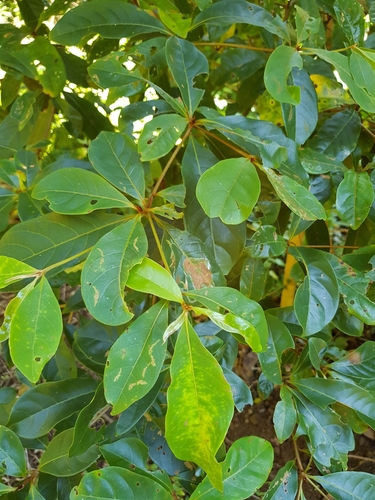
A small tree. It grows 5-20 m tall. Plants can be stunted in windy places. Young plant parts can have hairs. The leaves are clustered at the ends of the twigs. The leaf stalks are 1-2 cm long. The leaves are rounded but oval. They are 9-16 cm long by 6-13 cm wide. The tip is rounded. They taper slightly to a rounded base. The flowers are 5-6 mm long. The fruit are flattened and green when young. They become red and fleshy when ripe. They are 2-2.5 cm long by 1-1.5 cm wide. There are 6 fruit is a cluster. The kernels are small and edible.
Edible Uses
Like its cousin, the tropical beach almond (Terminalia catappa), the fruits (does this include the seeds?) are edible, however due to their smaller size, they are not commonly consumed.
Distribution
A tropical plant. It grows on coral coasts on islands in Papua New Guinea and the Solomon Islands. It is often in exposed locations.
Where It Grows
American Samoa, Chuuk, FSM, French Polynesia, Guam, Hawaii, Indonesia, Kiribati, Marshall Islands, Micronesia, Pacific, Palau, Papua New Guinea, PNG, Pohnpei, Samoa, Solomon Islands, Tahiti, Tonga, Tuvalu, Vanuatu, Yap,
Cultivation
The fruits are probably water-borne.
Other Uses
The wood of this tree is used for traditional carvings throughout its range.
Other Information
The fruit is eaten especially by children.
Notes
There are about 200-250 Terminalia species. They are tropical.
Synonyms
Also Known As
Chesemiich, Ekkon, Khin, Khun, Kil, Kon, Kukon, Te ukin
References (9)
- Coode, M.J.E., in Womersley, J.S., (Ed.) Handbooks of the Flora of Papua New Guinea. Vol. 1. p 100
- http://www.ntbg.org/plants/plant details.php
- Lebot, V. & Sam, C., Green desert or ‘all you can eat’? How diverse and edible was the flora of Vanuatu before human introductions?. Terra australis 52 p 410
- Stone, B.,
- Thaman, R. R., 1987, Plants of Kiribati: A listing and analysis of vernacular names. Atoll Research Bulletin No. 296
Show all 9 references Hide references
- Thaman, R. R, 2016, The flora of Tuvalu. Atoll Research Bulletin No. 611. Smithsonian Institute p 78
- Walter, A & Sam, C., 1995, Indigenous Nut Trees in Vanuatu: Ethnobotany and Variability. In South Pacific Indigenous Nuts. ACIAR Proceedings No 69. Canberra. p 57
- Walter, A. & Sam C., 2002, Fruits of Oceania. ACIAR Monograph No. 85. Canberra. p 254, 281
- www.manoa.hawaii.edu/botany/plants of micronesia