Terminalia sericea
Burch. ex DC.
Silver terminalia
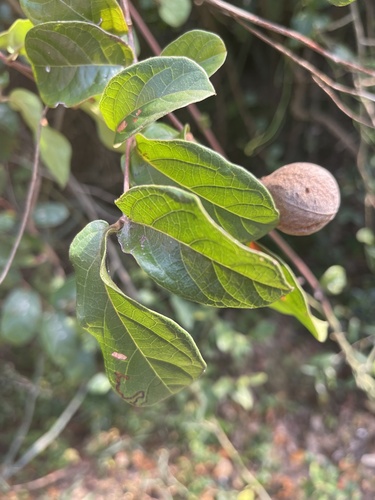
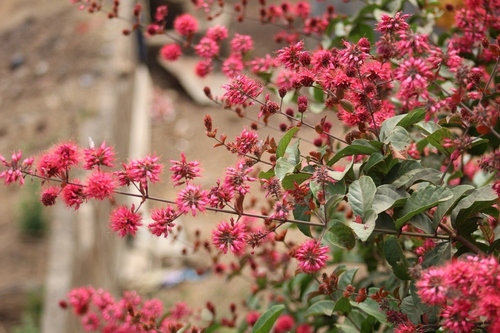
iNaturalist· cc-by-nc
(c) Ricky Taylor, some rights reserved (CC BY-NC), uploaded by Ricky Taylor
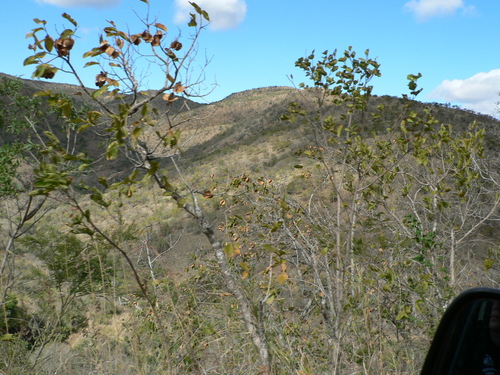
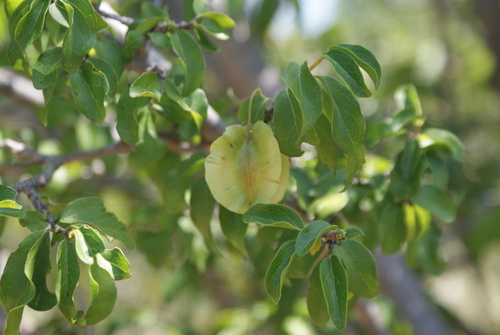
iNaturalist· cc-by-sa
(c) Tony Rebelo, some rights reserved (CC BY-SA)
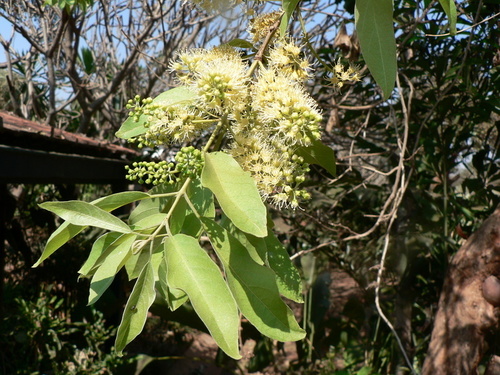
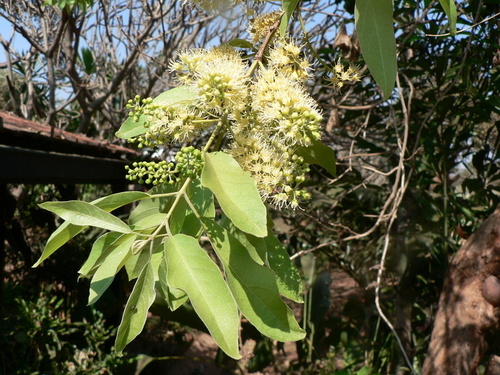
iNaturalist· cc-by-sa
(c) Tony Rebelo, some rights reserved (CC BY-SA)
Summary
Source: WikipediaTerminalia sericea is a species of deciduous tree of the genus Terminalia that is native to southern Africa. Its common names include clusterleaf, silver cluster-leaf or silver terminalia in English, vaalboom in Afrikaans and mususu in Venda.
Description
A shrub or small tree which loses its leaves during the year. It normally grows 6-9 m tall. It can grow to 23 m tall and have a stem 50 cm across. The trunk is dark and has deep splits along its length. The bark on the twigs is reddish brown due to silky hairs. The branches come out horizontal and droop slightly at the ends. This makes the branches appear to come out in layers. The leaves are clustered near the tips of the small branches. The leaves are grey-green or silver. The leaves are sword shaped and 5-15 cm long by 1.3-2.5 cm wide. They are usually wider above the middle and narrower towards the base. The leaves are on short leaf stalks. The flowers are small and yellow in spikes. They droop and have an unpleasant smell. The fruit are oval and round tipped. They are flat and with one seed. This is usually surrounded by a thin wing. The fruit become pink when ripe.
Edible Uses
The gum produced by the tree is eaten. The leaves are eaten fresh or used as a tea substitute.
Traditional Uses
The tree produces a gum which is eaten. The leaves are used as a tea substitute. The leaves are eaten.
This uses section is brief — help expand it
Medicinal Uses
The timber of the silver cluster-leaf is yellow and hard-grained and is resistant to attack by wood-boring insects and termites. It is used in building construction and to make tool handles, furniture and fencing posts. It is used for firewood and the making of charcoal. The bark has been used to make ropes and is also pounded to produce a substance for waterproofing boats. The leaves are eaten by cattle during the dry season when grass becomes unavailable. In traditional medicine, both leaves and roots have been used as a remedy for stomach ailments and a concoction of the roots for treating bilharzia, diarrhoea and pneumonia. The bark is used against diabetes and to dress wounds.
Known Hazards
The tree might be poisonous. The sawdust may cause inflammations of the respiratory organs and skin.
Distribution
A tropical plant. It is native to South Africa. It grows in the sandy bushveld in Southern Africa. It grows in areas between 300-520 mm per year. It can tolerate frost. It can grow in salty soils. It grows between 45-1,920 m above sea level. It can tolerate drought. It can grow in arid places.
Where It Grows
Africa, Angola, Australia, Botswana, Central Africa, Congo, East Africa, Eswatini, Lesotho, Malawi, Mozambique, Namibia, South Africa, Southern Africa, Swaziland, Tanzania, Zambia, Zimbabwe,
Cultivation
Plants can be grown from seed. Seed do not germinate easily. It is required to be on a deep sandy soil. It is best to plant the seeds where they are to grow rather than transplant.
Other Uses
The bark is cut into strips and used as a rope to hang beehives. The roots are also cut into strips and used as a strong rope for hut construction. The bark is a source of tannins. A yellow dye is obtained from the bark. The leaves are used as a mordant. The leaf hairs are used for glazing pottery. A gum obtained from the plant can be used as a glue. The heartwood is a dull yellow with brownish stripes, darkening with age; It is clearly demarcated from the narrow band of sapwood. The grain is usually straight, occasionally interlocked, texture moderately coarse and uneven. The wood is hard, heavy, very tough and resistant to both termites and borers. It works well with both hand and machine tools planes and finishes easily, although rather dull surfaces are produced. It is used extensively for construction, furniture, fence posts, tool handles and as a general-purpose timber. The boles are highly valued in traditional construction for use as poles for the construction of houses and huts, where they are said to last for at least 5 years. The flexible roots are used as cross-laths in huts. The wood makes a good fuel and charcoal. The species is aggressive and is usually easily established. It regenerates readily in open areas, creating good conditions for slower-growing but longer-lived trees of the mature forest. It is a very good pioneer species for use when restoring native woodland or when establishing a woodland garden. The plant improves sites by draining waterlogged soils, shading out weeds, and enriching impoverished soils. It is recommended for reforestation, agroforestry, soil stabilization and general land improvement purposes.
Production
It is slow growing.
Notes
There are about 200-250 Terminalia species. They are tropical.
Nutrition
| Part | Moisture | kJ | kcal | Protein | Vit A | Vit C | Iron | Zinc |
|---|---|---|---|---|---|---|---|---|
| Gum | 8.9 | 1506 | 360 | 3.3 | — | — | 1.2 | 0.3 |
Synonyms
Also Known As
Emangwe, Mangwelamhlophe, Mogonono, Mususu, Napini, Silver cluster-leaf, Transvaal silver leaf, Umangwe, Vallboom
References (27)
- Barwick, M., 2004, Tropical and Subtropical Trees. A Worldwide Encyclopedic Guide. Thames and Hudson p 411
- Bunderson, W. T. et al, 2002, Common Agroforestry Species in Malawi. Malawi Agroforestry Extension Project, Pubication No. 46, Lilongwe. p 5
- Drummond, R. B., 1981, Common Trees of the Central Watershed Woodlands of Zimbabwe, National Herbarium Salisbury. p 166
- Fowler, D. G., 2007, Zambian Plants: Their Vernacular Names and Uses. Kew. p 20
- Fox, F. W. & Young, M. E. N., 1982, Food from the Veld. Delta Books. p 157
Show all 27 references Hide references
- Leger, S., 1997, A Description of Today's Use of Plants in West Bushmanland (Namibia). German Development Service. PO Box 220035, 14061 Berlin, Germany. http://www.sigridleger.de/book/
- Long, C., 2005, Swaziland's Flora - siSwati names and Uses http://www.sntc.org.sz/flora/
- Malaisse, F., 1997, Se nourrir en floret claire africaine. Approche ecologique et nutritionnelle. CTA., p 91.
- Mbuya, L.P., Msanga, H.P., Ruffo, C.K., Birnie, A & Tengnas, B., 1994, Useful Trees and Shrubs for Tanzania. Regional Soil Conservation Unit. Technical Handbook No 6. p 480
- Palgrave, K.C., 1996, Trees of Southern Africa. Struik Publishers. p 684
- Palmer, E and Pitman, N., 1972, Trees of Southern Africa. Vol. 3. A.A. Balkema, Cape Town p 1661
- Peters, C. R., O'Brien, E. M., and Drummond, R.B., 1992, Edible Wild plants of Sub-saharan Africa. Kew. p 87
- Prodr. 3:13. 1828
- Rodin, 1985,
- Roodt, V., 1998, Trees & Shrubs of the Okavango Delta. Medicinal Uses and Nutritional value. The Shell Field Guide Series: Part 1. Shell Botswana. p 51
- Royal Botanic Gardens, Kew (1999). Survey of Economic Plants for Arid and Semi-Arid Lands (SEPASAL) database. Published on the Internet; http://www.rbgkew.org.uk/ceb/sepasal/internet [Accessed 10th April 2011]
- Ruiters-Welcome, A. K., 2019, Food plants of southern Africa. Ph.D. thesis. Univ. of Johannesburg p 45
- Schmidt, E., Lotter, M., & McCleland, W., 2007, Trees and shrubs of Mpumalanga and Kruger National Park. Jacana Media p 446
- Silberbauer, 1965, 1972, 1981,
- Story, 1958,
- Swaziland's Flora Database http://www.sntc.org.sz/flora
- van Wyk, B, van Wyk, P, and van Wyk B., 2000, Photographic guide to Trees of Southern Africa. Briza. p 307
- Wehmeyer, A. S, 1986, Edible Wild Plants of Southern Africa. Data on the Nutrient Contents of over 300 species
- Welcome, A. K. & Van Wyk, B.-E., 2019, An inventory and analysis of the food plants of southern Africa. South African Journal of Botany 122 (2019) 136–179
- Williamson, J., 2005, Useful Plants of Malawi. 3rd. Edition. Mdadzi Book Trust. p 243
- World Checklist of Useful Plant Species 2020. Royal Botanic Gardens, Kew
- www.worldagroforestrycentre.org/treedb/