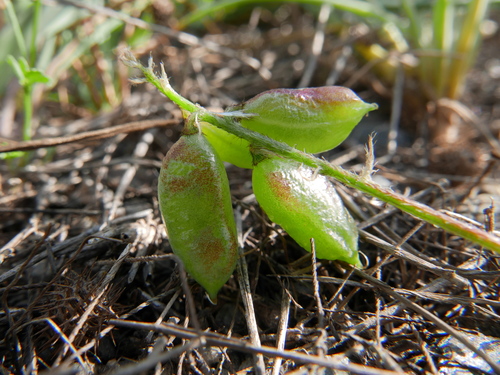
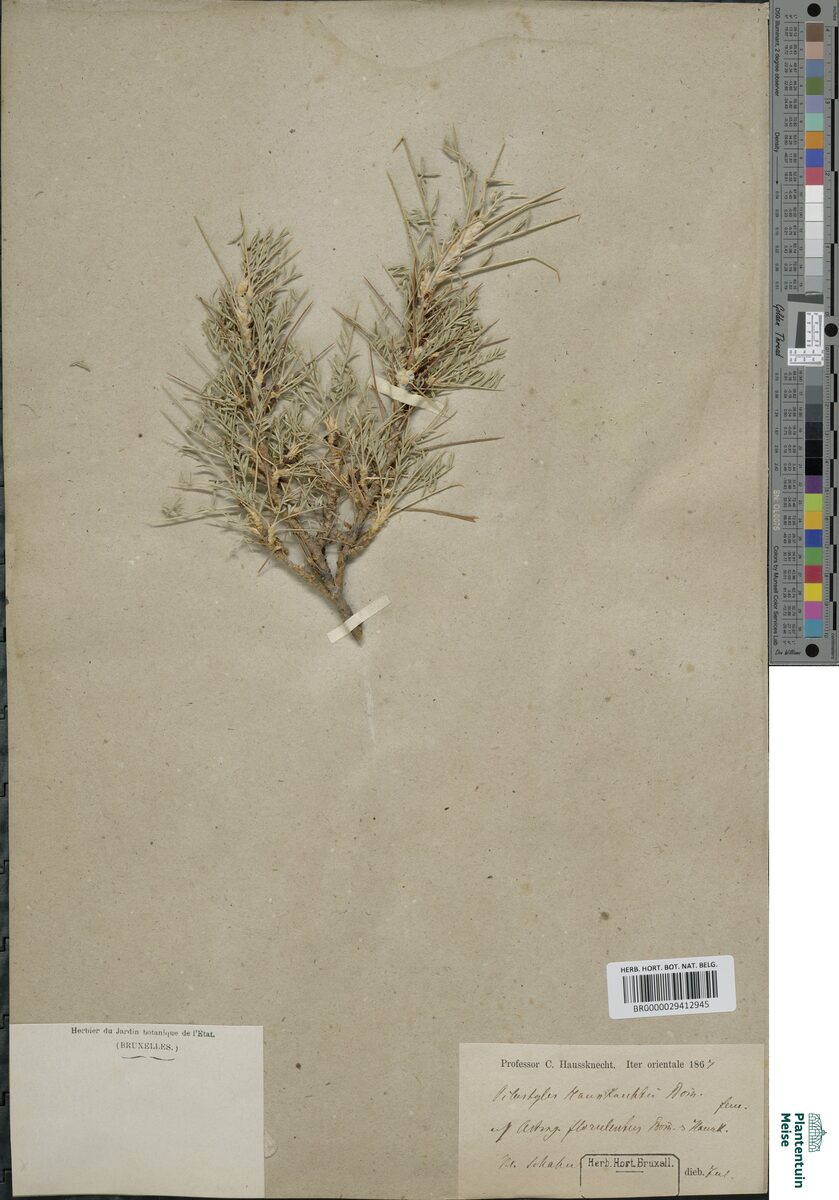
Tephrosia vogelii
Hook. f.
Fish-poison-bean
iNaturalist· cc-by
(c) Alexis López Hernández, some rights reserved (CC BY), uploaded by Alexis López Hernández
iNaturalist· cc-by
(c) Alexis López Hernández, some rights reserved (CC BY)
iNaturalist· cc-by-nc
(c) Troos van der Merwe, some rights reserved (CC BY-NC), uploaded by Troos van der Merwe
Summary
Source: WikipediaTephrosia vogelii, the Vogel's tephrosia, fish-poison-bean or Vogel tephrosia (English), tefrósia (Portuguese) or barbasco guineano (Spanish), is a flowering plant species in the genus Tephrosia. It is a herb or small tree that is native to tropical Africa and has also been used in tropical America as well as South and Southeast Asia. It is commonly used to deter pests and diseases, specifically fleas and ticks on animals. It is not suitable for livestock or human consumption because it is not highly nutritious and can be poisonous for fish and some other animals. Since it is a nitrogen-fixing plant, it can be intercropped with other plants and used as a source of green manure. Tephrosia vogelii is commonly known as the “fish bean”, “fish-poison bean”, or “vogel’s tephrosia”. It is a small tree used by farmers in numerous countries in Africa to get rid of pests on livestock, control pests in cultivated fields as an organic pesticide, improves soil fertility, as a medicine for skin diseases and internal worms, and for storage of crops. The use of “Tephrosia leaf extract as a low cost acaricide is spreading to farmers in central Kenya” and has been very successful in terms of its results.
Description
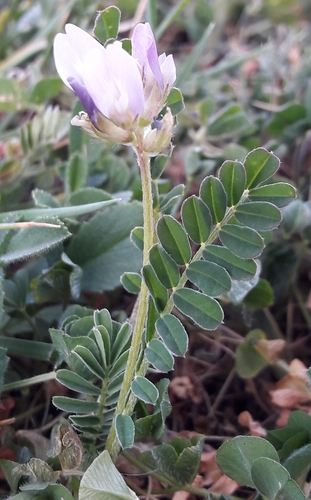
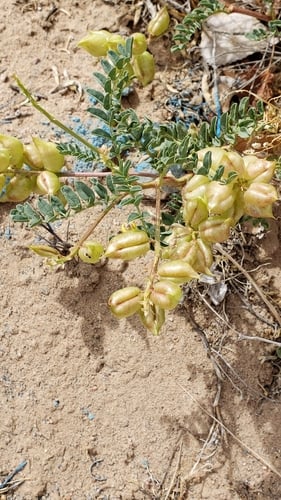
A softly woody herb. It is a branched shrub. It grows 1-4 m high. The stems are covered with dense hairs. The leaves have 13-29 leaflets. These are oblong and 5-9 cm long by 2-3 cm wide. They have silky hairs on top. The flowers are about 2.7 cm long in dense stalked clusters. The flowers can be white or violet. The fruit are 10-14 cm long pods which are 1.2-1.7 cm wide. They are densely hairy. The hairs near the edges are rusty brown and the ones towards the centre are white.
Edible Uses
None known
Traditional Uses
CAUTION: It contains the poison tephrosin. The leaves are cooked and eaten.
This uses section is brief — help expand it
Medicinal Uses
Used as an abortifacient, emetic, bactericide, purgative, and as a treatment for skin diseases, schistosomiasis, ringworm and parasitic infections. Leaf decoctions are applied in the treatment of scabies and yaws, and a weak infusion of the leaves is taken as an anthelmintic. Root decoctions are used to treat constipation.
Known Hazards
The plant contains rotenonoids and has been used traditionally as a fish poison - rotenoids kill or stun the fish making them easy to catch, but the fish remain perfectly edible for mammals. Rotenonoids are classified by the World Health Organization as moderately hazardous. They are mildly toxic to humans and other mammals, but extremely toxic to many insects (hence their use as an insecticide) and aquatic life, including fish. This higher toxicity in fish and insects is because the lipophilic rotenonoid is easily taken up through the gills or trachea, but not as easily through the skin or the gastrointestinal tract. The lowest lethal dose for a child is 143 mg/kg, but human deaths from rotenone poisoning are rare because its irritating action causes vomiting. Deliberate ingestion of rotenone, however, can be fatal. The compound decomposes when exposed to sunlight and usually has an activity of six days in the environment.
Distribution
A tropical plant. It grows naturally in grassy slopes. In Papua New Guinea it occurs from 1200 to 2280 m altitude. It can re-grow after fire. It grows in areas with an annual rainfall between 870-2,670 mm. It can grow in arid places.
Where It Grows
Africa, Angola, Asia, Australia, Burundi, Cameroon, Central Africa, Central America, China, Congo DR, Côte d'Ivoire, East Africa, Equatorial Guinea, Ethiopia, Gabon, Ghana, Guinea, Guinée, Guinea-Bissau, Honduras, India, Indochina, Indonesia, Ivory Coast, Jamaica, Kenya, Lao, Liberia, Madagascar, Malawi, Malaysia, Mali, Mauritius, Mozambique, Niger, Nigeria, Pacific, Papua New Guinea, PNG, Peru, Philippines, Rwanda, Sao Tome and Principe, SE Asia, Sierra Leone, South America, Sri Lanka, Sudan, Taiwan, Tanzania, Uganda, Vietnam, West Africa, West Indies, Zambia, Zimbabwe,
Cultivation
It grows best in areas where annual daytime temperatures are within the range 20 - 28°c, but can tolerate 10 - 32°c. The plant can survive temperatures down to about -1°c. It prefers a mean annual rainfall in the range 1,300 - 1,500mm, but tolerates 870 - 2,700mm. Prefers a sunny position, tolerating light shade. Grows well on andosols that are not subject to flooding and on well drained loams. Tolerant of poor soils, though it grows more slowly and is more prone to diseases. Prefers a pH in the range 5 - 6.5, tolerating 4.5 - 7. Established plants are drought tolerant. Tolerant of strong winds. Under favourable conditions, the plant grows quickly and is tolerant of repeated pruning. It can reach a height of 2 - 3 metres in just 7 months. A short-lived plant. Plants can flower and produce seeds all year round. Plants are quite tolerant of fire, usually resprouting readily afterwards due to its deep root system. If the plants are weakly branched, they should be lopped to promote branching. This species has a symbiotic relationship with certain soil bacteria, these bacteria form nodules on the roots and fix atmospheric nitrogen. Some of this nitrogen is utilized by the growing plant but some can also be used by other plants growing nearby.
Propagation
Fresh seed is preferably stored for 2 months before planting. Pre-soaking in warm water at 45°C for 12–24 hours improves germination. Without treatment, the germination rate is 65% and seedling survival around 60%. Seed stores well with no loss of viability over 2–3 years in open storage, and air-dried seed kept in sealed containers remains viable for at least 1.5 years.
Other Uses
The plant grows quickly, produces a good bulk and fixes atmospheric nitrogen, making it a useful green manure, windbreak and temporary shade crop in cocoa, coffee, tea, rubber, coconut and cinchona plantations. It performs well on acid soils where Leucaena leucocephala does not, forming root nodules and fixing nitrogen under those conditions. Its dense growth also makes it suitable as a hedge plant. Dry, crushed leaves are used as an insecticide against lice, fleas and ticks, and as a molluscicide — tephrosine is the active poisonous compound. The plant can also be used in the manufacture of the insecticide rotenone.
Notes
It is cultivated as a fish poison. It is also used as shade for coffee.
Synonyms
Also Known As
Bantaculudje, Bantamaro, Bwalu, Doankiem vogel, Kibaazi, Igongo, Koru, Mtetezga, Mthuthu, Toon, Umurukuruku, Yom
References (14)
- Ambasta, S.P. (Ed.), 2000, The Useful Plants of India. CSIR India. p 626
- Bunderson, W. T. et al, 2002, Common Agroforestry Species in Malawi. Malawi Agroforestry Extension Project, Pubication No. 46, Lilongwe. p 31
- Burkill, I.H., 1966, A Dictionary of the Economic Products of the Malay Peninsula. Ministry of Agriculture and Cooperatives, Kuala Lumpur, Malaysia. Vol 2 (I-Z) p 2172
- Chapman, J. D. & Chapman, H. M., 2001, The Forest Flora of Taraba and Andamawa States, Nigeria. WWF & University of Canterbury. p 187
- Fowler, D. G., 2007, Zambian Plants: Their Vernacular Names and Uses. Kew. p 40
Show all 14 references Hide references
- Henty, E.E., 1980, Harmful Plants in Papua New Guinea. Botany Bulletin No 12. Division Botany, Lae, Papua New Guinea. p 94, Pl. 33
- J. D. Hooker & G. Bentham in W. J. Hooker, Niger Fl. 296. 1849
- Latham, P., 2004, Useful Plants of Bas-Congo province. Salvation Army & DFID p 275
- Martin, F.W. & Ruberte, R.M., 1979, Edible Leaves of the Tropics. Antillian College Press, Mayaguez, Puerto Rico. p 200
- Pham-Hoang Ho, 1999, An Illustrated Flora of Vietnam. Nha Xuat Ban Tre. p 892
- Royal Botanic Gardens, Kew (1999). Survey of Economic Plants for Arid and Semi-Arid Lands (SEPASAL) database. Published on the Internet; http://www.rbgkew.org.uk/ceb/sepasal/internet [Accessed 29th April 2011]
- Terra, G.J.A., 1973, Tropical Vegetables. Communication 54e Royal Tropical Institute, Amsterdam, p 77, 79
- Verdcourt, B., 1979, Manual of New Guinea Legumes. Botany Bulletin No 11, Division of Botany, Lae, Papua New Guinea. p 346
- World Checklist of Useful Plant Species 2020. Royal Botanic Gardens, Kew