Acacia macrostachya
Reichenb.
iNaturalist· cc-by-nc-sa
(c) Marco Schmidt, some rights reserved (CC BY-NC-SA)
iNaturalist· cc-by-nc
(c) Sylvain Piry, some rights reserved (CC BY-NC)
iNaturalist· cc-by-nc
(c) Sylvain Piry, some rights reserved (CC BY-NC)
Description
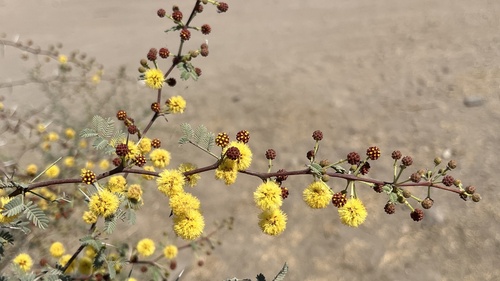
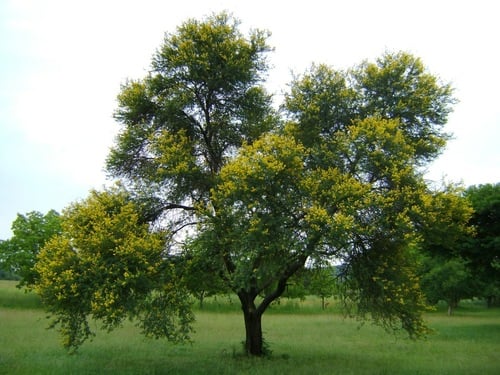
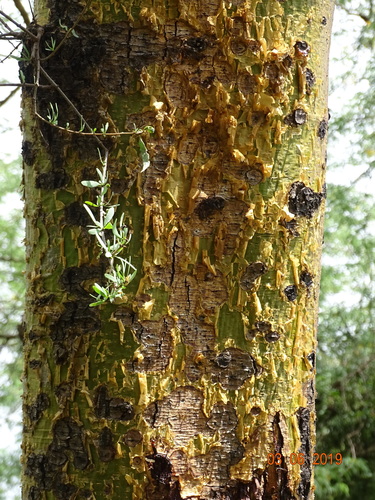
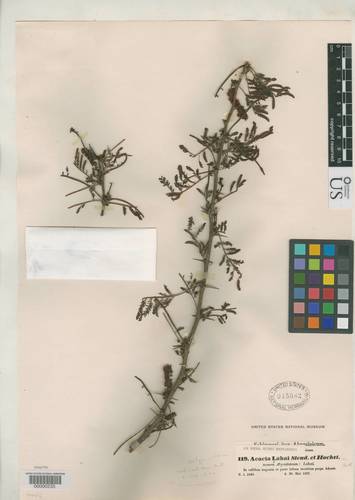
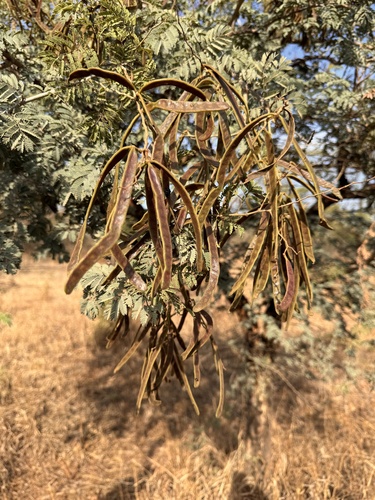
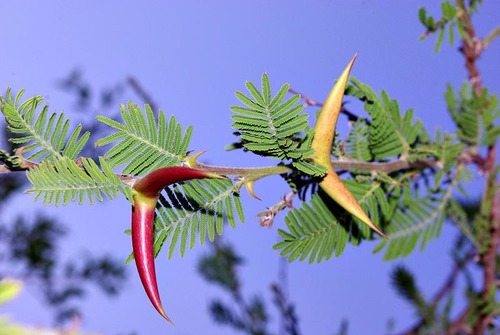
A shrub or small tree. It grows 5 m tall. There are prickles along the stem. The leaves are twice divided and there are 8-18 pairs of pinnae. There are up to 50 pairs of pinnules on each pinnae. The flowers are yellow. They are in large clusters at the ends of branches. The pods are flattened.
Edible Uses
Acacia longifolia is widely cultivated in subtropical regions of the world. Its uses include prevention of soil erosion, food (flowers, seeds and seed pods), yellow dye (from the flowers), green dye (pods) and wood. The flower colour derives from the organic compound kaempferol. The tree's bark has limited use in tanning, primarily for sheepskin. It is useful for securing uninhabited sand in coastal areas, primarily where there are not too many hard frosts. In Tasmania the ripening pods were roasted and the seeds removed and eaten.
Traditional Uses
The seeds are sometimes boiled and eaten. They can be dried and stored. The fruit is used as a sauce. The gum is edible.
This uses section is brief — help expand it
Medicinal Uses
Kaempferol (3,4′,5,7-tetrahydroxyflavone) N-(2-imidazol-4-yl-ethyl)-trans-cinnamamide N-(2-imidazol-4-yl-ethyl)-deca-trans-2, cis-4-dienamide Dimethyltryptamine 0.2–0.3% & Histamine
Distribution
It is a tropical plant. It forms thickets in the drier region of West Africa. It grows in the Sahel. It can grow on very poor soils. It grows in areas with annual rainfalls between 400-1,400 mm. It can grow in arid places.
Where It Grows
Africa, Angola, Benin, Burkina Faso, Central Africa, Chad, Côte d'Ivoire, Guinea, Guinée, Guinea-Bissau, Ivory Coast, Malawi, Mali, Niger, Nigeria, Sahel, Senegal, Sierra Leone, Sudan, Togo, West Africa,
Cultivation
Plants can be grown from seeds.
Notes
There are about 1,350 Acacia species. Over 1,000 occur in Australia. Also as Mimosaceae.
Synonyms
Also Known As
Batare, Bihongaga, Bu ngoho, Bula-bali, Bule, Bu ngoho, Burle, Fu likot, Fungo, Ga-ngor-tot, Gaude, Klealin, Kpessagotigou, Nafungwe, Pau-de-ferida, Pau-ferida, Quide, Tanda-sara, Tchide, Zamanega
References (16)
- Belem, B., et al, 2007, Use of Non Wood Forest Products by local people bordering the “Parc National Kaboré Tambi”, Burkina Faso. The Journal of Transdisciplinary Environmental Studies vol. 6, no. 1 p 9
- Belem, M., et al, 2017, Strategy of Conservation and Protection of Wild Edible Plants Diversity in Burkina Faso. ANADOLU 27 (2) 2017, 82- 90
- Bonou, A., et al, 2013, Valeur economique des Produits Forestiers Non Ligneux (PFNL) au Benin. Editions Universitaires Europeennes p 93
- Burkill, H. M., 1985, The useful plants of west tropical Africa, Vol. 3. Kew.
- Dalziel, J. M., 1937, The Useful plants of west tropical Africa. Crown Agents for the Colonies London.
Show all 16 references Hide references
- Gallagher, D. E., 2010, Farming beyond the escarpment: Society, Environment, and Mobility in Precolonial Southeastern Burkina Faso. PhD University of Michigan.
- Gaisberger, H., et al, 2017, Spatially explicit multi-threat assessment of food tree species in Burkina Faso: A fine-scale approach. PLoS ONE 12 (9): e0184457
- Gen. Hist.:411. 1832 (Acacia macrostachya DC.)
- Global Plants JSTOR
- Grivetti, L. E., 1980, Agricultural development: present and potential role of edible wild plants. Part 2: Sub-Saharan Africa, Report to the Department of State Agency for International Development. p 25
- Guinko, S. & Pasgo, L. J., Harvesting and marketing of edible products from local woody species in Zitenga, Burkina Faso. Unasylva - No. 168
- ILDIS Legumes of the World http:www;ildis.org/Legume/Web (Author as DC)
- Jardin, C., 1970, List of Foods Used In Africa, FAO Nutrition Information Document Series No 2.p 24
- Maydell, H. von, 1990 Trees and shrubs of the Sahel: their characteristics and uses. Margraf. p 117
- Peters, C. R., O'Brien, E. M., and Drummond, R.B., 1992, Edible Wild plants of Sub-saharan Africa. Kew. p 127
- Royal Botanic Gardens, Kew (1999). Survey of Economic Plants for Arid and Semi-Arid Lands (SEPASAL) database. Published on the Internet; http://www.rbgkew.org.uk/ceb/sepasal/internet [Accessed 26th April 2011]