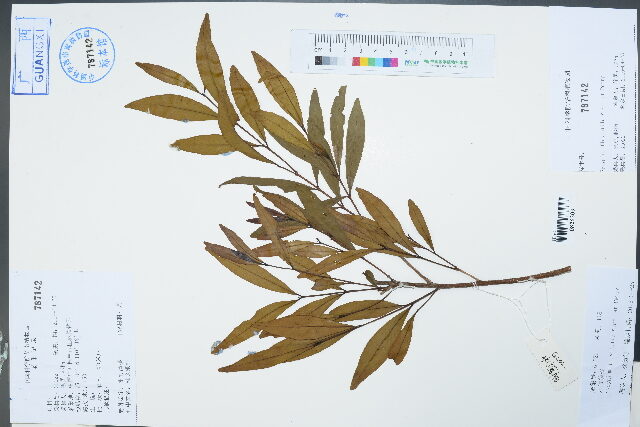
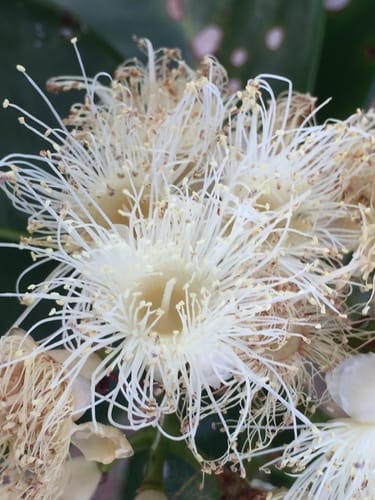
Syzygium wesa
B. Hyland
White Eungella satinash
Wikipedia· cc-by-sa
Wikimedia Commons - Syzygium_wesa.jpg
wikimedia· cc-by
Wikimedia Commons - Unknown authorUnknown author
Summary
Source: WikipediaSyzygium wesa, commonly known as white Eungella gum, is a tree in the Myrtaceae family, native to Queensland.
Description
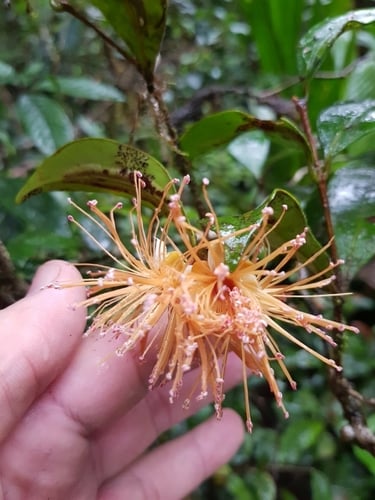
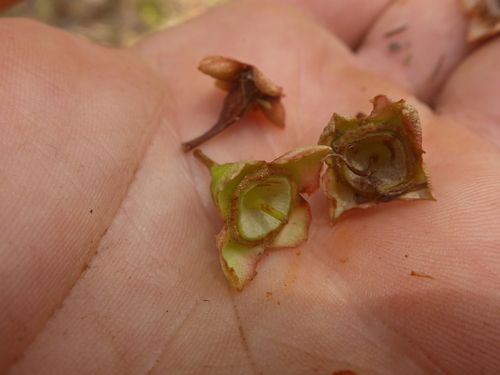
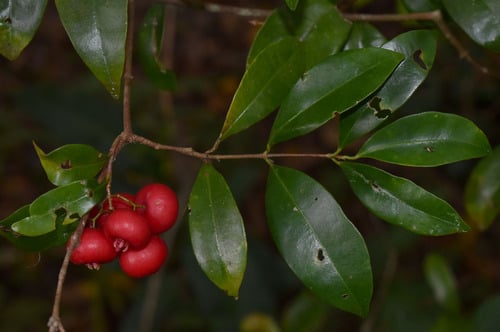
A tree. It grows up to 15-35 m tall. It has a dense spreading crown. The leaves are simple, sword shaped and 4-10 cm long by 5 cm wide. They do not have hairs but have several small oil dots. They are glossy green on the upper surface and paler underneath. The flowers are cream. They occur in much branched dense clusters. The fruit are 1.2-1.5 cm across. They hang in bunches. They are mostly at the ends of branches. As they ripen they change from cream to pink to red. There is one seed inside. The seed is 6-7 mm across. The fruit is edible.
Edible Uses
We have no specific information on edibility for the fruit of this species, but the fruits of many members of this genus are edible. The red, globular fruit is about 12 - 15mm in diameter, the succulent flesh enclosing a solitary seed about 6 - 7mm in diameter.
Traditional Uses
The fruit are eaten.
This uses section is brief — help expand it
Distribution
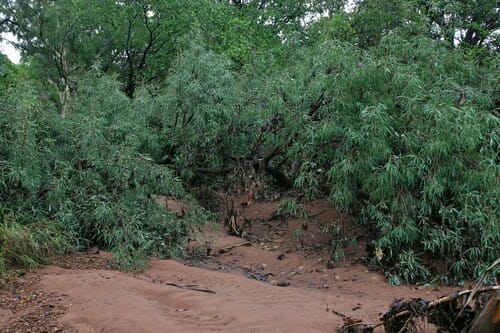
A tropical plant. They grow in the central east and northeast of Queensland in Australia. They grow from sea level to 1400 m altitude. They require shady positions.
Where It Grows
Australia*,
Cultivation
Plants are grown from fresh seed.
Propagation
Seed - best sown as soon as it is ripe.
Other Uses
A useful structural timber. We do not have any more specific information for the wood of this species, but the various species of Syzygium tend to have somewhat similar timber. The general description of syzygium timber is as follows:- The heartwood is a golden brown, greyish brown or brown, with pink or purplish glints; it is not clearly demarcated from the 1 - 4cm wide band of sapwood. The texture is fine; the grain slightly interlocked, sometimes wavy or irregular; there are resin deposits. The wood is heavy; moderately hard; somewhat durable, being moderately resistant to fungi and termites, but susceptible to dry wood borers. It seasons slowly, with a high risk of checking and distortion; once dry it is moderately stable in service. It works well with ordinary tools, nailing and screwing are good so long as the wood is pre-bored; gluing is correct. The wood is used for musical instruments, tool handles, furniture components, ship building, heavy carpentry, flooring, joinery etc.
Production
Trees are fairly slow growing. In Australia the fruit season is June to December.
References (5)
- Cooper W & Cooper W T, 1994, Fruits of the Rain Forest. RD Press p 280
- Cooper, W. and Cooper, W., 2004, Fruits of the Australian Tropical Rainforest. Nokomis Editions, Victoria, Australia. p 370
- Jackes, B.R., 2001, Plants of the Tropics. Rainforest to Heath. An Identification Guide. James Cook University. p 69
- Jones D, L, 1986, Ornamental Rainforest Plants in Australia, Reed Books, p 82, 340
- Townsend, K., 1994, Across the Top. Gardening with Australian Plants in the tropics. Society for Growing Australian Plants, Townsville Branch Inc. p 351