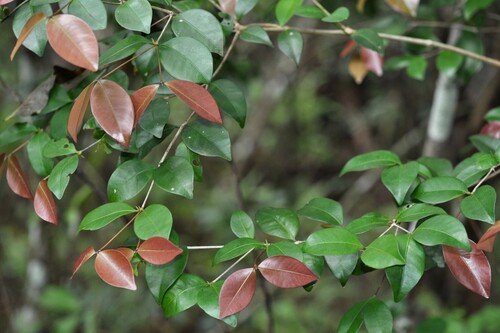
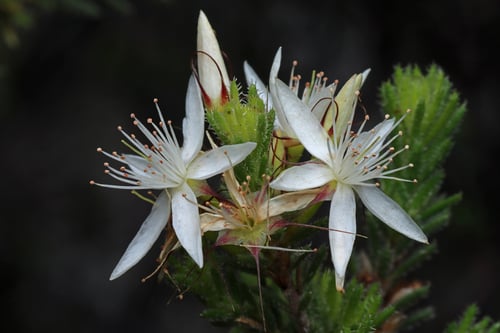
Campomanesia sessiliflora
(O. Berg.) Mattos
Guabiroba-verde
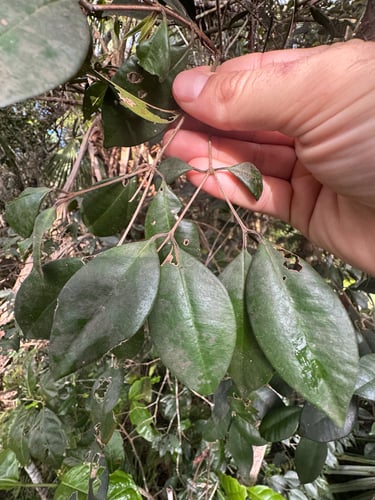
iNaturalist· cc-by-nc
(c) Laurent Quéno, some rights reserved (CC BY-NC), uploaded by Laurent Quéno
iNaturalist· cc-by-nc
(c) Laurent Quéno, some rights reserved (CC BY-NC), uploaded by Laurent Quéno
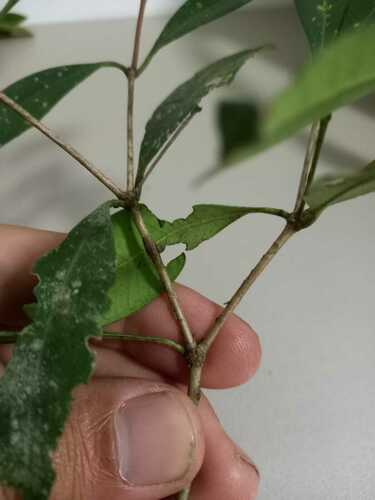
iNaturalist· cc-by-nc
(c) Laurent Quéno, some rights reserved (CC BY-NC), uploaded by Laurent Quéno
Description
A shrub or small tree. It grows 3-6 m high. The trunk is grooved and 15-25 cm across. The flower stalks are densely hairy. They are 1-12 mm long and shorter than the flower buds. The leaves are narrowly oval and 4-12 cm long by 2-6 cm wide. The leaves have 5-7 pairs of side veins. The flowers occur singly or in groups of 2-3. The fruit have a juicy firm flesh.
Edible Uses
Fruit - raw. A firm, succulent pulp with a sweet flavour. The green, globose fruits are about 4cm in diameter.
Traditional Uses
The fruit are eaten fresh.
This uses section is brief — help expand it
Distribution
A tropical plant. It grows naturally in the savannas and fields in central Brazil.
Where It Grows
Bolivia, Brazil*, Paraguay, South America,
Cultivation
Plants are grown from seeds. The seeds are collected from ripe fruit and put into a plastic bag to partly decompose then washed in running water. The seeds need to be planted fresh and are best in light shade. Seedlings emerge in 40-50 days.
Propagation
Seed - best sown as soon as it is ripe in a partially shaded position in a nursery seedbed. A low germination rate can be expected, with the seeds sprouting within 40 - 50 days. Seedlings grow away moderately quickly.
Other Uses
The wood is fine-textured, irregular-grained, moderately heavy, hard and with an average susceptibility to wood eating organisms. Because of its small dimensions, it is only used for fuel and to make charcoal.
Production
Plants grow at a moderate rate.
Other Information
The fruit are popular.
Notes
There are at least 11 Campomanesia species.
Synonyms
Also Known As
Guavira mi
References (6)
- Bircher, A. G. & Bircher, W. H., 2000, Encyclopedia of Fruit Trees and Edible Flowering Plants in Egypt and the Subtropics. AUC Press. p 78
- Bortolotto, I. M., et al, 2018, Lista preliminar das plantas alimenticias nativas de Mato Grosso do Sul, Brasil. Iheringia, Serie Botanica, Porto Alegre, 73 (supl.):101-116
- Grandtner, M. M. & Chevrette, J., 2013, Dictionary of Trees, Volume 2: South America: Nomenclature, Taxonomy and Ecology. Academic Press p 96
- Loefgrenia 26:26. 1967
- Lorenzi, H., Bacher, L., Lacerda, M. & Sartori, S., 2006, Brazilian Fruits & Cultivated Exotics. Sao Paulo, Instituto Plantarum de Estuados da Flora Ltda. p 188
Show all 6 references Hide references
- Lorenzi, H., 2009, Brazilian Trees. A Guide to the Identification and Cultivation of Brazilian Native Trees. Instituto Plantarum de Estuados da Flora Ltda. Vol. 3 p 241