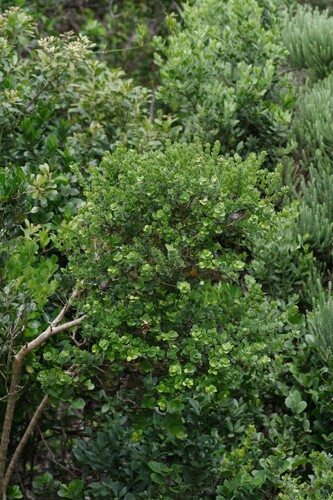
Campomanesia schlechtendaliana
(0. Berg.) Nied.
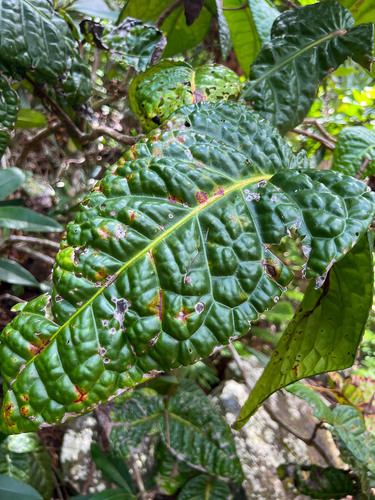
Guabiroba-rugosa
iNaturalist· cc-by-nc
(c) Dylan Morgan Schmitt, some rights reserved (CC BY-NC)
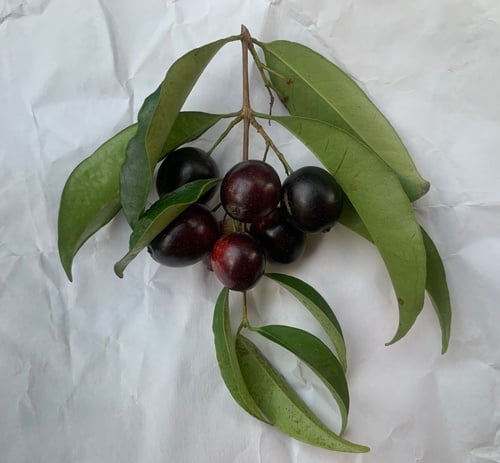
iNaturalist· cc-by-nc
(c) Dylan Morgan Schmitt, some rights reserved (CC BY-NC)
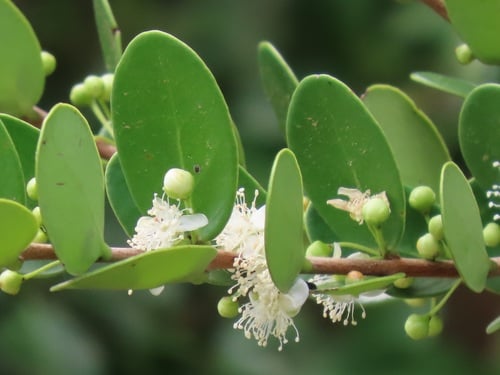
iNaturalist· cc-by-nc
(c) Dylan Morgan Schmitt, some rights reserved (CC BY-NC)
Description
It can be a shrub or a tree. It is evergreen. It grows 7-15 m tall. The fruit stalks are 1-6 mm long and shorter than the flower bud. They are hairy. The leaves have 8-15 pairs of veins. The flowers occur singly. The fruit are 2-4 cm across. The pulp of the fruit is acid and edible.
Edible Uses
Fruit - raw. A slightly acidic flavoured pulp]416]. The green, globose fruit is up to 3cm in diameter.
Traditional Uses
The fruit are eaten fresh.
This uses section is brief — help expand it
Distribution
A tropical plant. It grows on the Atlantic slopes in Brazil.
Where It Grows
Brazil*, South America,
Cultivation
Plants are grown from seeds. The seeds are collected from ripe fruit and put into a plastic bag to partly decompose then washed in running water. The seeds need to be planted fresh and are best in light shade. Seedlings emerge in 40-50 days.
Propagation
Seed - best sown as soon as it is ripe in a partially shaded position in a nursery seedbed. A germination rate in excess of 70% can be expected, with the seeds sprouting within 40 - 50 days. Seedlings grow away fairly quickly.
Other Uses
The wood is medium-textured, irregular-grained, heavy, hard to cut, resistant to wood eating insects. It is only used to make musical instruments and tool handles.
Production
Plants grow rapidly.
Notes
There are at least 11 Campomanesia species.
Synonyms
References (4)
- Grandtner, M. M. & Chevrette, J., 2013, Dictionary of Trees, Volume 2: South America: Nomenclature, Taxonomy and Ecology. Academic Press p 96
- Lorenzi, H., Bacher, L., Lacerda, M. & Sartori, S., 2006, Brazilian Fruits & Cultivated Exotics. Sao Paulo, Instituto Plantarum de Estuados da Flora Ltda. p 187
- Lorenzi, H., 2009, Brazilian Trees. A Guide to the Identification and Cultivation of Brazilian Native Trees. Instituto Plantarum de Estuados da Flora Ltda. Vol. 3 p 240
- www.colecionandofrutas.org