Syzygium luehmannii
(F. Muell.) L. A. S. Johnson
Cherry alder, Cherry satinash
iNaturalist· cc-by
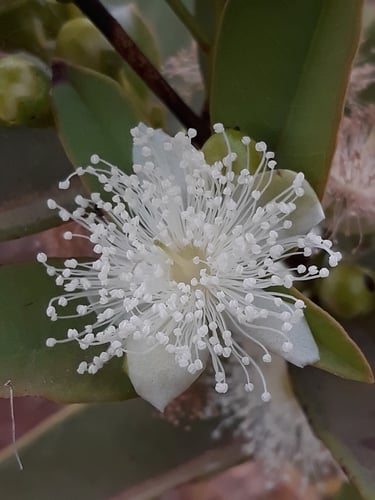
(c) Richard Dimon, some rights reserved (CC BY), uploaded by Richard Dimon
iNaturalist· cc-by-nc-nd
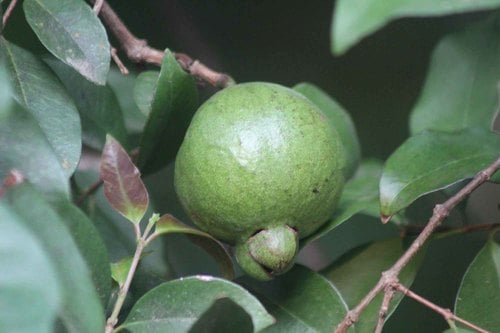
(c) melanie cook, some rights reserved (CC BY-NC-ND)
iNaturalist· cc-by-nc
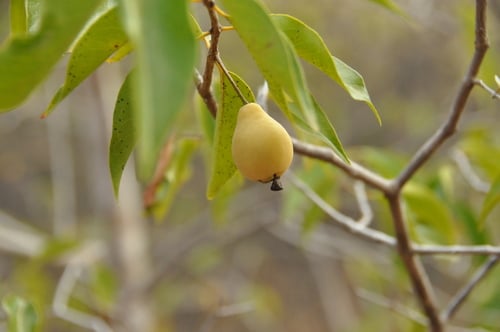
(c) Russell Cumming, some rights reserved (CC BY-NC), uploaded by Russell Cumming
Summary
Source: WikipediaSyzygium luehmannii is a medium-sized coastal rainforest tree native to Australia. Common names include riberry, small leaved lilly pilly, cherry satinash, cherry alder, or clove lilli pilli. The habitat is Australian riverine, littoral, subtropical or tropical rainforest. It grows on volcanic soils or deep sandy soils between the Macleay River in New South Wales to near Cairns in tropical Queensland. It is commonly grown as an ornamental tree and for its fruit, known as a riberry.
Description
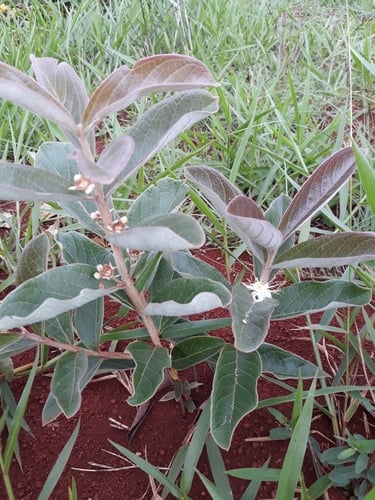
A tree. It grows up to 15-35 m tall and with a spread of 6 m. They grow as smaller trees when grown out of the rainforest. It has a dense crown of leaves. The stem is erect and often it has buttresses. The bark is flaky and greyish-brown. The new growth is bright red. The leaves are stiff. They are 6 cm long by 3 cm across. The leaves taper towards the tip. They are shiny green on both surfaces but the upper surface is darker green. The flowers are small and white. They occur in dense clusters at the ends of branches. The fruit are pinkish red to purple and pear shaped. They are about 1 cm across and 2 cm long. There is one seed in the fruit but often the fruit are seedless. The fruit are edible.
Edible Uses
Fruit - raw or cooked. A distinctive, clove-like flavour. Although sometimes eaten raw, the fruit is more commonly cooked, being used to make jams, jellies, sauces, marmalade etc. The red, pear-shaped fruit is 9 - 12mm long, 6 - 10mm in diameter.
Traditional Uses
The ripe fruit are eaten raw. They are also made into jams, jellies, sauces, vinegar and marmalade.
This uses section is brief — help expand it
Distribution
A tropical plant. It grows in warm temperate regions but can grow in the tropics and subtropics. It grows in north eastern Australia in New South Wales and Queensland. It is a rainforest species. Trees will grow in cooler places and can tolerate sunlight even when young. They need well drained soil. They can grow on a variety of soils but do best on light well composted soils. They need plenty of moisture to grow well but can survive a drought. Plants are frost tender but can stand light frosts. In Papua New Guinea it has been seen at 1,600 m above sea level. Melbourne Botanical Gardens. It suits hardiness zones 9-12. Mt Cootha Botanical Gardens.
Where It Grows
Australia*, Papua New Guinea, PNG,
Cultivation
Plants are grown from fresh seed. Often many fruit do not have seeds. Seeds do not always germinate well. Cuttings are difficult to get to grow. Tip cuttings are best.
Propagation
Seed - sown fresh, it germinates in 3 - 4 weeks. Cuttings are fairly easy to root.
Other Uses
A useful general purpose structural timber. We do not have any more specific information for the wood of this species, but the various species of Syzygium tend to have somewhat similar timber. The general description of syzygium timber is as follows:- The heartwood is a golden brown, greyish brown or brown, with pink or purplish glints; it is not clearly demarcated from the 1 - 4cm wide band of sapwood. The texture is fine; the grain slightly interlocked, sometimes wavy or irregular; there are resin deposits. The wood is heavy; moderately hard; somewhat durable, being moderately resistant to fungi and termites, but susceptible to dry wood borers. It seasons slowly, with a high risk of checking and distortion; once dry it is moderately stable in service. It works well with ordinary tools, nailing and screwing are good so long as the wood is pre-bored; gluing is correct. The wood is used for musical instruments, tool handles, furniture components, ship building, heavy carpentry, flooring, joinery etc. The plant is ornamental, has dense foliage and responds well to clipping. It can be grown as an ornamental, fruit-bearing hedge.
Production
Trees grow moderately quickly. The flowers occur October to December and the fruit are ripe November to March.
Notes
They are rich in folates.
Nutrition
| Part | Moisture | kJ | kcal | Protein | Vit A | Vit C | Iron | Zinc |
|---|---|---|---|---|---|---|---|---|
| Fruit | 82 | 325 | 78 | 0.9 | — | — | 0.9 | 0.2 |
Synonyms
Also Known As
Clove lilly pilly, Riberry, Small-leaf Lilly-Pilly, Small-leaved Water Gum
References (34)
- Alice, L. & O'Quinn, T., Australian Bush Superfoods. Explore Australia p 130
- Barwick, M., 2004, Tropical and Subtropical Trees. A Worldwide Encyclopedic Guide. Thames and Hudson p 392
- Bodkin, F., 1991, Encyclopedia Botanica. Cornstalk publishing, p 964
- Bonney, N., 1997, Economic Native Trees and Shrubs for South Australia. Greening Australia (SA) inc. Campbelltown SA 5074 p 169
- Bonney, N., 2012, Edible Wild Native Plants for Southern Australia. p 78
Show all 34 references Hide references
- Cherikoff V. & Isaacs, J., The Bush Food Handbook. How to gather, grow, process and cook Australian Wild Foods. Ti Tree Press, Australia p 51
- Cooper W & Cooper W T, 1994, Fruits of the Rain Forest. RD Press p 274
- Cooper, W. and Cooper, W., 2004, Fruits of the Australian Tropical Rainforest. Nokomis Editions, Victoria, Australia. p 364
- Cribb, A.B. & J.W., 1976, Wild Food in Australia, Fontana. p 32
- Cronin, L., 1989, The Concise Australian Flora. Reed. p 141
- Cundall, P., (ed.), 2004, Gardening Australia: flora: the gardener's bible. ABC Books. p 1393
- Edible and Useful Native Plants (off internet)
- Facciola, S., 1998, Cornucopia 2: a Source Book of Edible Plants. Kampong Publications, p 160
- Greig, D., 1996, Flowering Natives for Home Gardens. Angus & Robertson. p 311
- Haslam, S., 2004, Noosa's Native Plants. Noosa Integrated Catchment Assn. Inc. p 360
- Hibbert, M., 2002, The Aussie Plant Finder 2002, Florilegium. p 296
- Jackes, B.R., 2001, Plants of the Tropics. Rainforest to Heath. An Identification Guide. James Cook University. p 69
- Jones D, L, 1986, Ornamental Rainforest Plants in Australia, Reed Books, p 79, 340
- Keena, C. & G., 2010, Flora profile. Some Bushfoods of SEQ. Land for Wildlife South East Queensland Newsletter October 2010
- Lord, E.E., & Willis, J.H., 1999, Shrubs and Trees for Australian gardens. Lothian. p 21
- Low, T., 1991, Wild Food Plants of Australia. Australian Nature FieldGuide, Angus & Robertson. p 76
- Low, T., 1992, Bush Tucker. Australia’s Wild Food Harvest. Angus & Robertson. p 63
- Molyneux, B. and Forrester, S., 1997, The Austraflora A-Z of Australian Plants. Reed. p 152
- Nicholson, N & H., 1996, Australian Rainforest Plants, Terania Rainforest Publishing. NSW. p 62
- Queensland Forest Service, 1991, Trees and Shrubs. Department of Primary Industries. p 116
- Ratcliffe D & P., 1987, Australian Native Plants for Indoors. Little Hills press. p 134
- Recher, P, 2001, Fruit Spirit Botanical Gardens Plant Index. www.nrg.com.au/~recher/ seedlist.html p 3
- Robins, J., 1996, Wild Lime. Cooking from the Bush food garden. Allen & Unwin p 60
- Smith, K., 1998. Growing Uncommon Fruits and Vegetables. New Holland. p 99
- Smith, K & I., 1999, Grow your own bushfoods. New Holland. Australia. p 50
- Stanley, T. D. & Ross, E. M., 1986, Flora of south-eastern Queensland Volume 2. Queensland Government p 212
- Townsend, K., 1994, Across the Top. Gardening with Australian Plants in the tropics. Society for Growing Australian Plants, Townsville Branch Inc. p 347
- Williams, J.B., Harden, G.J., and McDonald, W.J.F., 1984, Trees and shrubs in rainforests of New South Wales and Southern Queensland. Univ. of New England, Armidale. p 113
- Yallakool Reserve Plant List July 1, 2009 Off internet